Key Points
- Saudi Arabia’s PIF ended LIV Golf funding after spending $5bn, with bankruptcy expected within days.
- The breakaway tour signed stars and offered faster play, but failed to build sustainable broadcast income.
- The retreat underlines how established sports resist disruption through entrenched traditions, institutions and fan loyalty.
The latest
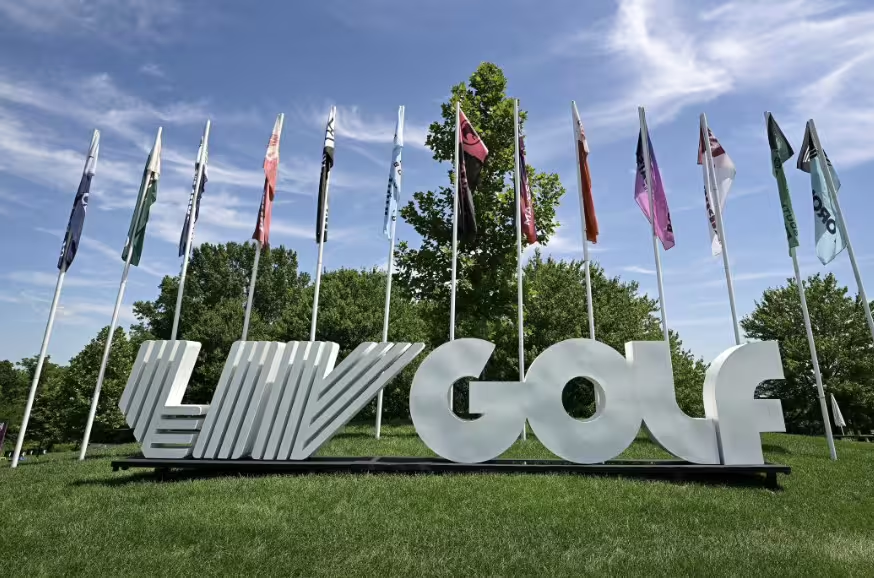
Saudi Arabia’s $900bn Public Investment Fund has pulled the financial plug on LIV Golf, ending a $5bn effort to challenge America’s PGA Tour and leaving the breakaway competition expected to file for bankruptcy in the coming days. The project used lavish salaries and prize money, shorter formats, pop music and the “Golf but louder” pitch to attract younger audiences. It recruited star players but failed to win enough supporters, particularly among golf’s affluent traditional fan base, to generate the broadcast revenue needed for sustainability.
Details
- Five-year push: The fund led Saudi investment across football, tennis, boxing, martial arts, motor racing and e-sports. Its goals included encouraging young Saudis to become more active, drawing tourists through marquee events and diversifying the oil-dependent economy. Critics accused Crown Prince Mohammed bin Salman of using sport to improve the kingdom’s image.
- Fan loyalty: Rich contracts secured prominent golfers but not automatic loyalty from spectators. Many established fans preferred the PGA Tour’s traditions and prestige, while LIV’s louder presentation alienated part of the audience it needed. Without sufficient viewership, the competition could not establish durable broadcasting income.
- Institutional resistance: Fans can also mobilise against changes to established competitions. FIFA recently abandoned an attempt to raise $4.2bn by selling stakes in football assets, including the World Cup. National federations pushed back, partly because they feared supporters’ anger over the proposal.
- Failed challengers: Other challengers have struggled to dislodge long-standing leagues. Michael Johnson’s Grand Slam Track, conceived as an alternative to athletics’ Diamond League, filed for bankruptcy in December, less than a year after its first fixture. By contrast, the Ultimate Fighting Championship prospered by creating a new mixed martial-arts market.
- Generational timeline: Building a successful sports franchise can take generations. More than 50 years after Pelé joined the New York Cosmos, soccer is only now coming into its own in America, and the Cosmos are long defunct. Buying and quickly reselling famous teams can produce gains but remains risky in a buoyant market.
- Faster returns: Financier Mark Walter sold the Los Angeles Lakers last month to two fellow billionaires for $12.5bn, $2.5bn above the price he had paid a year earlier. The example illustrates a faster route to returns than building a new competition, while exposing investors to inflated valuations.
- Digital priority: The PIF’s 2026-30 strategy uses the word “sports” only seven times across more than 50 pages, and six references carry the “e-” prefix. Saudi Arabia has taken a more methodical approach to gaming tournaments, including leading a $55bn buyout of Electronic Arts completed last month.
What’s next
LIV Golf is expected to file for bankruptcy in the coming days. Attention then shifts to implementation of the completed Electronic Arts takeover and the PIF’s 2026-30 strategy.