The latest:
Iran’s crude exports have fallen to about 260,000 barrels a day from roughly 1.7 million a year earlier, according to Kpler data, as Washington widens secondary sanctions on countries trading with Tehran. Three senior Iranian sources told Reuters the latest measures have left the leadership with far fewer routes to secure foreign currency or buy goods. Iran has warned it may answer the pressure with military escalation.
Details:
- The mechanism: Reuters reported Washington has expanded secondary sanctions to deny Iran the dollar in settling oil sales and financing imports of essential goods and raw materials. The three sources said evasion networks — front companies, unregistered tankers, smuggling — have become too costly to run, with less cash available to pay the premiums illicit workarounds demand.
- Stored crude: Iran says it still holds tens of millions of barrels stored on tankers outside the blockade zone, but the sources said new sanctions are pushing intermediaries to pull back or demand higher payment.
- Trade collapse: President Masoud Pezeshkian said total trade volume has fallen between 25% and 35%, with imports hit harder than exports. He is one of several senior officials warning in recent weeks of rapidly deteriorating conditions. The UAE announced on 19 August it was suspending all trade and financial dealings with Tehran until further notice.
- Currency and fuel: The rial has slid from about 1 million to the dollar a year ago to more than 2.2 million, hitting record lows in recent days. One Iranian source said the country holds only two months of gasoline stocks, which must be imported despite domestic crude output because refining capacity is limited.
- Household squeeze: Official data put average inflation over the past 12 months at 69.9%, with food, beverage and tobacco prices rising at roughly twice that rate. Unemployment reached 9.1% in spring and employment fell by about 450,000 year-on-year. An average monthly salary near 125 dollars covers little of the 450 dollars officials estimate a family needs.
- Medicine shortages: Iranian media reported shortages of some 800 medicines, dozens deemed vital. Pharmacists Association spokesman Hadi Ahmadi said the sector needs about 2.2 billion dollars this year and has received roughly half, adding alternative supply routes can triple drug costs. Iran International reported insulin out-of-pocket costs rose more than 24-fold in about 50 days.
- Energy damage: Mehdi Ghodsi of the Vienna Institute for International Economic Studies estimated Iran has lost between 15% and 30% of its energy production capacity to war damage and asset depreciation. He assessed that as temperatures drop, factories may be forced to shut so scarce gas can be redirected to homes.
- Repression signals: Judiciary chief Gholam-Hossein Mohseni-Ejei threatened a harsher crackdown on any new uprising, and security forces fired on people protesting over jobs in southwestern Iran this week. At least 950 people have been executed since the start of the year, Iran International reported.
- Tehran’s answers: MP Abdolkarim Hashemi Nakhl Ebrahimi told ICANA that cutting dollar dependence requires stronger domestic production, wider exports and currency swap arrangements. Energy Exchange chief Mohammad Nazifi told Tasnim that listing export crude on the bourse could diversify sales methods and help bypass the naval blockade.
- Washington and Brussels: Treasury Secretary Scott Bessent welcomed the European Union formally joining the US-led Economic Pariah operation, praising what he called its “strong and early” stance, and shared an EU statement issued around G20 finance meetings backing additional economic pressure on Iran.
Background:
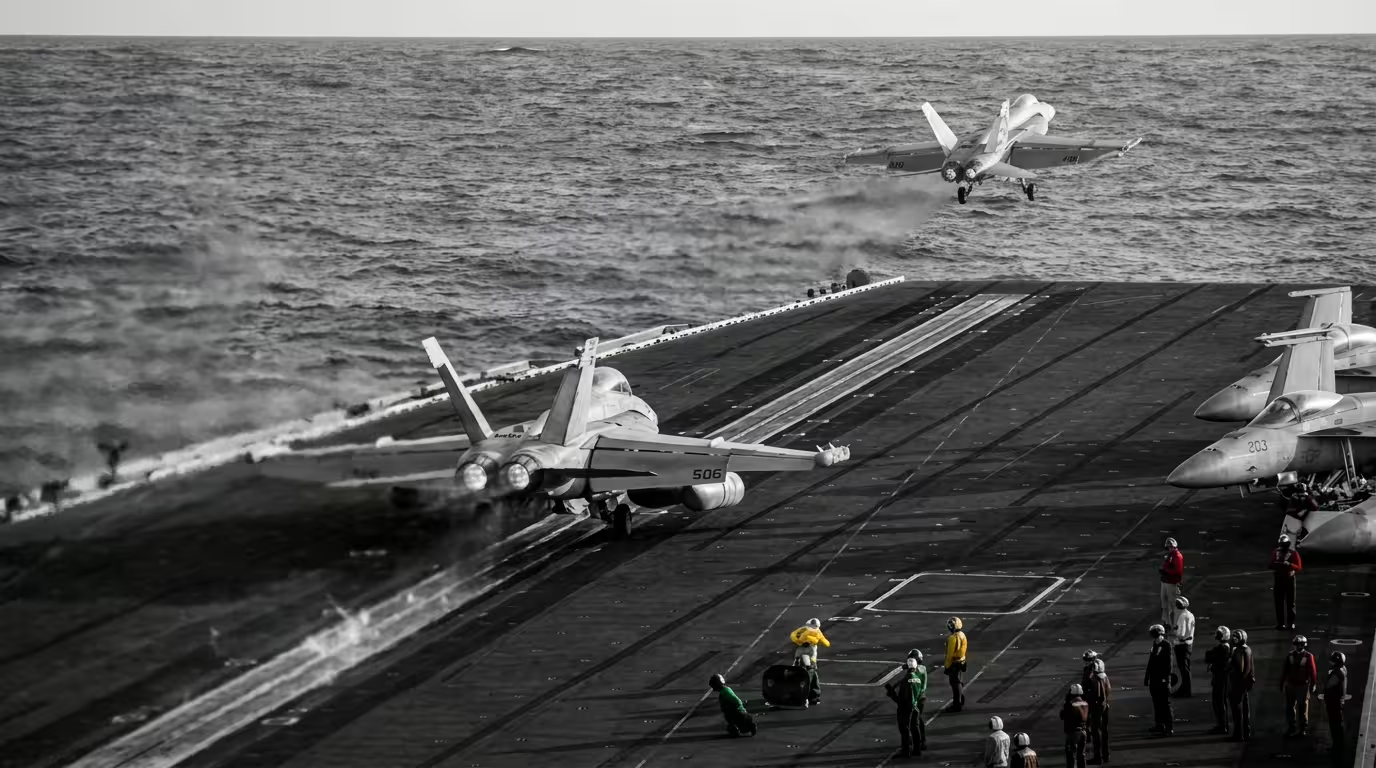
Reuters reported that six months of conflict failed to extract Iranian concessions, prompting Washington to escalate economic pressure instead. Fighting reopened this week, with US strikes along Iran’s Gulf coast and Iranian retaliatory strikes on US bases in Arab countries.
Between the lines:
Both sides are now targeting each other’s domestic politics. A senior Iranian official said Tehran hopes inflation risk deters Washington before November midterms, while Washington aims to push Iranians toward revolt. Analyst Ali Ansari assessed that Iran, losing control of the strait under severe economic pressure, will find negotiation unavoidable. Ejei’s threat, former Treasury strategist Miyad Maleki argued, signals the leadership knows how fragile its position is.
What’s next
Watch gasoline stocks against the stated two-month cushion, the rial’s level beyond 2.2 million, winter gas rationing decisions, and whether US midterm politics or fresh protests shift either side toward talks.