Key Points
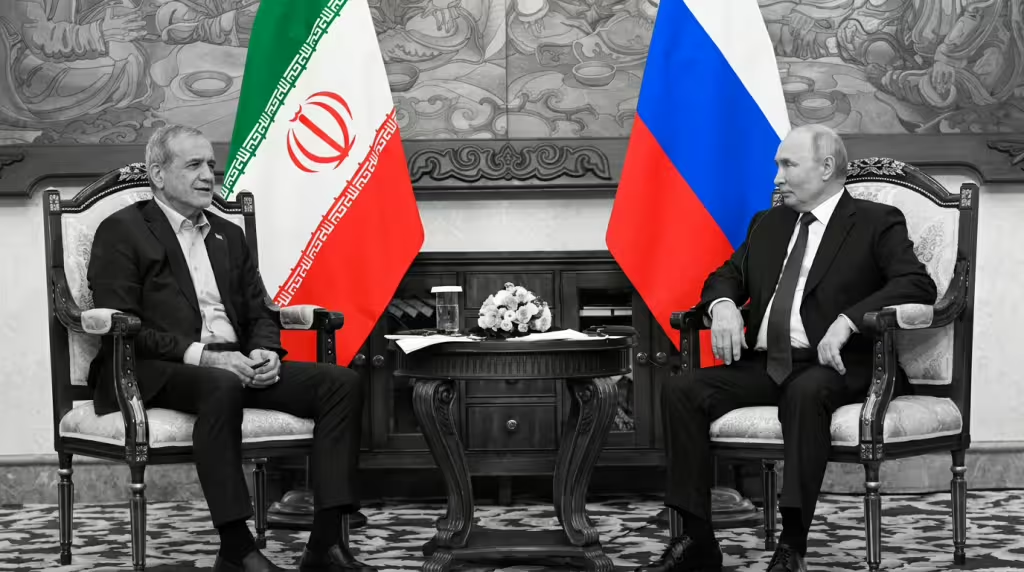
- Russia is secretly helping Iran develop advanced supersonic cruise missiles through the multiyear C430L programme.
- The effort pairs Iranian flight testing with Russian expertise in ramjet propulsion and missile design.
- Mastering the technology could help Tehran threaten US warships and expand its domestic defence industry.
The latest
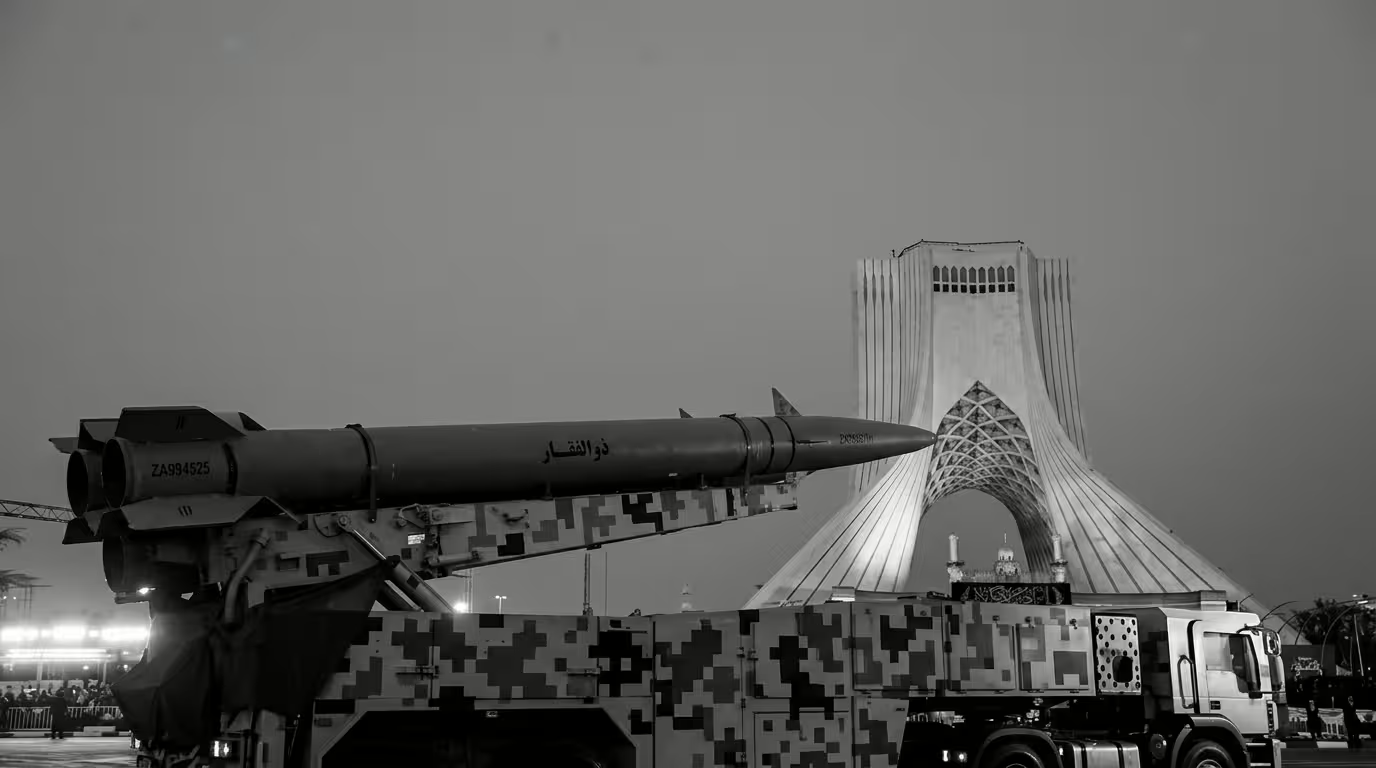
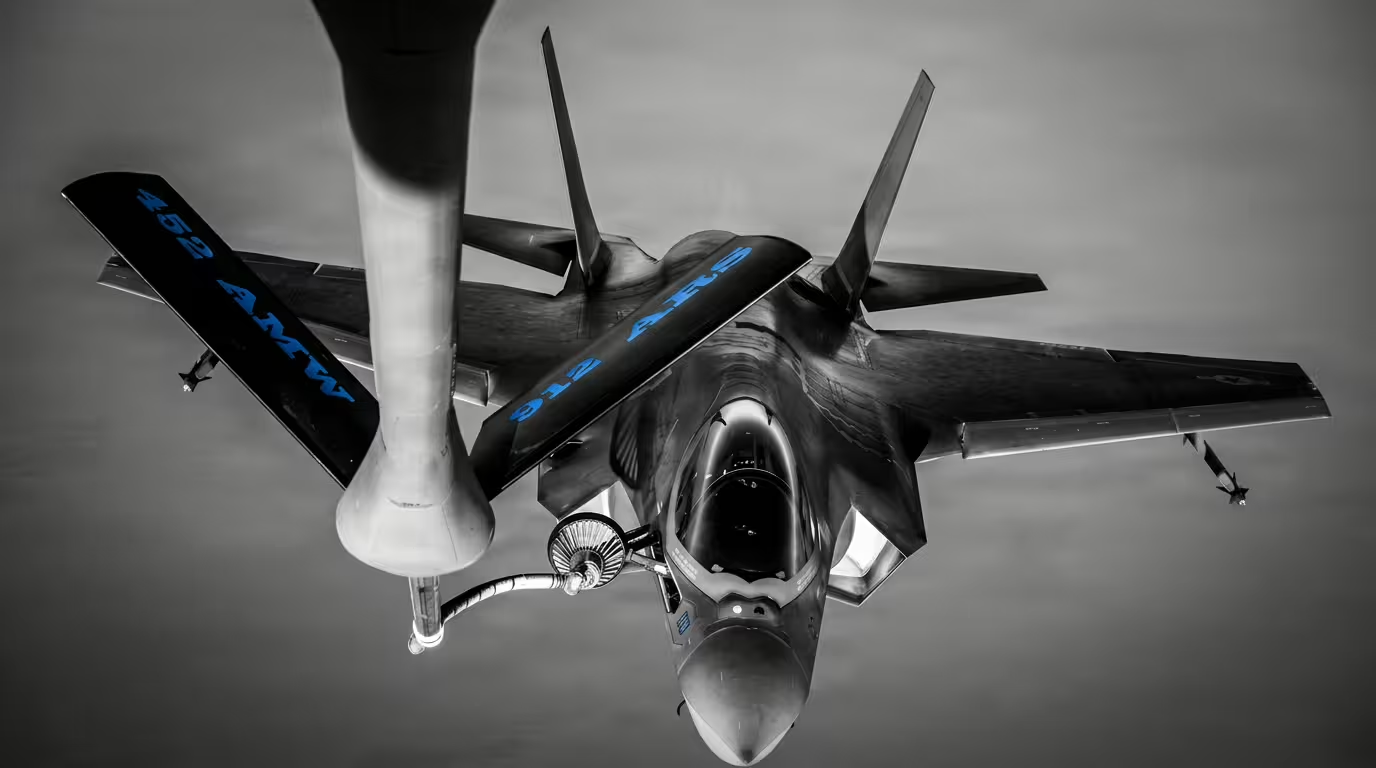
Russia has been secretly helping Iran develop a new class of supersonic cruise missile under a multiyear programme codenamed C430L, bringing experienced Russian specialists into Tehran’s effort to master ramjet propulsion. The programme began in 2023 and continued during the US-Israeli war against Iran. It is intended to support weapons capable of striking ships and land targets, including US aircraft carriers and other warships operating in the Middle East.
Details
- Ramjet objective: The propulsion system would let a cruise missile sustain powered flight at several times the speed of sound. Combined with low-altitude flight, that speed shortens detection and engagement windows for advanced air and missile defences. Iran has built and flight-tested the system, although no Russian-assisted supersonic cruise missile has yet been deployed.
- Russian review: By 2025, NPO Mashinostroyenia had received extensive Iranian technical material and analysed data from an Iranian flight test. Its engineers questioned Tehran about fuel-system changes, combustion stability, the air intake and engine nozzle, and whether the ramjet continued operating after telemetry ended less than a minute into the test.
- Contract network: State arms exporter Rosoboronexport arranged C430L with NPO Mashinostroyenia. Russian export officials and senior engineers repeatedly visited Iran before the contract was signed with Iran’s Ministry of Defence and Armed Forces Logistics in November 2023. Washington sanctioned the Russian missile company in 2014 over its strategic weapons work.
- Specialist delegation: Rosoboronexport proposed sending about two dozen specialists to Iran in April 2025 for technical consultations. Personnel linked to the programme included experts in sea-launched missiles, air-breathing propulsion, aerodynamics and ballistics. Several were named as inventors on Russian patents covering ramjet engines and high-speed missiles designed for ship and land targets.
- Strategic impact: Former CIA military analyst Jim Lamson said the technology could give Iran a qualitatively new strategic weapon capable of threatening US Navy vessels. Missile expert Fabian Hinz described experienced Russian engineers identifying and solving design problems as highly valuable. Mastering the engine could also help Iran develop later weapons with less reliance on foreign suppliers.
Background
Iran has pursued supersonic anti-ship missile technology for years through domestic engineering, foreign procurement and reverse-engineering. Its defence minister announced such plans in 2016. Two Iranian diplomats were arrested in Ukraine in 2018 while seeking parts and documents for the Soviet Kh-31A missile. Iran displayed a locally developed ramjet engine in 2019 and announced prototype testing in August 2023.
What’s next
C430L correspondence extends into 2026, with Russia preparing technical reports and both sides discussing another development phase. A June 2026 Rosoboronexport letter shows negotiations continuing over that phase and plans for further talks on the Russian technical findings.