Key Points
- Dyson’s CameraJet uses a tiny camera to identify gaps and direct water between teeth.
- The company targets people who struggle to maintain regular flossing as part of daily oral care.
- Its launch extends camera technology into a highly personal routine while drawing attention to image handling.
The latest
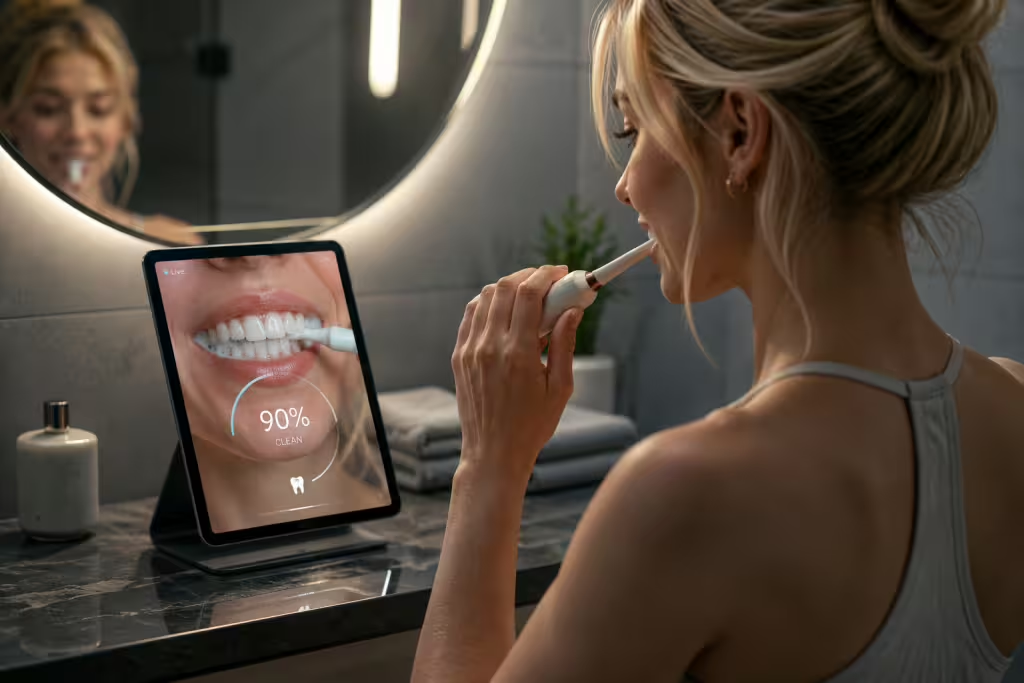
Dyson has launched the $499 CameraJet, an electric toothbrush and “precision flosser” that uses a tiny camera to locate gaps between teeth and direct water at plaque or trapped food. The device combines brushing and water flossing in a single process, aimed at consumers who do not floss consistently. Its arrival also puts a camera inside a twice-daily bathroom routine, expanding a trend that has already brought lenses and mapping sensors into doorbells, robot vacuums, refrigerators and health-tracking toilets.
Details
- How it works: The camera operates at close range inside the mouth, identifying spaces between teeth so the device can target them with jets of water. Dyson presents the system as a way to brush and clean between teeth with one device, rather than treating flossing as a separate step in an oral-care routine.
- Privacy design: Dyson says the camera is “optimized for short-range vision and detection only,” limiting its intended view to the area immediately around the teeth. In its explanation, Dyson says this means the lens is designed to work only when positioned directly against teeth, rather than recording the wider bathroom. The company addresses privacy concerns in a dedicated question-and-answer section about placing a camera inside the mouth and using the connected app in a bathroom environment.
- Image policy: Images displayed through the CameraJet app are deleted immediately after viewing and are neither stored nor shared, Dyson says. A request to the company for further details about the camera’s privacy protections and handling of in-mouth footage had not received an immediate response.
- Premium category: The $499 price places CameraJet alongside Dyson’s other expensive personal-care products. The company has already built a market for high-priced hair dryers and styling tools, and is now applying its combination of industrial design and integrated technology to oral hygiene.
- Camera expansion: CameraJet joins a growing range of connected household products that collect visual information. Video doorbells monitor entrances, robot vacuums map homes, premium refrigerators look inside shelves and a newer AI-enabled toilet uses a camera to track health information from a user’s waste.
Background
The spread of cameras into everyday devices has included security incidents as well as new functions. Someone previously gained remote access to a fleet of camera-equipped DJI robot vacuums. CameraJet extends that shift into oral care, alongside products such as Meta’s camera glasses and Flock cameras, while restricting its stated function to close-range monitoring of teeth and gums.
What’s next
The next indicators will be Dyson’s response with further privacy details and consumer uptake of a $499 oral-care device. Its reception will show whether buyers accept an in-mouth camera in exchange for combining brushing and water flossing.