Key Points
- US forces launched new strikes inside Iran after attempted attacks on commercial shipping and American troops.
- The operation followed the first direct US-Iran exchange of fire in more than a month.
- Oil rose nearly 3% as renewed military action intensified risks around a critical energy route.
The latest
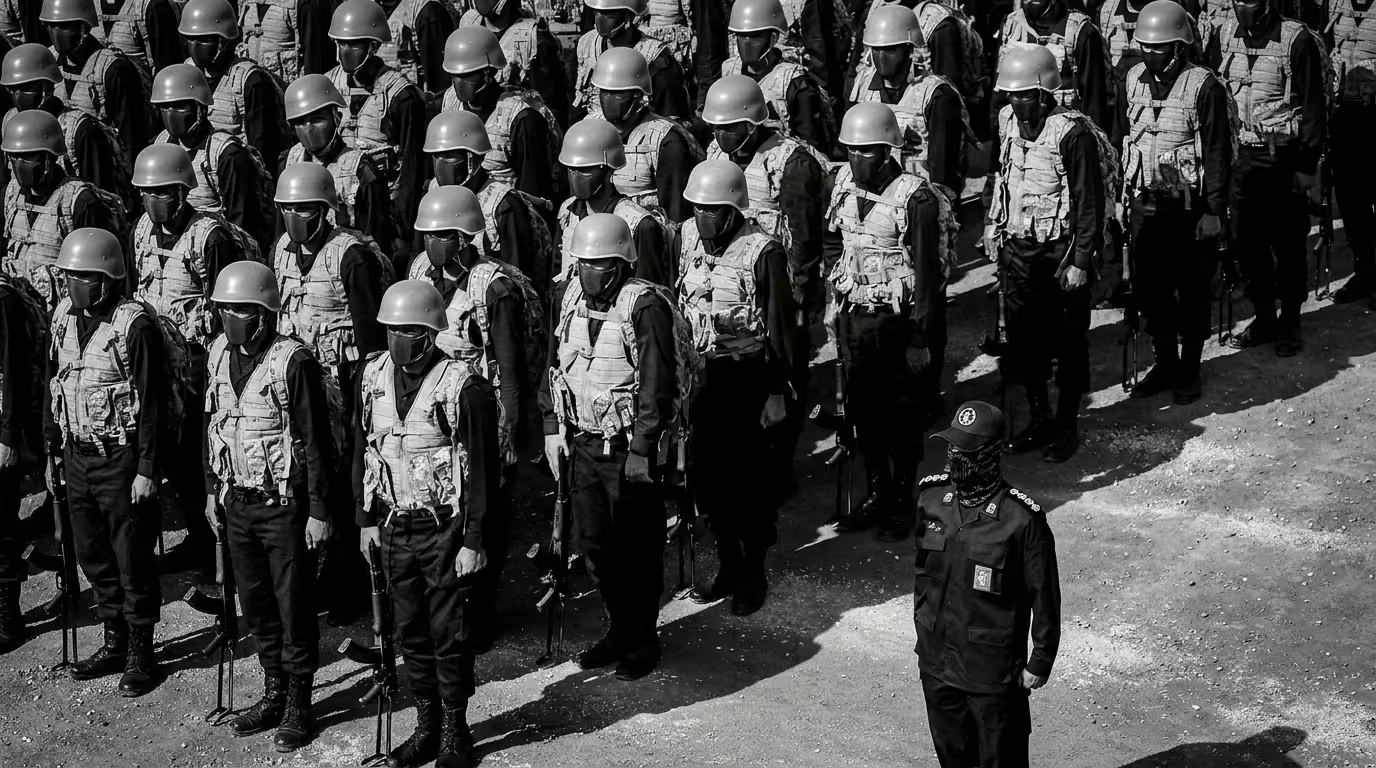
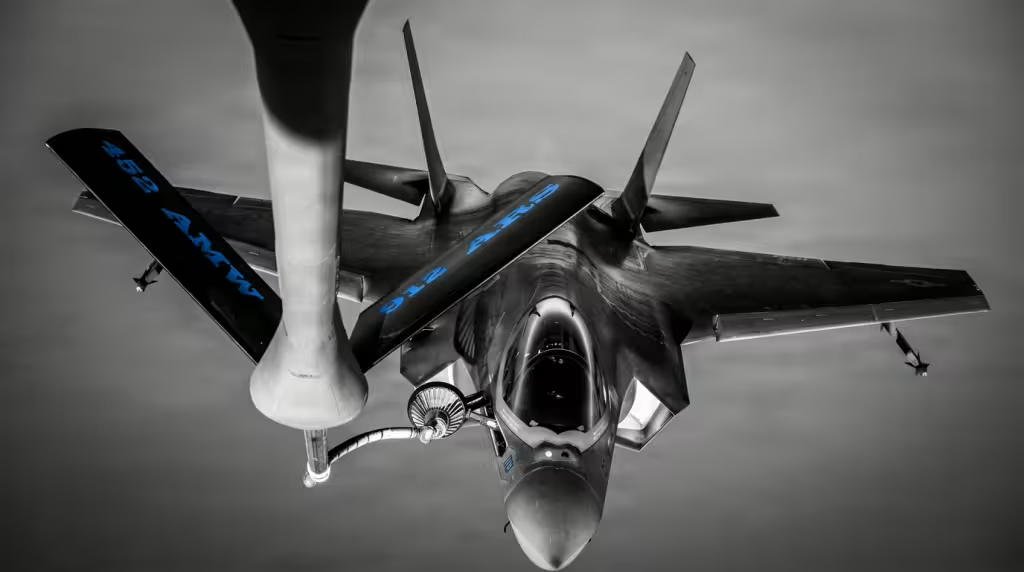
U.S. forces launched additional strikes against Islamic Revolutionary Guard Corps targets inside Iran on Tuesday, after recent attempted attacks on commercial shipping in the Strait of Hormuz and American personnel deployed across the region. U.S. Central Command said the operation began at noon Eastern Time, hours after Iranian President Masoud Pezeshkian discussed returning to a ceasefire under a memorandum of understanding. The action also followed overnight attacks extending into Monday, the first exchange of fire between Washington and Tehran in more than a month.
Details
- Strike trigger: Central Command linked the strikes to attempted IRGC attacks against vessels using the strategic waterway and against U.S. service members in the region. It described Tuesday’s action as a further round against Guard targets in Iran.
- Overnight exchange: Iran said it fired missiles toward U.S. military targets in Jordan and the United Arab Emirates, retaliating for an American strike on Iranian rocket launchers on Larak Island. Washington said Iran had been trying to deploy sea mines into the Strait of Hormuz.
- Trump’s limits: Trump called U.S. actions in Iran “very limited” on Monday, while leaving open the possibility of more strikes. He said six months of war had eliminated Iran’s navy and air force and almost all of its surveillance equipment, adding that Washington could still “smack ’em.”
- Shipping picture: Trump said the Strait was in “extremely good shape” and that many ships were transiting. Tracking data showed traffic remained significantly below levels recorded before the war, despite his declaration days earlier that the route was free of mines.
- Tehran leadership: Asked who controlled Tehran, Trump said the answer remained open and argued Iranians did not know who their leader was. He described the military strength of Iranian hardliners as a fraction of what it had been.
- Market fallout: The earlier exchange pushed global oil prices almost 3% higher and sent U.S. stock indexes lower on Monday. The renewed attacks marked a shift from Washington’s recent emphasis on maximizing economic pressure on Iran rather than using military force.
Background
The Strait of Hormuz sits at the center of both the military confrontation and efforts to contain it. The latest sequence connected rocket launchers on Larak Island, alleged mine deployment into the shipping lane, missile fire toward U.S. targets in Jordan and the UAE, and renewed American strikes inside Iran. Disruption around the waterway also fed directly into oil and equity markets during Monday trading.
What’s next
The next indicator is vessel traffic through the Strait of Hormuz, alongside any announced Iranian action against shipping or U.S. forces and any subsequent American strike decision after Tuesday’s noon operation.