Key Points
- Trump threatened countries providing Iran any “lifeline” with sweeping economic consequences and isolation.
- Two ceasefires collapsed as disrupted Hormuz shipping and regional fighting continued.
- China’s oil purchases and UAE links place major partners within the threat’s broad reach.
The latest
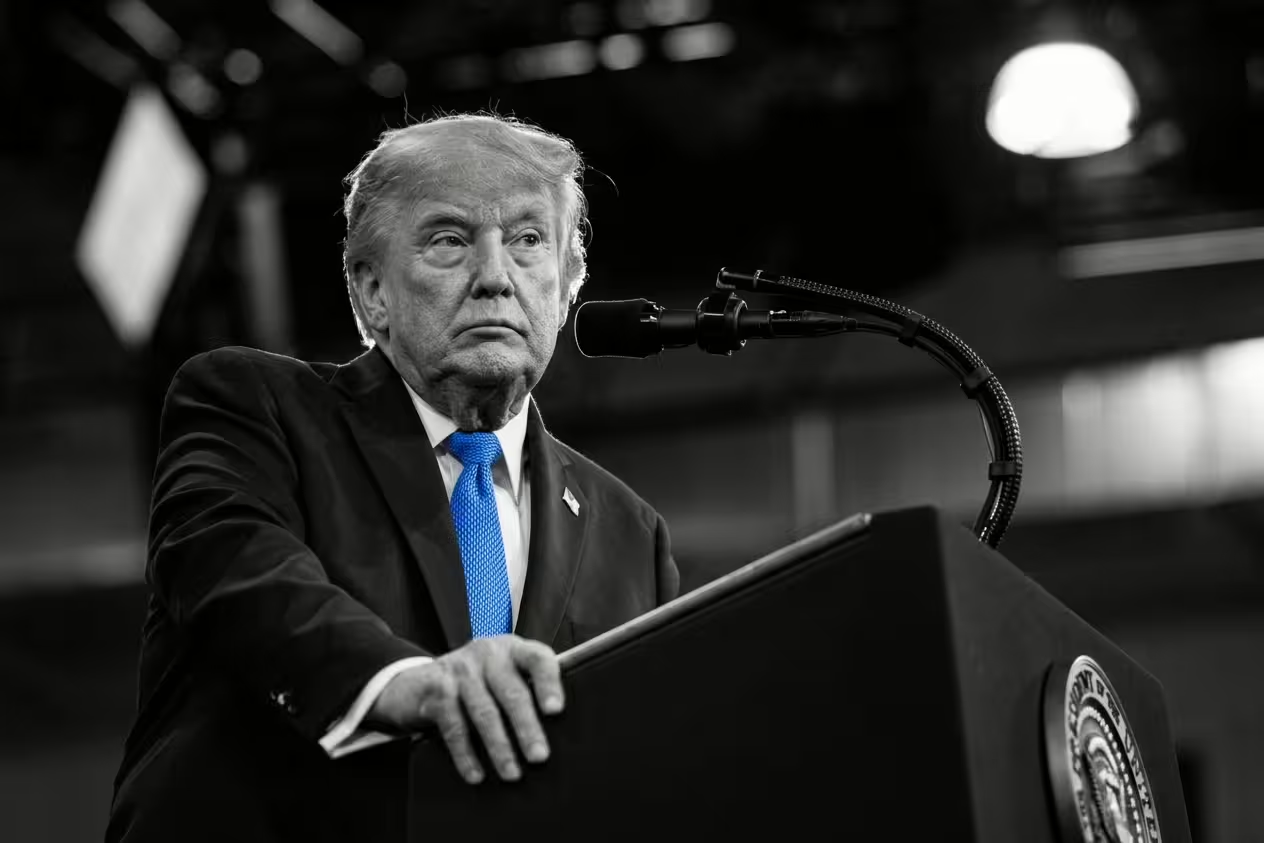
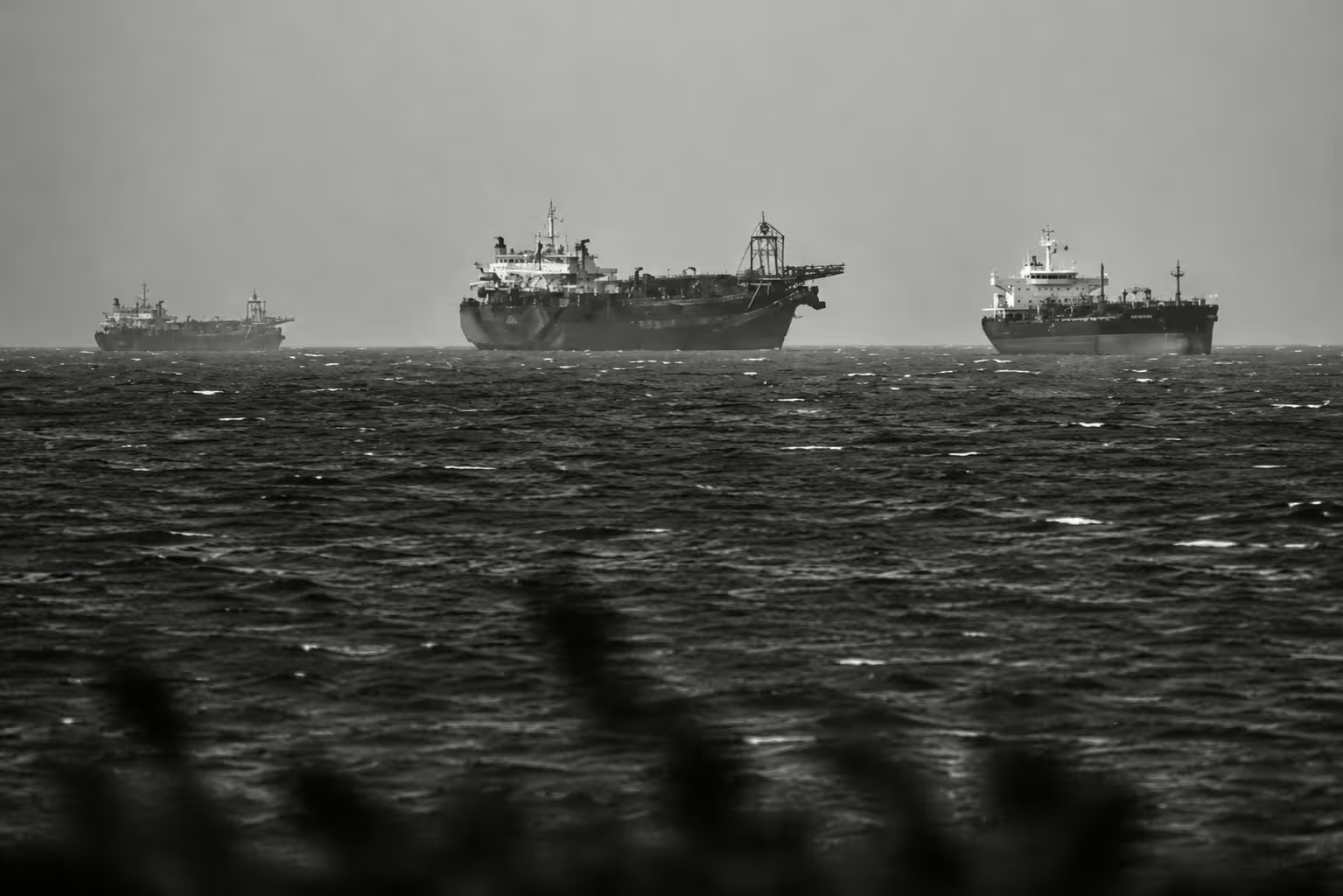
U.S. President Donald Trump warned that any country allowing financial institutions, businesses, airports or government entities to provide Iran with “any type of lifeline” would face “tremendous economic consequences.” In a Wednesday evening social media post, he promised “economic warfare and isolation on an unprecedented scale,” but identified neither specific U.S. measures nor any country by name. The warning comes as Washington seeks to end a war it began alongside Israel nearly six months ago. Thousands have been killed, Gulf countries have been drawn into the conflict, and markets have been shaken by Iran’s control over shipping through the Strait of Hormuz. About one-fifth of globally traded oil passed through the waterway before February.
Details
- Threat’s reach: Trump described the campaign as the “most crushing economic operation ever taken against any country.” Its broad wording would appear to encompass U.S. allies that have helped mediate peace talks. His social media threats and announcements have not always been implemented as written.
- Failed ceasefires: The United States and Iran announced ceasefire agreements in April and June, intended to restore shipping through Hormuz to pre-war levels as a step toward ending the conflict. Both agreements quickly collapsed, even as Israel largely withdrew from the fighting.
- UAE suspension: The United Arab Emirates suspended all trade activities, commercial exchanges and financial transactions with Iran until further notice. The move followed the UAE Defense Ministry’s announcement that two missiles launched from Iran had fallen into the sea, an account Tehran dismissed as baseless.
- China exposure: China buys more than 80% of Iran’s shipped oil, based on 2025 data from analytics firm Kpler. Further U.S. economic confrontation with Beijing could risk retaliation from a major exporter to the United States, including of vital rare-earth minerals.
- Conflicting signals: Trump said Tuesday that no talks with Iran were taking place. A day earlier, his son-in-law and special envoy Jared Kushner said discussions remained underway and were “probably more robust” than ever. Iranian adviser Mohammad Mokhber said Tehran remained open to dialogue but would not equate negotiation with surrender.
- Nuclear demands: Trump wants to seize Iran’s stockpile of highly enriched uranium and secure a more restrictive agreement covering its nuclear energy and research programs. The proposed deal would replace the accord from which he unilaterally withdrew the United States in 2018. Iran maintains that its nuclear program is peaceful.
Background
Iran has endured continuous, severe economic sanctions since the 1979 Islamic Revolution. The latest threat intensifies that pressure as Tehran uses its influence over Hormuz during a conflict that has disrupted regional commerce and global energy markets.
What’s next
The next indicators will be any U.S. announcement naming targeted countries, institutions or restrictions; whether the UAE extends or lifts its suspension; and whether shipping through Hormuz returns toward pre-war levels after two failed ceasefire agreements.