Key Points
- Amazon says Prime Air will reach nearly 500 cities and towns by end-2026.
- The service currently operates in 11 metro areas, offering deliveries in as little as 30 minutes.
- It is the largest drone-delivery push yet in a market still slowed by cost, noise and regulation.
The latest:
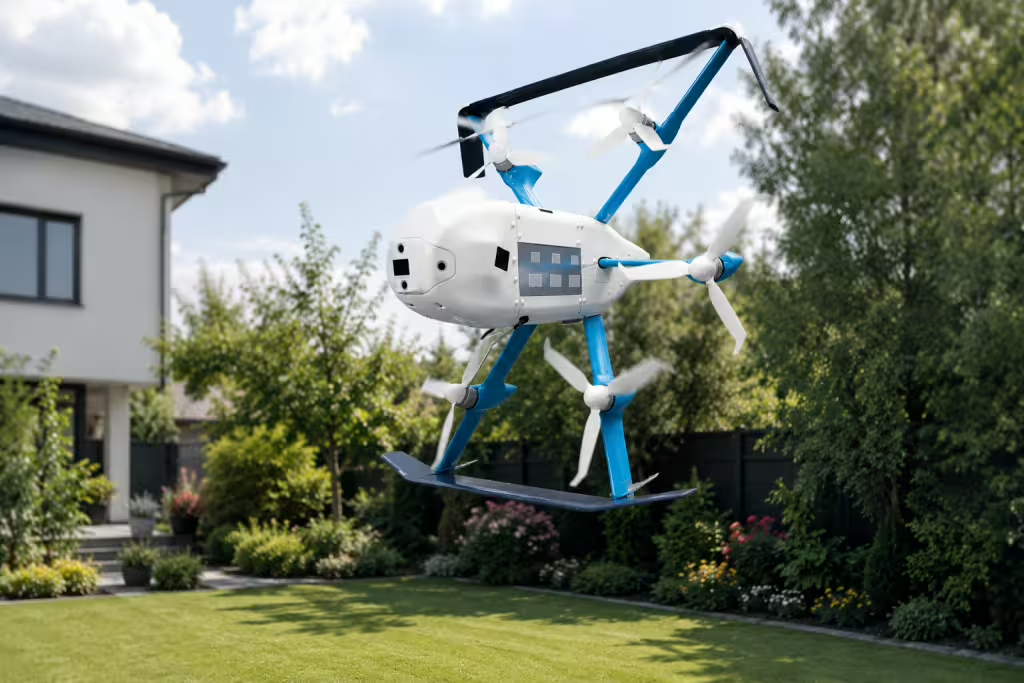
Amazon is scaling its drone delivery service from 11 metro areas to nearly 500 cities and towns by the end of 2026, the company announced. New launch markets include Chicago, Atlanta, Cleveland, Syracuse in New York, and Boise in Idaho. Prime Air vice president David Carbon said hundreds of thousands of packages have already been delivered by drone this year.
Details:
- The scale: Amazon said Prime Air currently flies in 11 metro areas, including Phoenix, Detroit, Houston, Dallas and San Antonio. The expansion to nearly 500 cities and towns would make it by far the broadest commercial drone-delivery footprint announced by any US retailer to date.
- The offer: The company said the service promises delivery in as little as 30 minutes, covering a selected range of items: groceries, electronics, medications and household products. Amazon did not detail how many of the nearly 500 locations will be live at launch versus phased in later in the year.
- The executive: David Carbon, vice president of Amazon Prime Air, framed the service as a faster option for customers who need it. “We’ve already delivered hundreds of thousands of packages to customers by drone this year,” he said, adding that the near-500 target is set for the end of 2026.
- The rivals: Walmart, the largest US retailer, said earlier this year it would add drone delivery at 150 more stores in partnership with Wing, owned by Alphabet. DoorDash has also moved into aerial delivery, positioning the format as a fast route from online order to doorstep.
- The newest deal: Uber said Monday it was teaming up with Zipline on drone delivery, aiming to compete on turnaround times for takeout, grocery and retail orders. The announcement lands in the same week as Amazon’s expansion, widening the field of large platforms betting on aerial logistics.
- The regulator: DoorDash secured a key certification from the Federal Aviation Administration in July to make commercial deliveries by drone. The company is building its own aircraft alongside the ground infrastructure and digital systems needed to coordinate order pickup and handoff.
- The obstacles: Rollout has been sporadic and confined to specific regions, held back by regulatory hurdles, safety and privacy concerns, and limits on flying in bad weather. Amazon and Walmart are both still working to bring the cost per drone delivery below delivery by car, bike or van.
- The backlash: Delivery drones have met resistance in some communities, with noise the leading complaint from residents. Startups including Zipline have redesigned systems to fly higher and lower food and goods to the ground on long cables to reduce the sound at street level.
Between the lines:
The expansion is a bet on volume before economics: Amazon is multiplying its coverage roughly 45-fold while the cost per drone delivery still has not fallen below van, car or bike delivery. The company is also moving into dense metros such as Chicago and Atlanta, where noise complaints have been the sharpest constraint on the technology so far.
What’s next
Watch which of the nearly 500 locations go live before December, whether the FAA extends certifications to more operators after DoorDash, and how the Uber-Zipline partnership prices against Prime Air.