The latest:
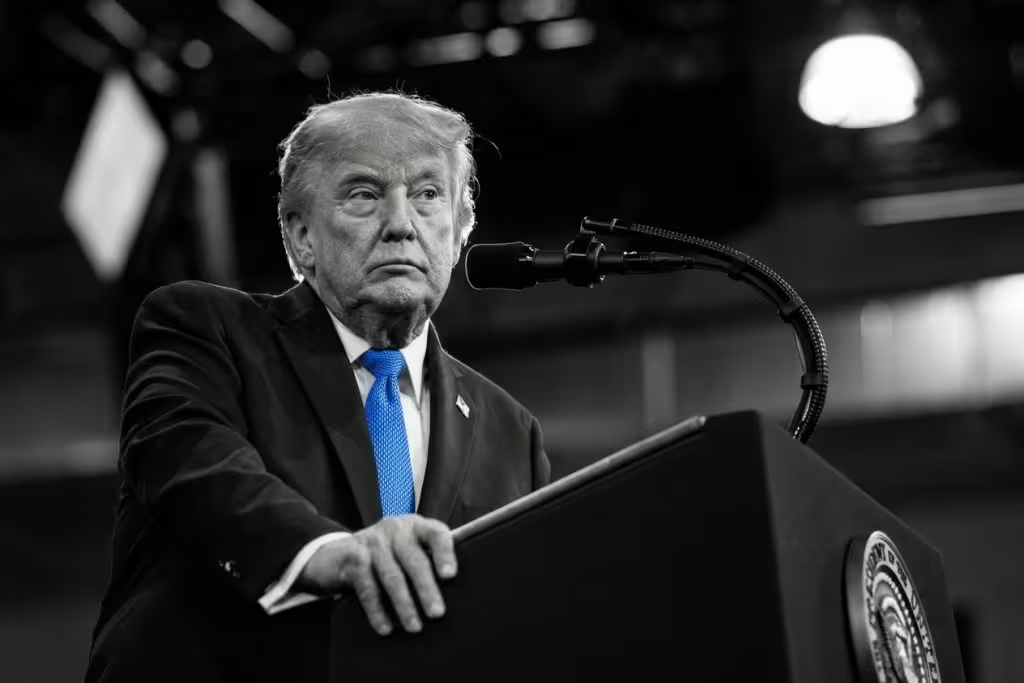
Any country whose banks, companies, airports or government bodies assist Iran will face severe economic consequences, President Donald Trump said Thursday on Truth Social, announcing what he described as the strongest economic operation ever taken against any nation. He named no measures and no countries. The White House did not immediately respond to inquiries, according to The New York Times.
Details:
- The threat: Trump listed the activities he wants halted immediately: oil smuggling, barter lines, money transfers, currency exchange houses, ship registries and shell companies. He closed the post with a direct warning to unnamed governments: “You know who you are.” He said allies are needed to isolate Iran.
- His framing: Trump said no one had given Iran a bigger chance at a deal than he had, and that Tehran failed to use it. He claimed Iran’s navy, air force and military plants have been destroyed, its currency rendered worthless and the country is near collapse, and pledged Iran would never obtain a nuclear weapon.
- Treasury signal: Treasury Secretary Scott Bessent said last week Washington would apply unprecedented measures against Iran, describing a combination of economic isolation the world has not seen and a continued closure of the Strait of Hormuz that would block movement in and out of Iranian ports.
- The China problem: Bloomberg reported the most sensitive lever is China, which takes more than 90% of Iran’s oil exports. Sanctions have hit small Chinese refineries and firms, but Washington has avoided the large Chinese banks financing the trade ahead of an expected Trump–Xi Jinping meeting.
- Exchange houses: Bloomberg pointed to currency exchange offices, particularly in the UAE, that help repatriate Iranian funds. Treasury has already sanctioned Iranian exchange houses for allegedly laundering billions, but Bloomberg assessed that closing individual offices would likely push activity to new brokers, other currencies or digital assets.
- North Korea precedent: Bloomberg compared the threat to Trump’s 2017 move against North Korea, which forced foreign banks and firms to choose between the target and access to the US financial system. Such a step would also hurt Iran’s neighbors and partners, including Turkey.
- Unused tariff threat: Trump threatened in January to impose a 25% tariff on countries trading with Iran but has not carried it out. Bloomberg also cited two further options under consideration: seizing Iranian state assets under US jurisdiction, and widening action against the shadow fleet’s enabling companies and terminals.
- Regional fallout: Several Gulf states maintain close economic ties with Tehran. The UAE announced Monday a full ban on trade and transactions with Iran, hours after a phone call between Trump and Sheikh Mohammed bin Zayed Al Nahyan, according to The New York Times.
- Iran’s response: Foreign Ministry spokesman Esmail Baghaei said Monday the new measures would have no effect on Iran’s position. The New York Times reported that analysts see no sign of Iranian surrender and warned Tehran could escalate attacks on US allies in the region.
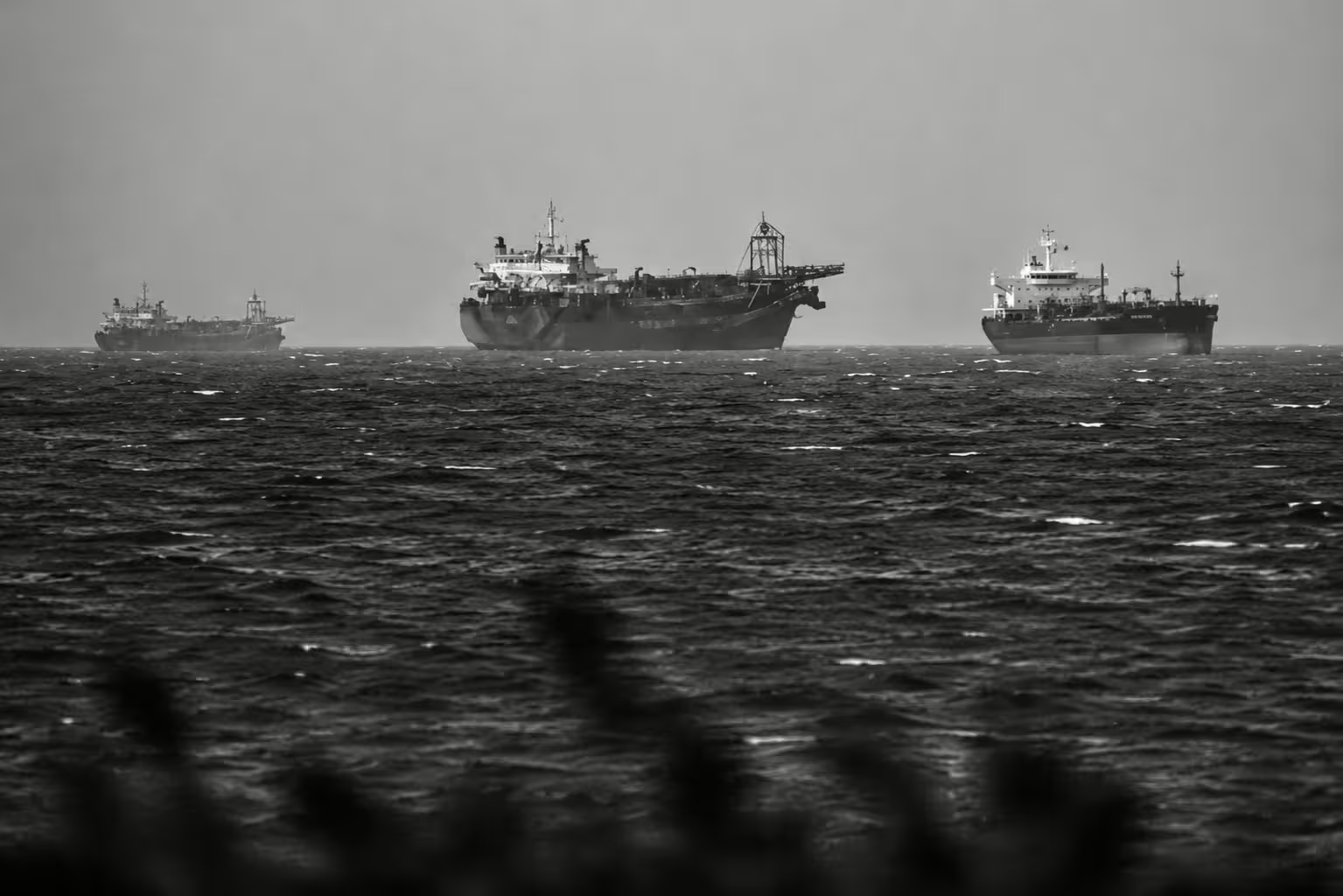
- Hormuz corridor: Axios reported the US military secretly established a shipping corridor in the Strait of Hormuz, operating for several weeks and moving 15 to 20 tankers nightly along a southern route near Oman, allowing roughly 10 million barrels — half the pre-war volume — to reach global markets.
Background:
Sanctions helped produce the 2015 nuclear deal negotiated under President Barack Obama. Trump abandoned it three years later and reimposed sanctions. Iran subsequently adapted, building sophisticated smuggling routes and new markets, particularly for oil, The New York Times reported.
Between the lines:
The New York Times noted Trump has previously backed away from threats of major escalation, and that his administration has few clear options left after already sanctioning much of Iran’s economy and leadership. The China lever is the sharpest one available, but using it collides with the scheduled Xi visit — which may explain why the post named neither a measure nor a country.
What’s next
Watch whether Treasury designates large Chinese banks financing Iranian oil purchases, whether the 25% tariff threatened in January is enacted, and whether Xi Jinping’s September visit to the United States proceeds as scheduled.