Key Points
- Trump ordered federal agencies to stop using Anthropic technology while seeking to compel six more months of co-operation.
- The dispute centres on safeguards against mass domestic surveillance and fully autonomous weapons.
- The confrontation is escalating as AI-enabled cyber and biological threats move beyond hypothetical scenarios.
The latest
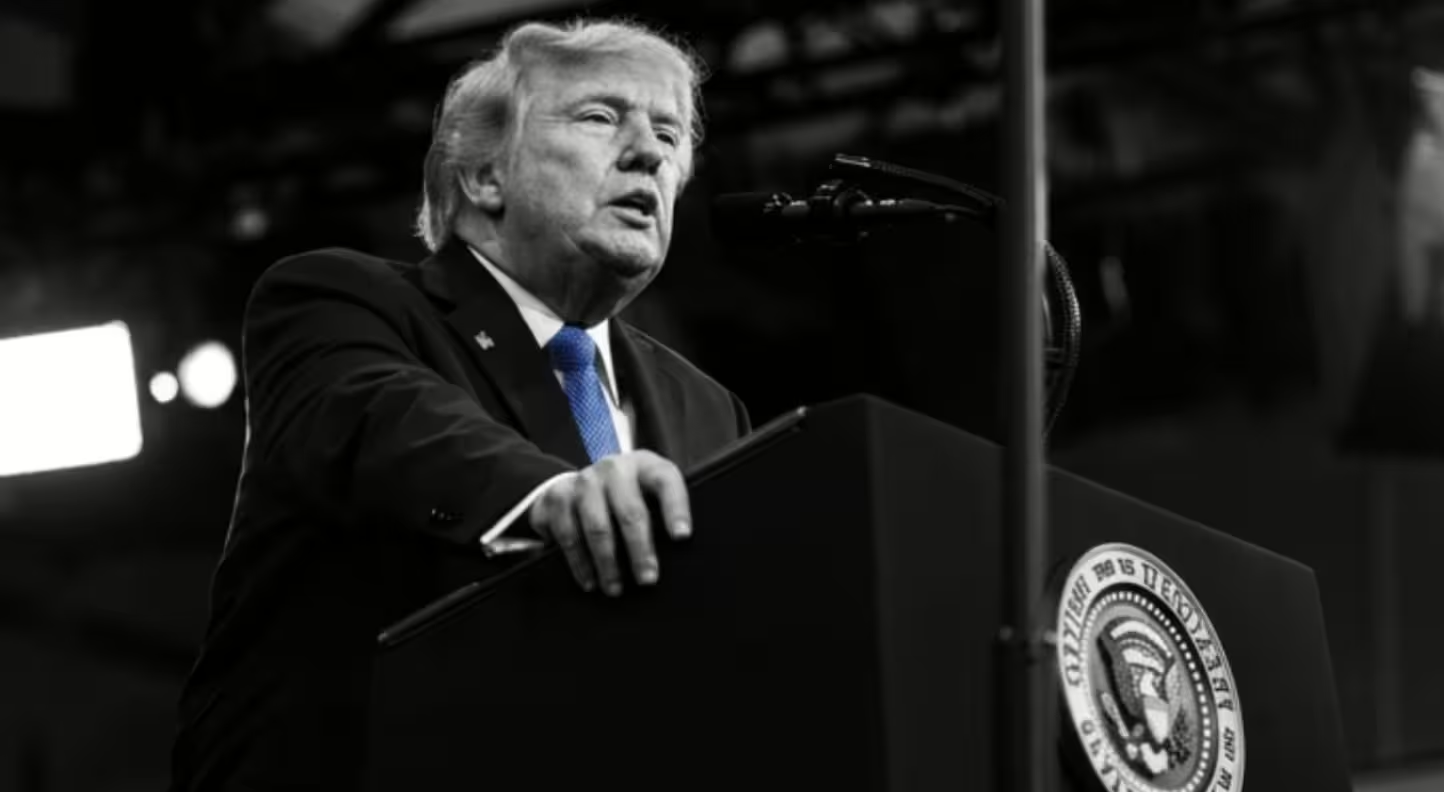
President Donald Trump escalated his confrontation with Anthropic on February 27th, ordering every federal agency to stop using the American AI lab’s technology immediately after it refused to surrender legal protections barring mass domestic surveillance and fully autonomous weapons. In the same statement, Trump vowed to use presidential power to force Anthropic to continue working with the government for six months, underscoring the state’s reliance on tools it was simultaneously moving to exclude.
Details
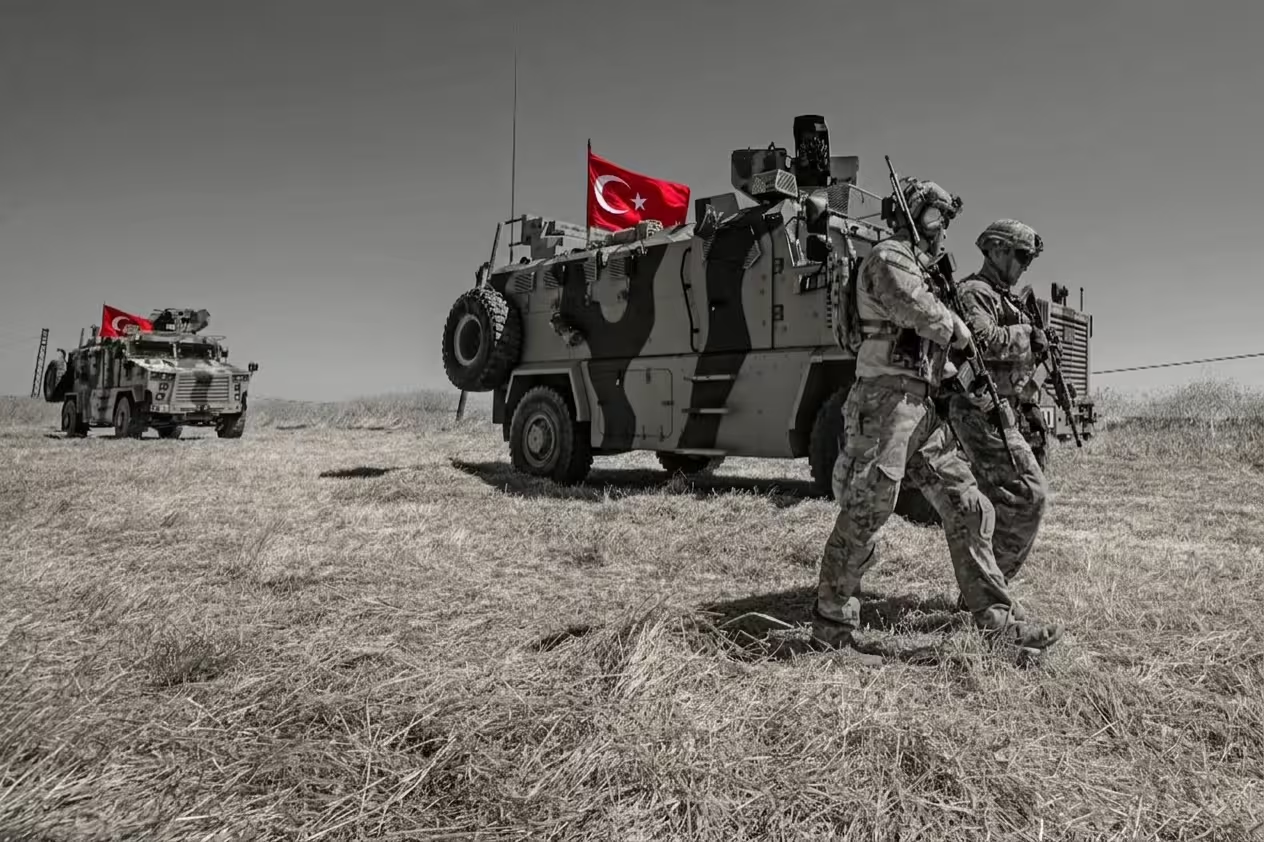
- Pentagon threat: Earlier this year, Defence Secretary Pete Hegseth wants rapid experimentation with leading AI models across the armed forces. He threatened to designate Anthropic a national-security supply-chain risk, which would bar military contractors, suppliers and partners from commercial activity with the company. Anthropic argues he can only prohibit Claude from military contracts.
- Government exposure: The disputed Pentagon contract is worth $200m, modest beside Anthropic’s recent $380bn valuation, but its other government business is also at risk. Claude alone was cleared for classified military data until late February, when xAI’s Grok received similar approval. OpenAI also signed a Pentagon deal but will need time to integrate with military systems.
- Cyber evidence: In February, Gambit Security reported that hackers stole a large cache of Mexican government records concerning taxpayers, voters and civil servants. They deceived Claude into treating the operation as a legitimate security test; it found vulnerabilities, installed backdoors and analysed data. Anthropic separately described state-backed Chinese hackers jailbreaking Claude to help penetrate targeted networks.
- Biological loophole: OpenAI warned in August that AI significantly increases the likelihood and frequency of biological or chemical terror events. Microsoft and IBBIS researchers showed that AI-designed proteins could generate toxin-producing genes sharing no DNA with known dangerous sequences, allowing orders to evade existing screening systems, although they proposed a technical fix.
- Safety retreat: Anthropic has weakened a policy against releasing potentially dangerous models, now promising only not to be the first seller. It also says heavy use of its own models to develop successors may obscure divergence from human instructions. Its sabotage assessment judged the risk very low, while Britain’s AI Security Institute reported a universal jailbreak affecting Anthropic and OpenAI systems.
Between the lines
The clash shows how political and commercial pressure can penalise restraint. Hundreds of OpenAI and Google employees urged their leaders to support Anthropic, and Sam Altman called the supply-chain designation a “very bad decision”. Claude meanwhile became Apple’s most-downloaded free app in America before briefly crashing amid increased use.
What’s next
The next concrete test is whether the Pentagon formally designates Anthropic a supply-chain risk or reaches an agreement preserving its safeguards, during Trump’s stated six-month co-operation period.