The latest:
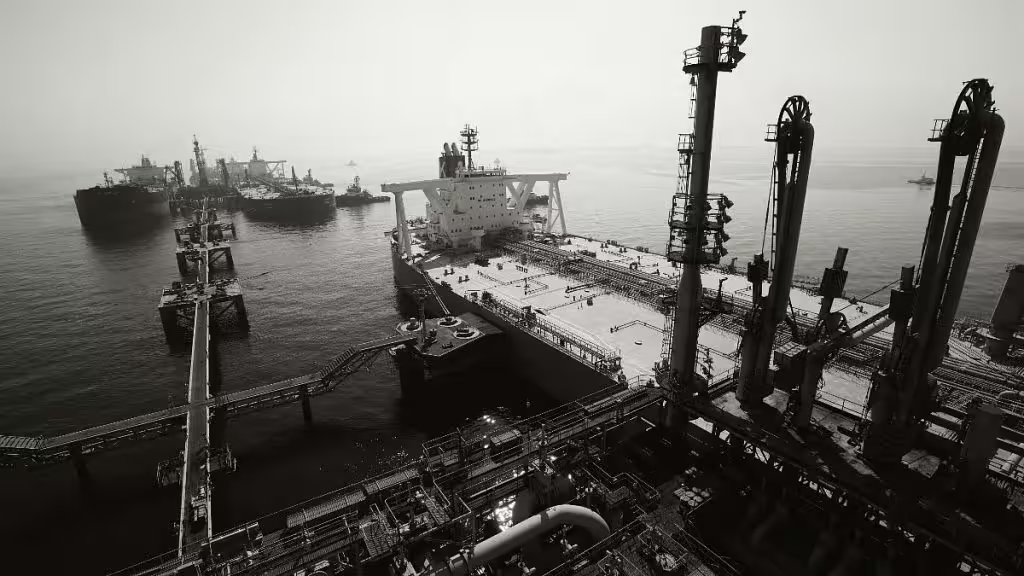
Crude is moving through the Strait of Hormuz again. Aramco resumed loadings at Ras Tanura and Ju’aymah last week, ending a three-week gap at the terminals, according to Kpler and Vortexa data cited by Reuters, with more tankers waiting to load. The world’s largest oil exporter is offering prompt heavy grades to Asian refiners while a Houthi blockade still restricts its Red Sea route.
Details:
- The cargoes: Three very large crude carriers — Malaysia Prosperity, Algeria Prosperity and Singapore Prosperity — each loaded close to 2 million barrels from the Ju’aymah and Ras Tanura terminals between 12 and 16 August, according to shipping data. The grade of crude aboard the tankers was not immediately clear.
- What comes next: Preliminary Kpler data showed six additional VLCCs may lift Saudi crude from inside the strait later this month. Traders told Reuters that Aramco could deploy Saudi-owned tankers for future Hormuz transits, alongside vessels belonging to South Korea’s Sinokor.
- The fleet positions: London Stock Exchange Group shipping data showed on Tuesday that seven VLCCs owned by Saudi Arabia’s Bahri were floating off the United Arab Emirates and Oman, while two more were heading toward Fujairah — a fleet already positioned for the next round of liftings.
- The workaround: Aramco on Monday offered Arab Medium and Arab Heavy cargoes to some Asian refiners for loading this month via ship-to-ship transfers off Fujairah. The mechanism lets buyers take Saudi barrels without sending their own vessels through the strait.
- Why the pause: The producer suspended sales from inside the strait for weeks following attacks that targeted its tanker fleet during last month’s escalation between the United States and Iran. Aramco declined to comment on the resumption; Sinokor, which owns the three tankers, did not respond to a request for comment.
- The Red Sea problem: Saudi exports remain limited by a blockade imposed by Iran-backed Houthi rebels in the Red Sea. Aramco had shifted shipments to the port of Yanbu earlier in the war, only to run into the Houthi obstruction there.
- The Egyptian alternative: Aramco offered additional cargoes from Egypt’s Mediterranean port of Sidi Kerir as a substitute. Kpler data showed roughly 670,000 barrels per day of Middle Eastern crude are due to load there for Asia this month, against zero in each of the previous three months.
- The gap: That volume is a fraction of the pre-blockade level of about 4 million barrels per day exported through Yanbu. Longer voyages and higher freight costs have discouraged purchases, making the Mediterranean route hard to sell to Asian buyers.
- The market effect: The return of Saudi barrels could ease a shortfall in heavy grades, which yield larger volumes of residual fuel. That material is used to bunker ships or processed at refineries into higher-value fuels such as gasoline and diesel.
- An analyst’s read: Emma Li, China market analyst at Vortexa, said the Sidi Kerir offer to Asia is likely not working because “her Asian customers, at least the Chinese ones, are unhappy with the long voyages and high freight costs.”
Background:
Saudi Arabia spent weeks searching for routes that bypass the Strait of Hormuz after attacks on its tanker fleet, testing the Red Sea via Yanbu and then Egypt’s Mediterranean coast. Both alternatives ran into either the Houthi blockade or freight economics before loadings resumed inside the strait.
Between the lines:
The pattern points to a producer with no cost-free exit. Yanbu volumes collapsed from about 4 million barrels per day to a Houthi blockade, and Sidi Kerir’s 670,000 barrels per day is drawing resistance from Chinese buyers over freight, per Vortexa. Sending Bahri-owned vessels through Hormuz shifts the risk onto Saudi ships rather than removing it.
What’s next
Watch whether the six additional VLCCs flagged by Kpler load inside the strait this month, whether Bahri tankers begin transiting Hormuz, and whether Sidi Kerir volumes for Asia hold above zero in September.