Key Points
- The Pentagon is assessing a possible Gulf pullback after Iranian strikes battered major American bases.
- The work is preliminary “prudent planning,” not a formal posture review ordered by Defense Secretary Pete Hegseth.
- Any reduction could reshape Gulf security while redirecting U.S. resources toward homeland defense or deterring China.
The latest
The Pentagon is evaluating whether to reduce the U.S. military presence in the Persian Gulf after the Iran war, according to eight officials and other people familiar with the matter. The analysis follows months of Iranian strikes that damaged major American bases and could determine whether those facilities are rebuilt as before or whether troops and equipment remain dispersed farther west. No decision has been made, and the Defense Department says the work is not yet a formal review.
Details
- Existing footprint: U.S. Central Command normally stations about 40,000 personnel at nearly 20 sites across a 1,500-mile arc from Jordan to Oman. The Gulf contains its largest and most permanent regional bases, including the U.S. Fifth Fleet headquarters in Bahrain and Army and Air Force assets in Kuwait.
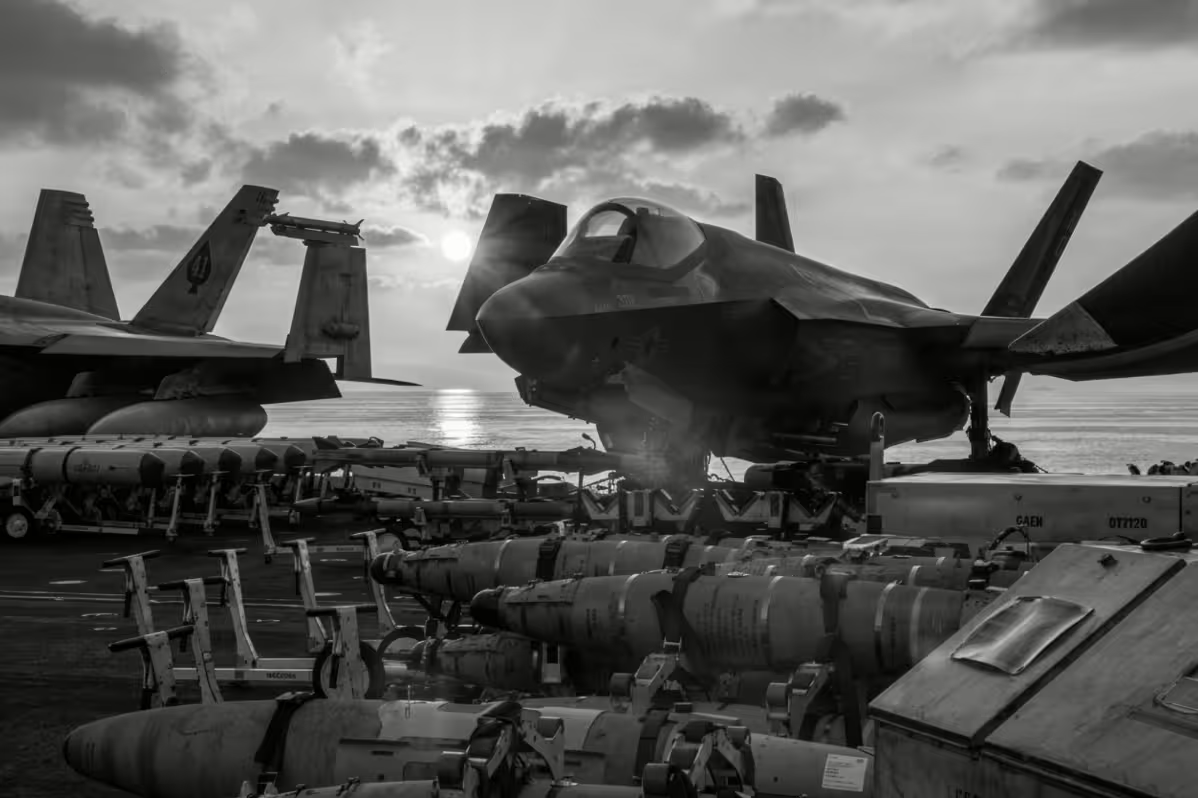
- Wartime surge: Since early 2026, the military has sent warships, fighters, air-defense systems and other scarce equipment to the region to protect American forces and conduct more than 13,000 strikes against Iran. The deployments expanded a presence that had already underpinned Gulf defense for decades.
- Damage and losses: Six U.S. service members were killed in a March strike on Kuwait’s Port Shuaiba, while more than 200 American facilities were damaged or destroyed during the conflict, The Washington Post previously reported. The military also expended more than 1,000 advanced Patriot and THAAD interceptors, straining Pentagon inventories.
- Planning process: The Pentagon’s policy office is leading the analysis, with the Joint Staff and Central Command also examining the issue. A senior Pentagon official said Hegseth has not ordered a formal review, describing the effort as planning that could inform eventual decisions on rebuilding damaged bases.
- Possible relocation: Central Command chief Adm. Bradley Cooper supports considering troop movements westward from the Gulf, according to a U.S. official; the command declined to comment. Former ambassador Michael Ratney identified Jordan, Israel and Saudi Arabia’s Red Sea coast as possible locations, while cautioning that distance would not eliminate vulnerability.
- Earlier dispersal: Central Command evacuated many bases before the war began in February, judging them too exposed to Iranian missiles and drones for normal staffing. A person familiar with those changes said some shifts away from major Gulf facilities could continue after the conflict, without identifying locations that could endanger personnel.
Between the lines
The assessment could intensify an administration debate between supporters of continuing U.S. security commitments and officials seeking to prioritize homeland defense or deterrence of China. Gulf partners could require months or years to replace reduced American protection through domestic capabilities or relationships with other powers.
What’s next
The next concrete indicator will be whether Hegseth orders a formal regional posture review. After the war, the administration must decide whether to rebuild damaged Gulf bases or retain the wartime dispersal of troops and equipment; no deadline was reported.