Key Points
- Attacks hit Masrour Barzani's private office and the Parastin intelligence chief's residence, President Nechirvan Barzani said.
- They came less than 24 hours after Axios detailed Nechirvan's secret backchannel to the IRGC.
- A former Kurdish minister told +ontime the timing may signal Tehran's anger over the disclosure.
The latest:
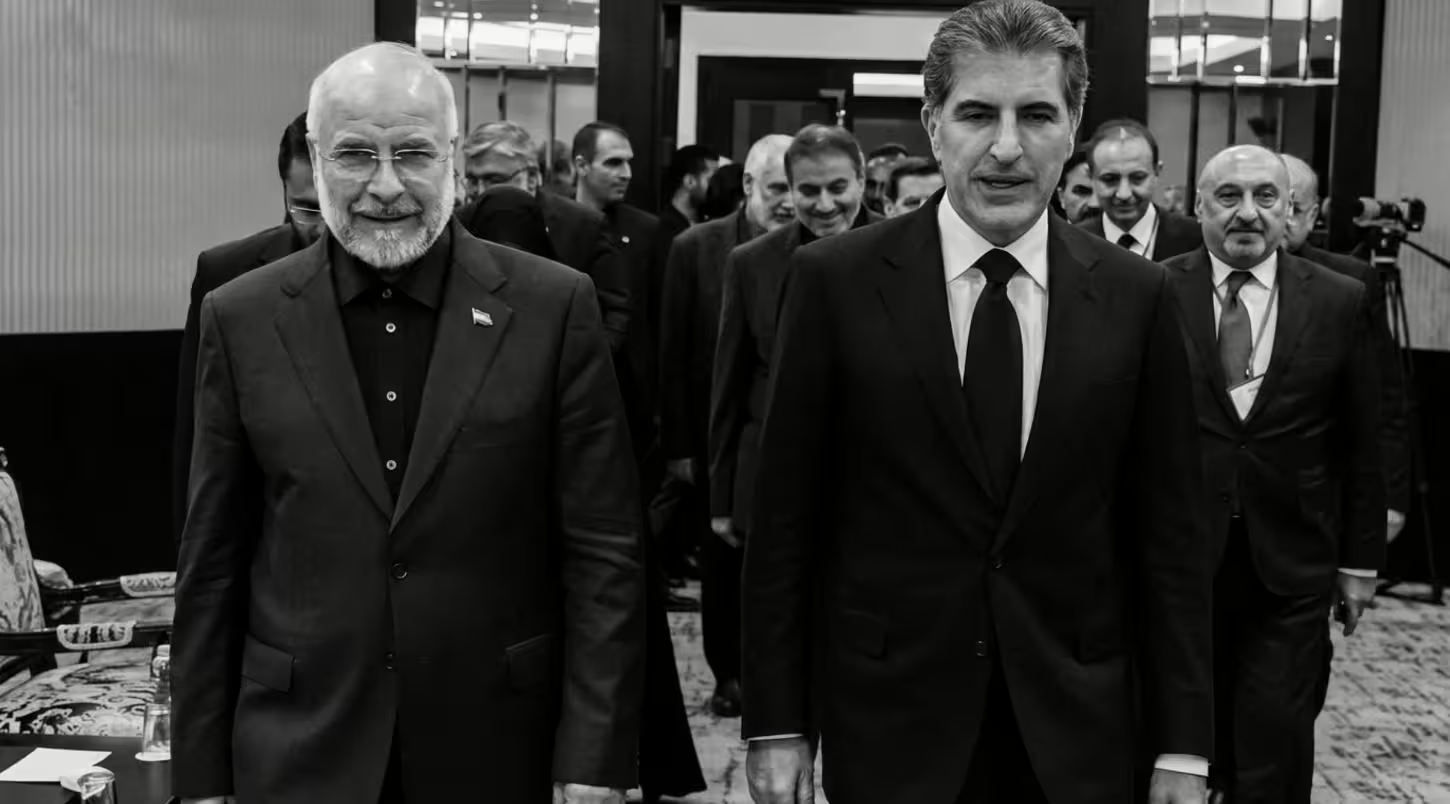
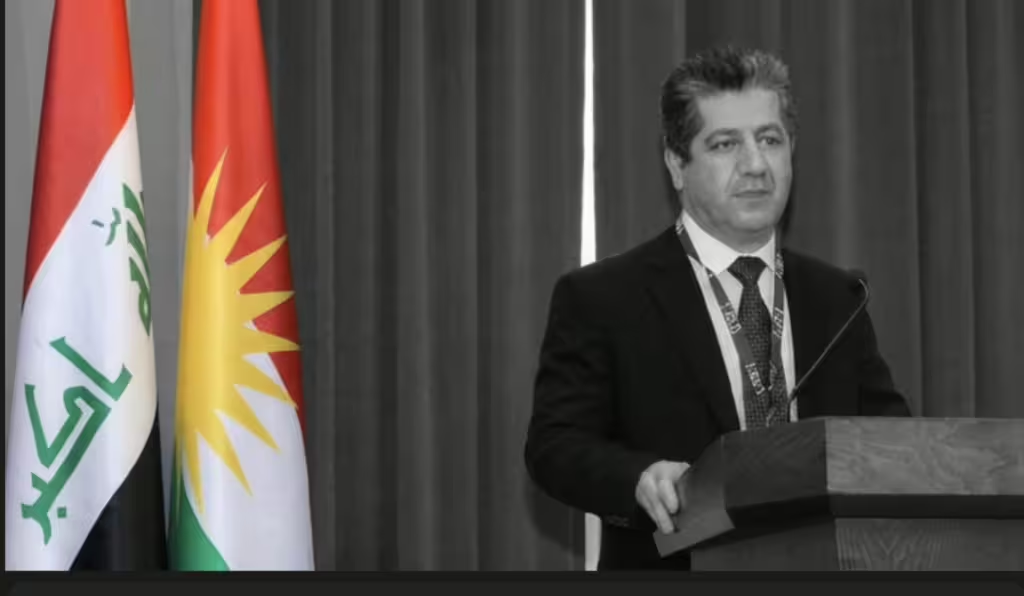
Attacks early Monday struck the private office of Kurdistan Regional Government Prime Minister Masrour Barzani and the residence of the head of the Parastin Agency, Kurdistan Region President Nechirvan Barzani said. He called the targeting completely unacceptable and a dangerous escalation. The incident came less than a day after Axios reported his role as a secret intermediary between the Trump administration and Iran’s Revolutionary Guard.
Details:
- The targets: Nechirvan Barzani said the attacks hit Masrour Barzani’s private office and the residence of the Parastin Agency chief, the KDP’s main intelligence body. Notably, they did not target Nechirvan’s own office, the figure named in the Axios report a day earlier.
- Baghdad’s role: Rather than publicly accusing Iran, Nechirvan directed his demand at the federal government, calling on it to exercise its constitutional responsibilities to protect Iraq’s security and stability and prevent similar attacks. He described defending Iraqi sovereignty, including the Kurdistan Region, as a shared national responsibility.
- No attribution: The official Kurdish statement does not name the perpetrators, identify where the attacks originated, or link them to the Axios report. It does not attribute the incident to Iran or to any Iraqi armed faction.
- The Axios disclosure: According to Axios reporting by Barak Ravid, then-Director of National Intelligence Tulsi Gabbard contacted Nechirvan Barzani around May 10 and asked him to open direct contact with IRGC commander Gen. Ahmad Vahidi.
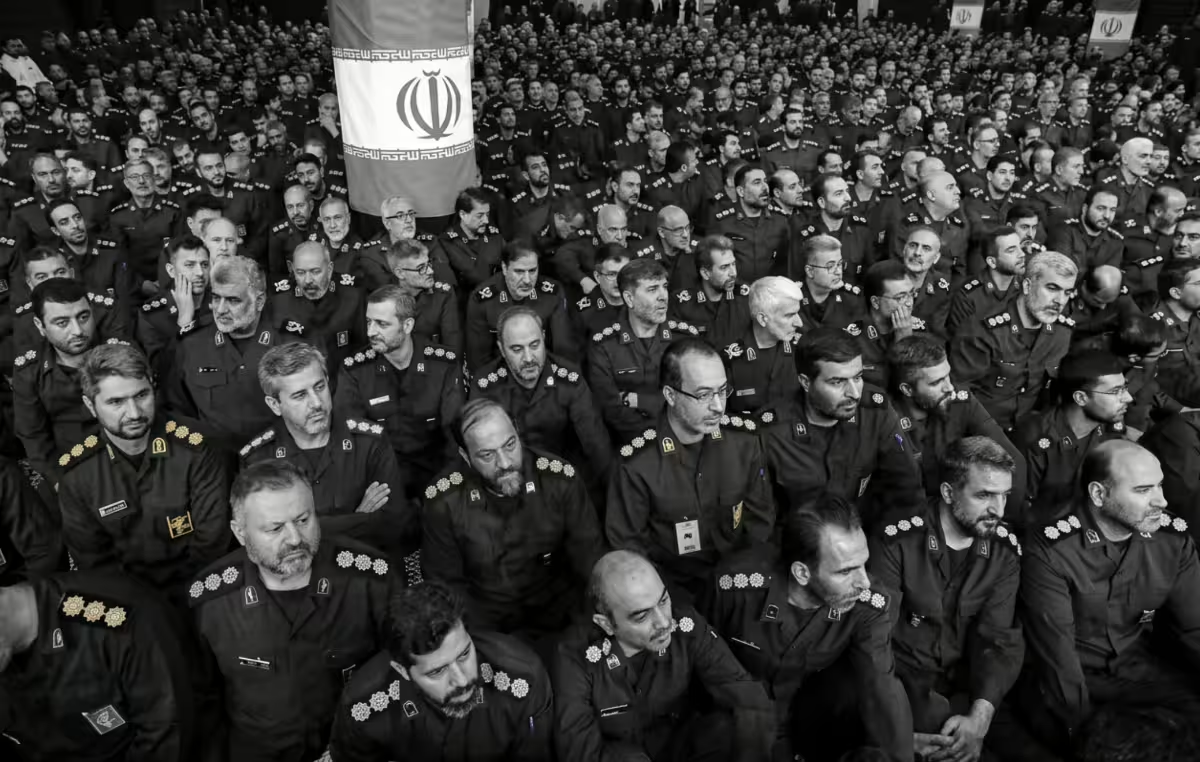
- The encrypted call: Barzani spoke with Vahidi on May 14 through an encrypted phone brought to his Erbil office by an IRGC official, Axios reported. Vahidi told him he backed Iran’s negotiators and that the Guard preferred resolving the nuclear crisis through negotiations.
- Why Washington turned to him: Axios reported the Trump administration approached Barzani after questioning whether Parliament Speaker Mohammad Bagher Ghalibaf and Foreign Minister Abbas Araghchi had enough authority to conclude an agreement without IRGC approval.
- The Erbil talks that collapsed: Washington later explored hosting secret U.S.-Iran talks in Erbil, according to Axios, but they never materialized. Iranian officials cited concern over Israeli intelligence activity in Iraqi Kurdistan and feared their negotiators could be assassinated in Erbil or en route.
- The former minister’s reading: A former Kurdish minister told +ontime the timing can be read as three possible messages from Tehran: keep secret understandings secret, remind Iraqi factions that Erbil holds no immunity, and discredit the Axios account itself.
- The IRGC image argument: In that assessment, the Guard may privately support negotiations while resisting any public portrayal of itself as the institution advocating compromise. “The Guard wants to remain the hard-line actor in the shadows,” the former minister said.
Background:
Axios placed Vahidi personally, and the IRGC institutionally, behind Iran’s negotiating track. The former minister’s reading is political assessment: neither the Kurdish statement nor other information available to +ontime establishes that Iran ordered Monday’s attacks over the disclosure.
Between the lines:
The Axios report tied together three files Tehran treats as highly consequential: direct IRGC contact with the Trump administration, a Kurdish leader as intermediary, and Iranian fears of Israeli intelligence inside Iraqi Kurdistan. That does not prove causation. But the fact the attacks spared Nechirvan’s office and hit Masrour’s and the Parastin chief’s weakens any account of narrow personal retaliation, while leaving open a broader signal to the KDP’s security establishment.
What’s next
Attribution is the open question. Any investigation naming who launched or ordered the attacks would show whether the timing was coincidental, part of the existing pressure campaign on Kurdistan, or a message tied to the backchannel.
Sources: