Key Points
- Intercepted communications indicate Iranian hard-liners are preparing forces to widen the war and increase pressure on Washington.
- The reported preparations include military restructuring, faster weapons production and coordination with allied militias across the region.
- The shift threatens shipping and energy infrastructure while reducing prospects for a durable agreement over the Strait of Hormuz.
The latest
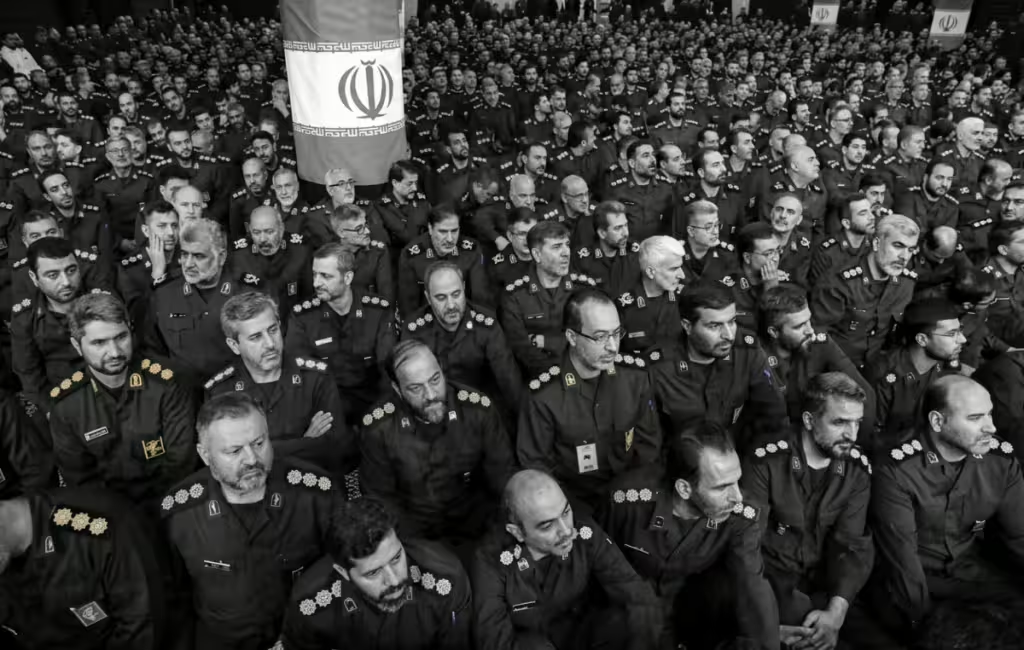
Iranian hard-line leaders used the two months after a June 17 memorandum with Washington to prepare for a broader conflict rather than wind it down, according to Iranian and Arab officials cited by The Wall Street Journal. Arab intelligence reportedly intercepted communications between Iran and allied militias in Yemen and Iraq indicating plans to widen attacks and raise costs for the United States and regional partners. The effort included expanding Revolutionary Guard authority over the army, accelerating missile and drone production, strengthening counterintelligence and positioning weapons near the Red Sea.
Details
- June terms: The memorandum signed by President Donald Trump at Versailles offered oil-sanctions waivers, access to frozen funds and the prospect of a $300 billion reconstruction fund. Iran was expected to reopen Hormuz and negotiate in good faith over its nuclear program.
- Regional coordination: Officials familiar with Arab intelligence findings said the Guard sent advisers to Iraq, Yemen and Lebanon. Intercepts allegedly showed planning with Houthis and Iraqi militias, alongside deployments of missiles, naval weapons and drone launchers overlooking the Red Sea.
- Escalating attacks: Houthi strikes on Moktah, Yemen, killed at least 11 people and damaged its port on August 9. The group also declared Bab al-Mandeb closed to Saudi Arabia, while Riyadh blamed Iran-backed Iraqi militias for drone attacks on oil facilities.
- Security reshuffle: Mojtaba Khamenei installed veterans in key roles, according to the report. Mohsen Rezaei became secretary of the Supreme National Security Council; Hossein Taeb returned to lead the Basij; Ali Abdollahi received unified military control; and Ahmad Vahidi was formally appointed Guard commander.
- Remaining capacity: Israeli officials said Iran was restoring infrastructure and missile-base access faster than expected despite damage from US and Israeli strikes. Arab officials said the Guard remained neither defeated nor deterred, while its position around Hormuz had strengthened.
- Escalation options: Iranian officials and public statements described contingency plans including pre-emptive strikes, sabotage of Gulf internet cables, unrest in Kuwait and Bahrain, and possible ground operations in Kuwait. Kuwait said in May it detained six Guard members who landed on an island in a rented fishing boat.
- Blocked negotiations: Mediators said Iranian diplomats and Oman had agreed on routes enabling Hormuz to reopen gradually, but the Guard blocked progress and resumed attacks on ships. US officials said Washington was waiting to see whether sanctions and a naval blockade changed Tehran’s position.
What’s next
The next concrete test is whether the Supreme National Security Council approves the Omani shipping mechanism. Further vessel attacks, or their suspension, will indicate whether the Guard continues blocking a phased reopening of Hormuz.