Key Points
- A senior Kurdish official tells +ontime the IRGC initiated the secret channel, not Trump's administration.
- The account inverts Axios reporting that Washington recruited Nechirvan Barzani to reach Ahmad Vahidi.
- The source says the leak strengthens Erbil's position between Washington and Tehran, and pressures Baghdad.
The latest:
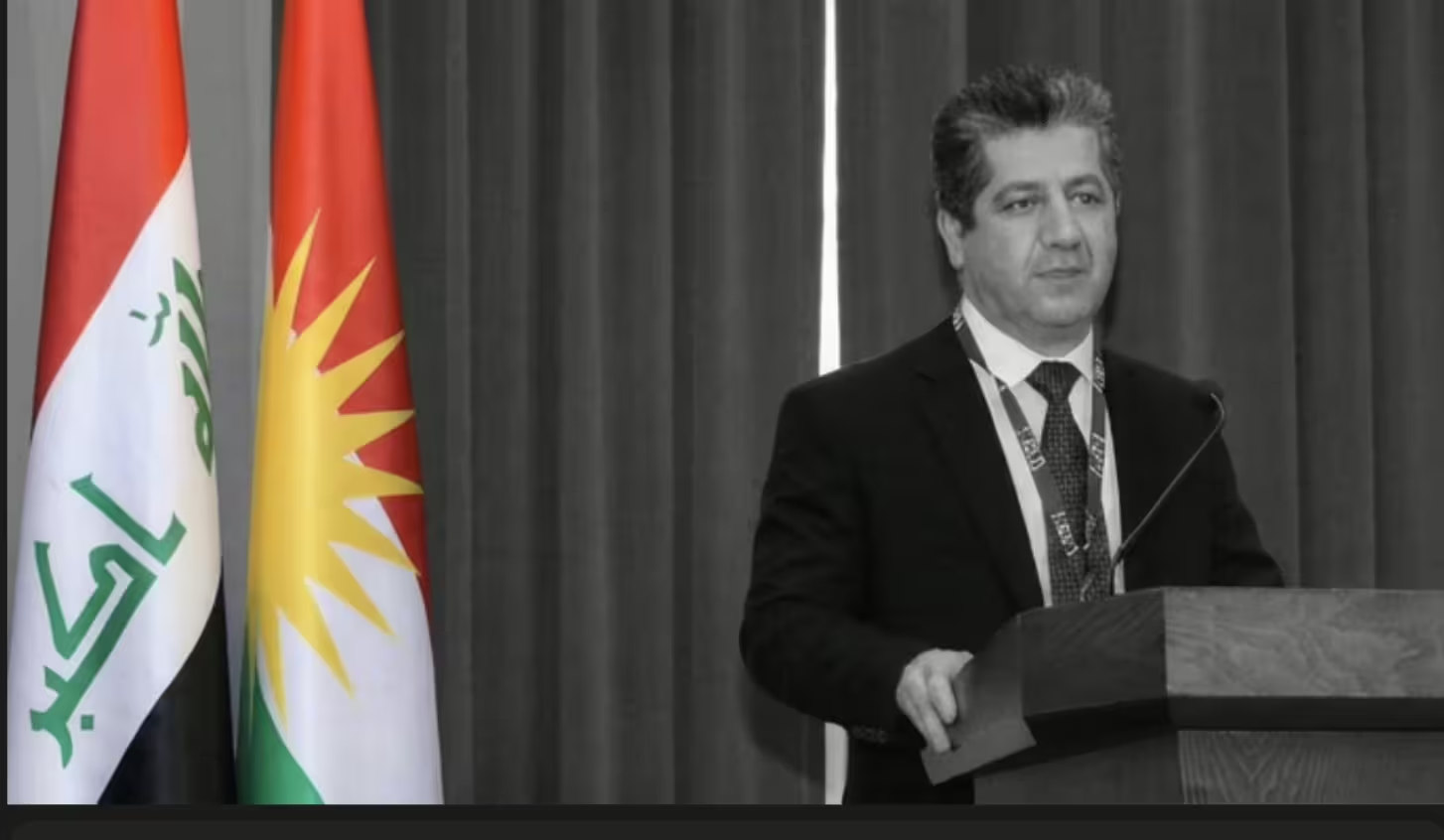
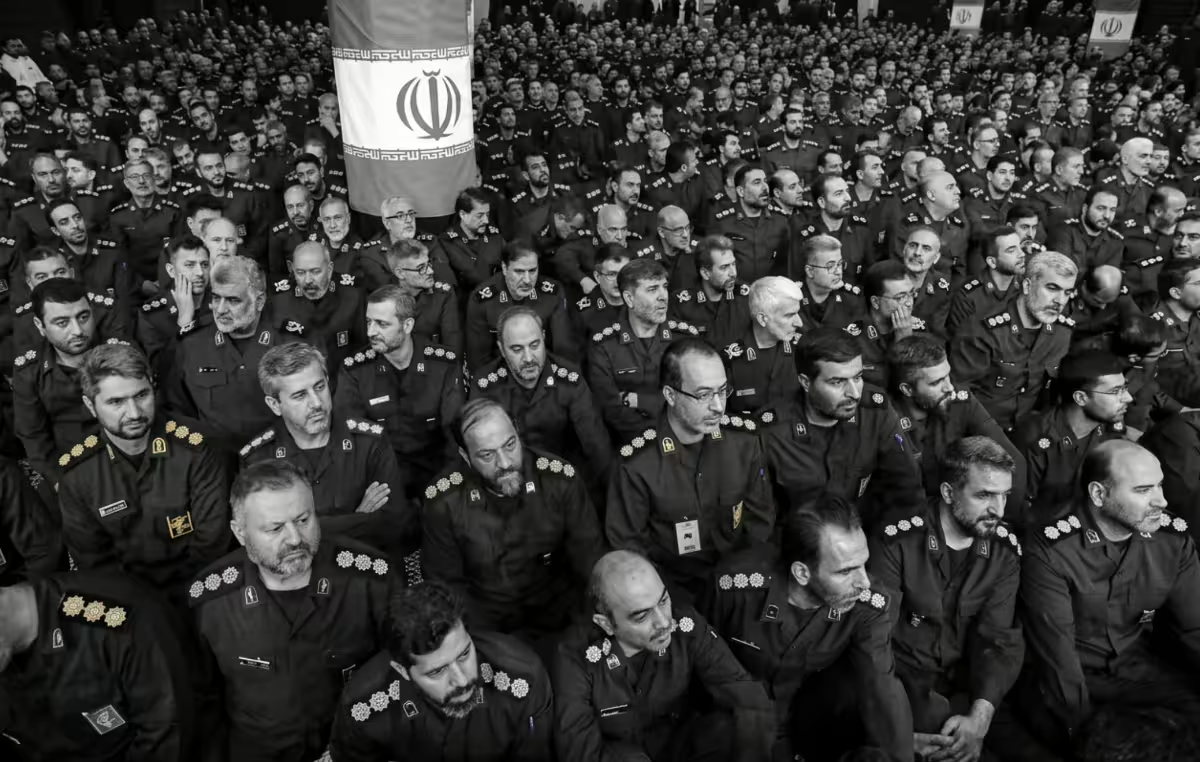
The secret channel between Washington and Iran’s Revolutionary Guard was opened at the initiative of influential figures inside the Guard, not by President Donald Trump’s administration, a senior Kurdish official told +ontime. The same official said the story reached Axios from the Kurdish side, but that the published version got the sequence of events wrong.
Details:
- The Axios account: Barak Ravid reported that Washington turned to Nechirvan Barzani after doubting whether Iran’s negotiators truly represented the Revolutionary Guard’s position, and that National Intelligence Director Tulsi Gabbard called him around 10 May with the approval of Trump and Vice President JD Vance.
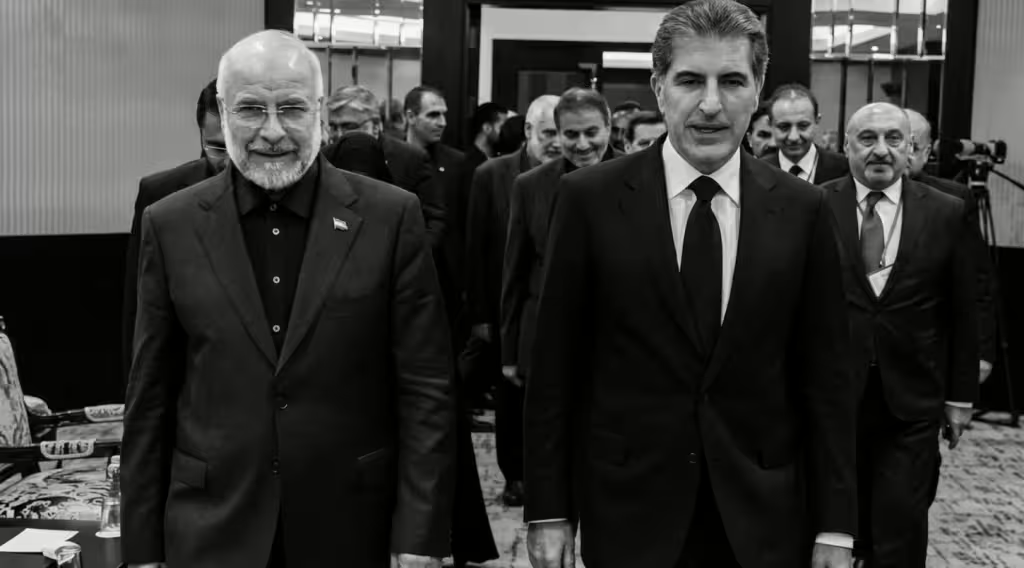
- The Kurdish account: The +ontime source said powerful factions within the Guard asked Barzani to carry a message to Washington while he was in Tehran in early July for Ali Khamenei’s funeral — not on 10 May — meaning the choice of intermediary originated on the Iranian side.
- The message: According to the source, the Iranians told Barzani the Guard, represented by its commander Ahmad Vahidi, backed the negotiations and wanted a mutually satisfactory outcome, an attempt to reassure Washington the military establishment was not working to sink the track.
- Erbil’s move: The source said Barzani’s office requested an urgent call with Gabbard’s office immediately on his return, to relay an important message from the Guard. He denied that Barzani spoke personally with Trump about the matter.
- The encrypted call: Axios reported that a Guard official arrived at Barzani’s Erbil office on 14 May carrying an encrypted phone, and that Barzani held a secure call with Vahidi, who confirmed his support for the talks, according to the outlet’s sources.
- The meeting that failed: Axios said Washington later proposed that Erbil host secret US-Iranian negotiations, but the session never convened because of Iranian concerns over Israeli intelligence activity in the region and the risk of the delegation being targeted.
- Why him: Axios described Barzani as trusted by officials in both Washington and Tehran, a Persian speaker with long personal ties to Iranian figures including Guard commanders — making him a practical option for both sides.
- Baghdad calculations: The source said Erbil wanted to send a signal to Baghdad at a moment when Prime Minister Ali Falih al-Zaidi is being pushed toward confining weapons to the state. Al-Zaidi pledged after meeting Trump to allow no arms outside state institutions after 30 September.
- Engineering the leak: The official told +ontime that publishing through a US outlet with wide contacts inside the administration lets the leak read as if it came from Washington rather than Erbil. Axios said its reporting rested on three informed sources, including a White House official.
Background:
The Kurdistan Region Presidency confirmed Barzani attended Khamenei’s funeral in Tehran and met President Masoud Pezeshkian and parliament speaker Mohammad Baqer Qalibaf. Axios said Washington wanted to know whether the Guard backed what Qalibaf and Abbas Araghchi had negotiated.
Between the lines:
Both accounts agree on the intermediary and differ on the timing and on who moved first. If the Kurdish source is right, Washington’s problem was trust in who holds decision-making power in Tehran, and the answer came from the Guard itself. The source also ties the leak to internal Kurdish balances ahead of expected talks between the two main parties, assessing that showcasing the region president’s access to both the White House and the Guard gives him weight beyond his formal powers.
What’s next
The test is any fresh attempt to revive US-Iranian talks. Axios reported Barzani recently offered the White House his help again; a new channel would show whether Erbil now rivals Pakistan and Qatar as a mediator.