The latest
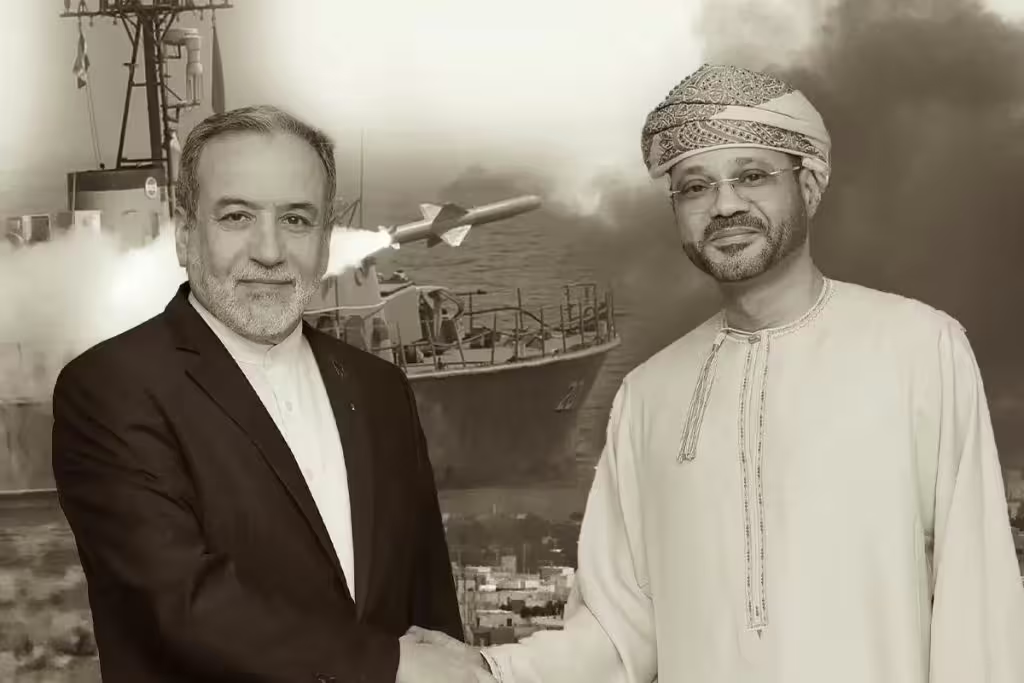
Iran and Oman are nearing an agreement on a new shipping corridor through the Strait of Hormuz, according to Iranian officials, but the issue of transit fees remains under negotiation. While reports say different fee proposals are being discussed, neither Muscat nor Tehran has announced a final agreement on that point.
Details
- The agreement: Iranian Foreign Ministry spokesman Esmaeil Baghaei said Tehran and Muscat have finalized the coordinates of the new corridor and are preparing a joint statement to formalize the arrangement.
- The fee dispute: According to Israel Hayom, Iran is seeking fees of 5% to 7% of a vessel’s cargo value, while Oman has proposed about 3%. The United States opposes any transit charges.
- Maritime oversight: Reuters, citing a senior Iranian official, reported that the arrangement could give Iran a role in monitoring shipping linked to Omani territorial waters, a key issue that remains under negotiation.
- Temporary measure: Iranian Deputy Foreign Minister Kazem Gharibabadi said the new route would operate for two to four months, replacing the temporary northern and southern corridors currently in use.
- U.S. position: U.S. Secretary of State Marco Rubio warned that recognizing any country’s control over an international waterway would create “a very dangerous precedent” that could be repeated elsewhere.
Background
Under the United Nations Convention on the Law of the Sea (UNCLOS), ships and aircraft enjoy the right of transit passage through international straits without prior authorization or transit fees for using the strait itself, except for charges related to specific services provided. The Strait of Hormuz carries roughly one-fifth of the world’s oil trade, making any change to its navigation regime a matter of global concern.
Between the lines
If reports about transit fees prove accurate, the debate extends beyond reopening the strait to the legal framework governing navigation during the temporary arrangement. So far, there is no public indication that Oman has agreed to impose such fees, and available information suggests the issue remains under negotiation.
What to watch
Attention is now focused on the anticipated joint Iranian-Omani statement, which is expected to clarify whether the agreement includes a fee mechanism, how shipping oversight would work, and when the temporary corridor would become operational.
Statements by Iranian Deputy Foreign Minister Kazem Gharibabadi, United Nations Convention on the Law of the Sea (UNCLOS)