The latest:
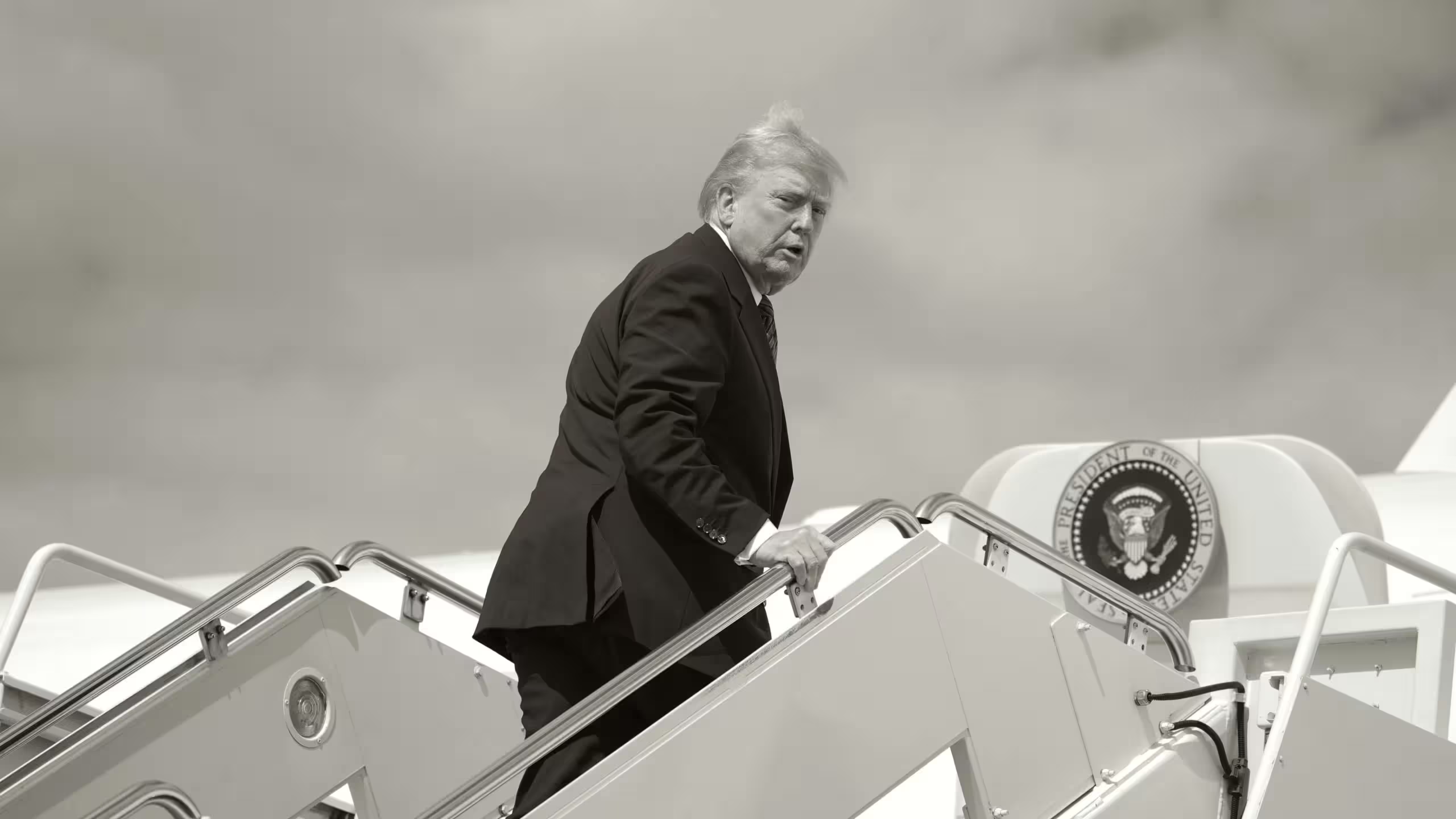
Bombs were already being loaded onto American warplanes and target lists approved when President Trump reversed course Sunday and called off strikes on Houthi positions in Yemen, at least for now, administration officials told The New York Times. The decision followed two weeks of hesitation over Saudi appeals for U.S. firepower against the Iran-backed group.
Details:
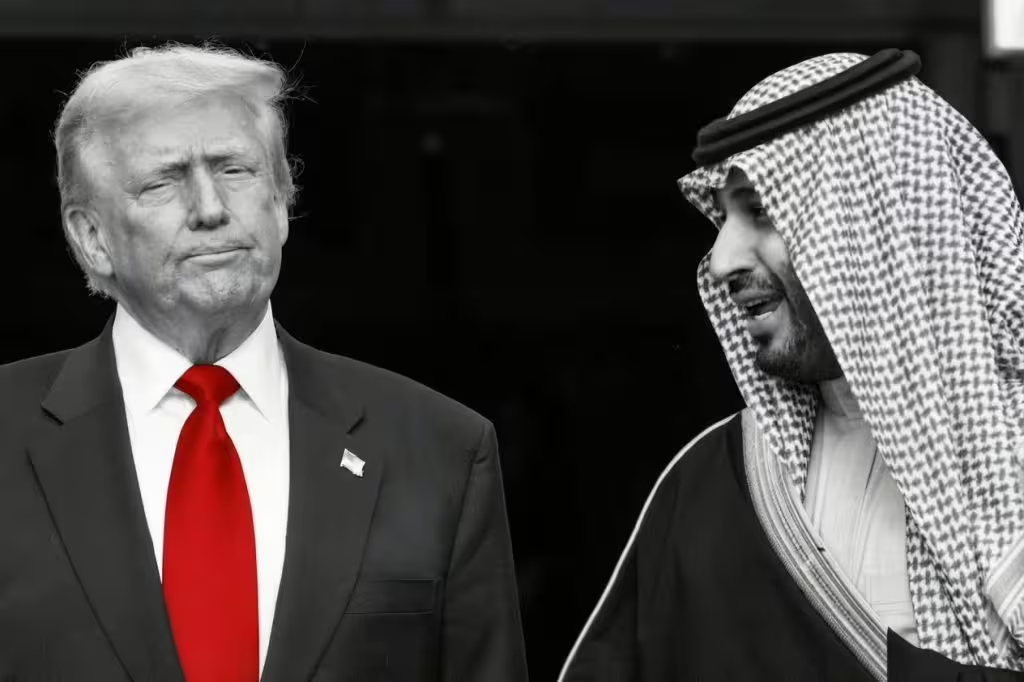
- The reversal: Trump told advisers Wednesday he opposed military strikes, changed his mind Thursday after speaking with Crown Prince Mohammed bin Salman, and directed the Pentagon to prepare air raids, according to administration officials. By midday Sunday the strikes were shelved.
- How close it came: Commanders had signed off on target lists and crews were loading bombs onto warplanes assigned to the mission when the order was pulled, according to two people briefed on the operation. The wave of attacks was about to begin.
- The Saudi appeal: Mohammed bin Salman, the kingdom’s de facto ruler and Washington’s principal partner in the war against Iran, called Trump on Thursday to press again for intervention against a group making rapid battlefield gains, administration officials said.
- Internal opposition: Most members of Trump’s inner circle were deeply skeptical or flatly opposed to joining the Saudi fight, a senior administration official said, citing the strain already on the U.S. military from the war with Iran. The White House press office declined to discuss the deliberations on the record.
- Saudi leverage: Trump administration officials argue Riyadh withheld help during the war with Iran. In May, Saudi Arabia effectively killed a U.S. plan to escort commercial oil tankers through the Strait of Hormuz by refusing American use of its airspace and air bases.
- Trump’s own account: In a Sunday phone call with Fox News correspondent Trey Yingst, Trump said he was in a decision-making stage on next steps in the wider conflict with Iran. He said Washington remains in continuous contact with the Houthis, who have so far agreed not to fight the United States.
- Military skepticism: Current and former U.S. diplomats and commanders who served in the Middle East doubt a limited bombing campaign would force the Houthis to negotiate. The group withstood roughly eight weeks of American bombing last year without abandoning its hardest demands.
- The ground problem: Officials said U.S. entry could coincide with a new ground offensive planned by Yemeni government forces, but those forces have proven ineffective and their ranks dissolved at the first major clash with the Houthis in recent weeks.
- An analyst’s warning: Gregory Johnsen of the Arab Gulf States Institute in Washington described the anti-Houthi coalition as a “Frankenstein’s monster” assembled from Yemen’s leftover factions, whose goals diverge so sharply that they fight each other more than the Houthis.
Background:
The Houthis reignited their war with Saudi Arabia this summer, exploiting regional instability. Riyadh has pressed Washington for weeks to join the fight, while Trump struggles to end the war with Iran he began, whose economic shocks are spreading worldwide.
Between the lines:
Trump’s oscillation reflects a bind he himself described: the Houthis have avoided attacking American ships while striking the kingdom. Entering the Yemen fight would open a second front against Iran’s network at a moment his own advisers say the U.S. military is already stretched — and in defense of a partner that denied Washington airspace and bases in May.
What’s next
Whether Trump revives the shelved target lists, whether Yemeni government forces launch their planned ground offensive, and whether the Houthis maintain their informal understanding not to attack U.S. vessels.