
The latest
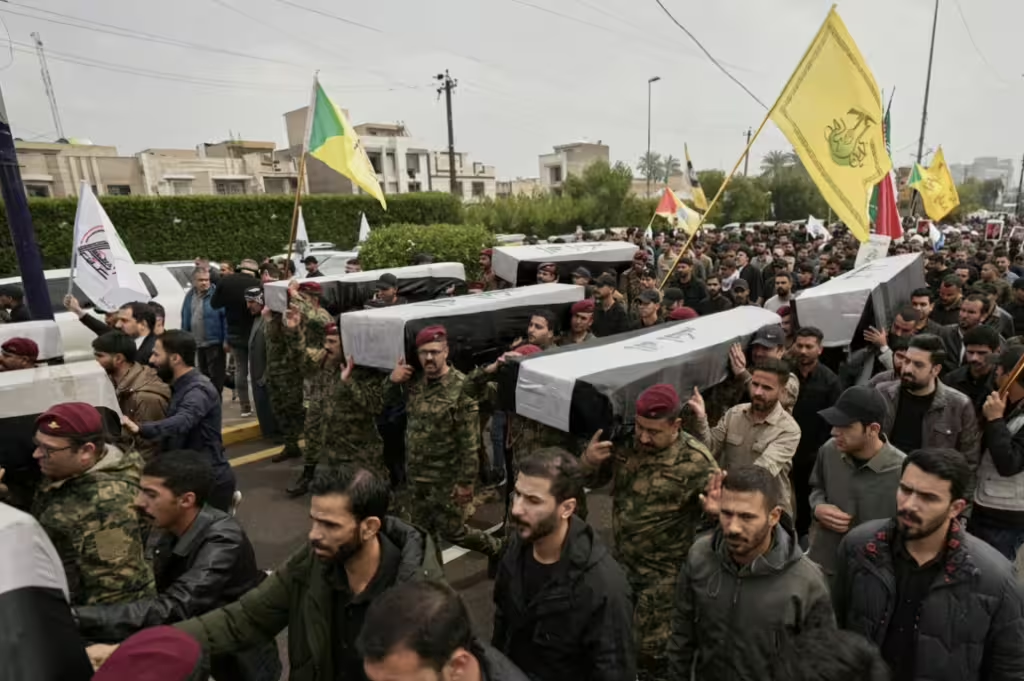
The power of Iraq’s militias rests not only on their weapons but on their ambiguous position between the state and the forces operating beyond it. Groups originally formed to resist US troops and later fight Islamic State have evolved into a military and political network with government positions, parliamentary influence and access to state resources. They formally recognize national authority while their strongest factions retain separate command structures, independent decision-making and foreign relationships.
This arrangement has made Iraq especially vulnerable in the confrontation between the United States and Iran. US Central Command says the latest drone attacks were conducted under the direction of Iran’s Islamic Revolutionary Guard Corps, but none of the Iraqi factions claimed responsibility. Tehran denies direct involvement, while the militias present their actions as a defense of Iraqi sovereignty and support for Iran in the wider war.
The Iraqi government is caught between conflicting positions. It considers attacks on the PMF an assault on an official security institution and a violation of national sovereignty. Yet it also rejects the use of Iraqi territory to attack neighboring countries or settle regional disputes. Parallel armed power therefore creates a sovereignty problem in both directions: It gives foreign states a justification to strike Iraq while limiting Baghdad’s ability to prevent attacks originating from its territory.
Details
- The origins: Several Shiite militias formed after the 2003 US-led invasion, with some receiving Iranian training and weapons to attack American forces.
- The PMF’s creation: Many factions joined the Popular Mobilization Forces in 2014 to confront Islamic State after the extremist group seized large areas of Iraq.
- A dual relationship: Some factions cooperated with the US-led coalition against Islamic State while groups within the same umbrella received support from Iran.
- Incomplete integration: The PMF formally came under Iraq’s security forces, but its integration remains unfinished and influential factions still operate with considerable autonomy.
- The Badr Organization: One of the strongest Iran-aligned groups, Badr helped fight Islamic State before its leaders expanded their influence across government and politics.
- Kataib Hezbollah: The group is closely linked to Iran’s Quds Force, was designated a foreign terrorist organization by Washington in 2009 and operates partly outside state control.
- The recent attacks: Washington said the factions launched more than 30 drones against US targets and Saudi facilities in one week, although no group acknowledged responsibility.
- Saudi Arabia’s position: Riyadh said it was not seeking escalation but would respond to any attack.
- Baghdad’s response: The Iraqi presidency condemned the strikes while rejecting any attempt to use the country as a platform for attacks on its neighbors.
Between the lines
Baghdad is not confronting isolated armed groups that can be dissolved by an administrative order. It faces a system that earned legitimacy by fighting Islamic State, receives state resources, holds political influence and maintains external military ties. Ending its autonomy would therefore require a genuine redistribution of power inside Iraq’s political system.
What to watch
The escalation will test Prime Minister Ali al-Zaidi’s order to place every faction under direct state control after previous efforts failed and powerful Iran-aligned groups rejected the latest attempt. Continued attacks and foreign retaliation could once again transform Iraq from an intermediary between Washington and Tehran into an open battlefield in their war.
Source
The New York Times.