The latest
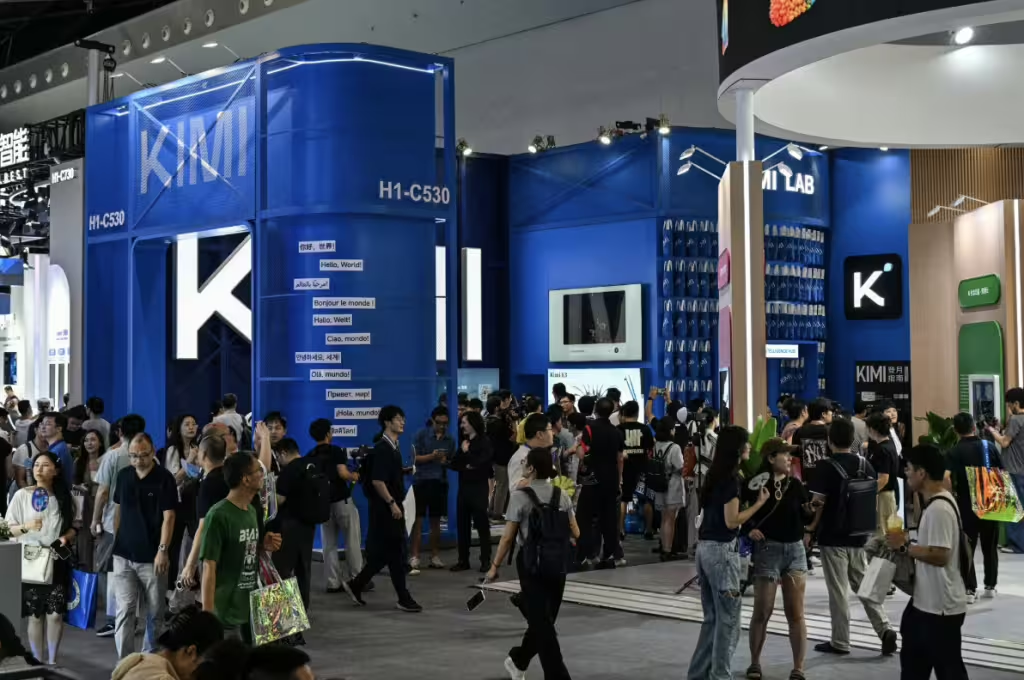
Chinese AI start-up Moonshot has released code and technical information for its new Kimi K3 model, allowing developers to examine how it was built. But it has departed from the approach taken by many Chinese companies by requiring commercial agreements for large-scale use.
The model drew intense attention in Silicon Valley and affected US technology stocks after Moonshot said it matched leading models from OpenAI and Anthropic on some tasks.
The move shows China’s AI competition entering a new phase: companies must now find sustainable business models without abandoning the openness that helped them catch up with American rivals.
How the business model works
- Technical access: Moonshot released programming code and other information that allows developers to study, modify and operate the model under its licensing terms.
- Commercial licenses: Individuals and companies seeking to use Kimi K3 at scale will have to enter into licensing agreements with Moonshot.
- Open in theory: The model is technically open, but it is too large for most users to download and run on an ordinary computer.
- Paid access: Most people will use it through a Moonshot subscription or another provider that has secured a license from the company.
- Explicit requirement: Kevin Xu, founder of AI-focused hedge fund Interconnected Capital, said Moonshot was notable for making the commercial condition unusually clear.
Why China is embracing open models
- Faster development: Sharing model weights or code enables developers to improve systems and build applications on them more quickly.
- Lower prices: The strategy has helped Chinese companies win international users with products that cost less than many closed American alternatives.
- Challenger strategy: Researcher Jeffrey Ding said Chinese companies view openness as a tool that helps challengers catch up with market leaders, rather than an end in itself.
- Profit imperative: Wide adoption can deliver users and influence, but companies ultimately need revenue to sustain the enormous cost of training and operating advanced models.
Beijing’s calculations
- Competing priorities: China wants its technology to spread globally while keeping its strategic and economic benefits inside the country.
- Growing scrutiny: Beijing increased oversight of how Chinese AI systems are used abroad after Meta announced plans to acquire Manus, an AI start-up founded in China.
- Unwound transaction: The government ordered the deal reversed in April, suggesting it was considering treating domestically developed AI systems as technologies subject to export controls.
- Open approach: Kimi K3 was unveiled as President Xi Jinping presented China at Shanghai’s World AI Conference as a global advocate of open technology.
- Delicate balance: Beijing must allow domestic companies to compete with Silicon Valley without giving away the technology’s strategic value or weakening its own champions through restrictive policies.
The chip constraint
- US restrictions: Chinese AI companies have faced years of trade controls limiting their ability to purchase the advanced chips needed to train and operate models.
- Funding gap: Chinese firms have less money to buy computing capacity than their deep-pocketed American competitors.
- Registration halted: Two days after announcing Kimi K3, Moonshot stopped accepting new users because it could not secure enough chips to serve them.
- Subscriptions suspended: The decision showed how strong demand can become a liability when a company lacks sufficient computing infrastructure.
Between the lines
Kimi K3 is not merely a test of whether a Chinese model can compete with American systems. It is an experiment in combining three difficult objectives: distributing technology globally, retaining strategic control and converting popularity into revenue.
The suspension of new registrations also shows that chip availability can shape commercial success as much as model quality. Moonshot can build technology that attracts global demand, but it cannot translate that demand into growth without enough computing power.
What to Watch:
Demand among global companies for Kimi K3 licenses and whether Moonshot can expand its computing capacity and resume accepting subscribers. Beijing’s approach to model exports will also determine how far Chinese AI companies can expand internationally.
In the US, the debate will continue over whether widespread use of open Chinese models represents only a commercial threat to American technology companies or a national-security risk requiring government restrictions.