The latest
The United States has agreed to provide Saudi Arabia with a civilian nuclear program that could include power reactors and a domestic uranium-enrichment facility. The deal would help Riyadh build a nuclear-energy industry, meet domestic power demand and free more oil for export.
The project, estimated to be worth tens of billions of dollars, represents a major opportunity for American companies, led by Westinghouse and its AP1000 reactor. Washington aims to keep China and Russia out of the Saudi nuclear sector while retaining a direct role in building and operating the facilities.
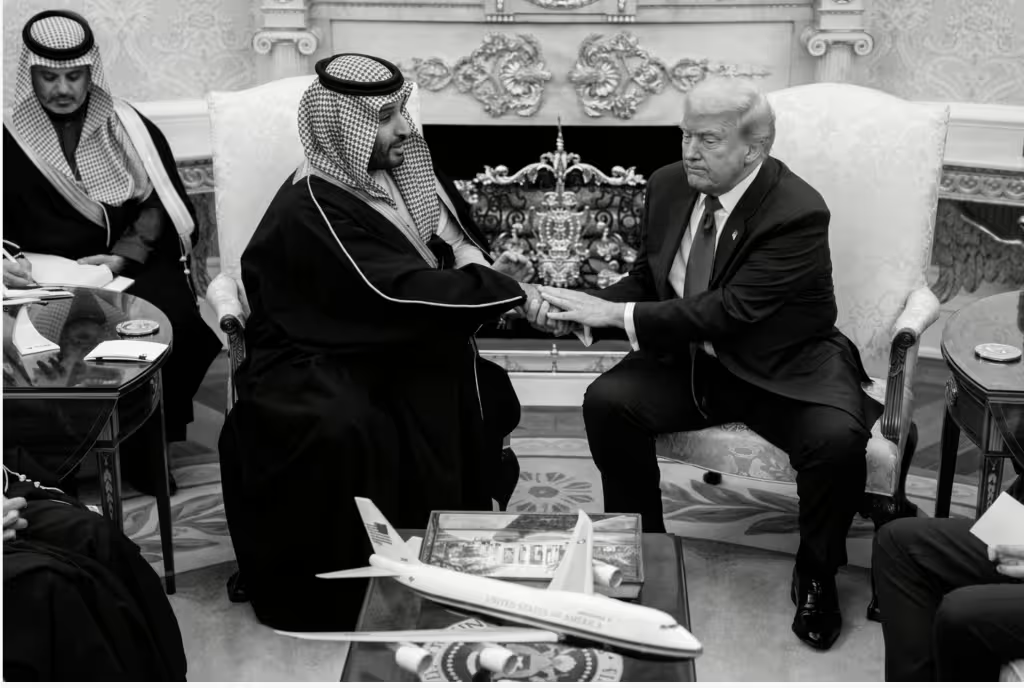
The agreement nevertheless raises concerns about the spread of sensitive nuclear technology in the Middle East as Washington pressures Iran to limit its program and surrender its highly enriched uranium. Saudi Arabia says its intentions are peaceful, but Crown Prince Mohammed bin Salman has said the kingdom would pursue a nuclear weapon if Iran developed one.
Details
- What Saudi Arabia gets: Civilian nuclear reactors and the possibility of a domestic enrichment facility if a two-year joint study determines that one is warranted.
- What Washington gets: Major contracts for U.S. companies and a dominant role in the program while excluding Chinese and Russian suppliers.
- The safeguards: Any enrichment plant would be built under a “black box” arrangement designed to prevent sensitive technology from being transferred to Riyadh, with U.S. oversight of nuclear fuel and materials.
- What is excluded: Saudi Arabia rejected commitments to forgo enrichment and spent-fuel reprocessing, as well as stricter inspections by the International Atomic Energy Agency.
- The next stage: The countries’ energy secretaries are expected to sign the accord before it is submitted to Congress, where it faces opposition that will be difficult to turn into an effective block.
Between the lines
The agreement attempts to balance Saudi Arabia’s ambition for a domestic nuclear fuel cycle with Washington’s desire to keep the program under American control. But it gives Riyadh greater flexibility than countries that accepted the “gold standard” of permanently renouncing enrichment and reprocessing.
What to watch
Attention will focus on the monitoring provisions in the final text, the outcome of the enrichment study and Congress’s response. If Washington objects to enrichment, the agreement would bar the kingdom from pursuing it independently or with another foreign partner for 10 years.