
The latest
Apple is planning its broadest Mac overhaul in years, seeking to capitalize on demand for powerful computers capable of running artificial intelligence agents and other compute-intensive applications. The road map includes new versions of every laptop and desktop the company sells.
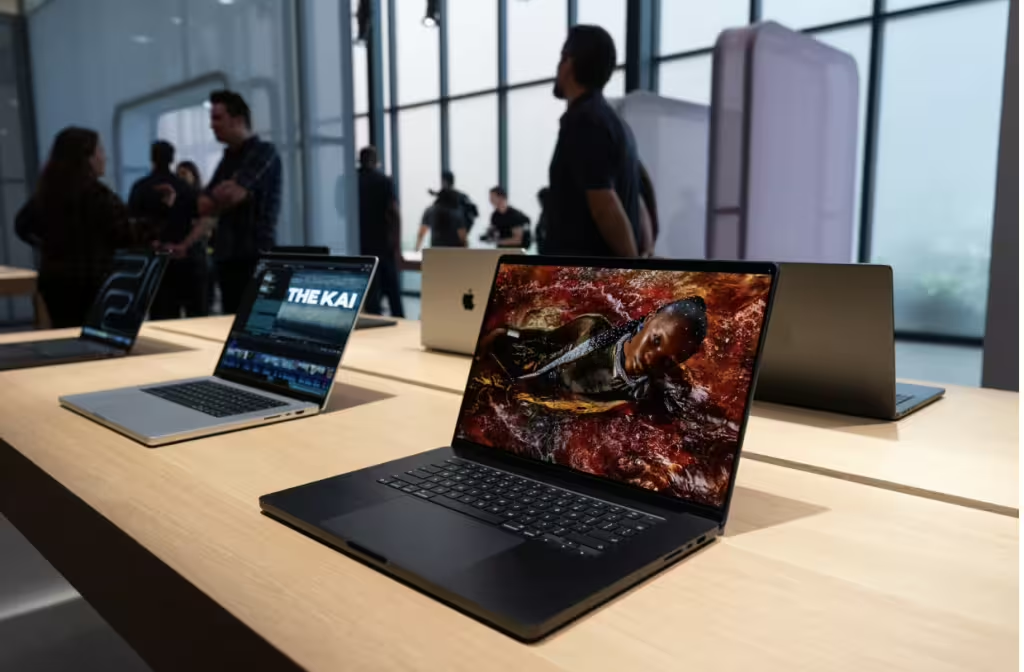
The rollout will begin this fall with an entry-level 14-inch MacBook Pro powered by an M6 chip and the first new iMacs in two years. Apple is also developing redesigned premium MacBook Pros in 14-inch and 16-inch sizes with OLED touchscreens—both firsts for the Mac.
The overhaul comes as Mac sales are projected to rise for a third consecutive year. But memory-chip shortages are straining production, particularly for the Mac mini and Mac Studio, where demand has outpaced supply because of their use in AI computing.
Details
- First releases: Development of the entry-level MacBook Pro and new iMacs is complete, but shipments are not expected before the fall.
- Touchscreen model: The redesigned MacBook Pro could arrive between the end of this year and early next year with an OLED display offering more vibrant colors.
- MacBook Air: Apple plans to refresh the 13-inch and 15-inch models by early next year while largely retaining the current design.
- Desktop Macs: The company is testing Mac mini models with M5 Pro and M6 chips, and Mac Studio machines with M5 Max and M5 Ultra processors.
- Supply pressure: Some current Mac mini and Mac Studio orders face shipping delays of at least three months.
- Higher prices: Apple raised prices across its Mac range in June, with a fully configured 16-inch MacBook Pro now costing $9,999.
Between the lines
Apple is treating the AI boom as an opportunity to return the personal computer to the center of its growth strategy—not merely as a reason to add software features. But success will depend on securing enough memory supply and meeting demand without further price increases.
What to watch
Attention will focus on the launch timing of the touchscreen MacBook Pro and Apple’s ability to rebuild inventory for the Mac mini and Mac Studio. The M6 chip’s performance will also show whether the new generation can meet growing demand for running AI locally.