The latest
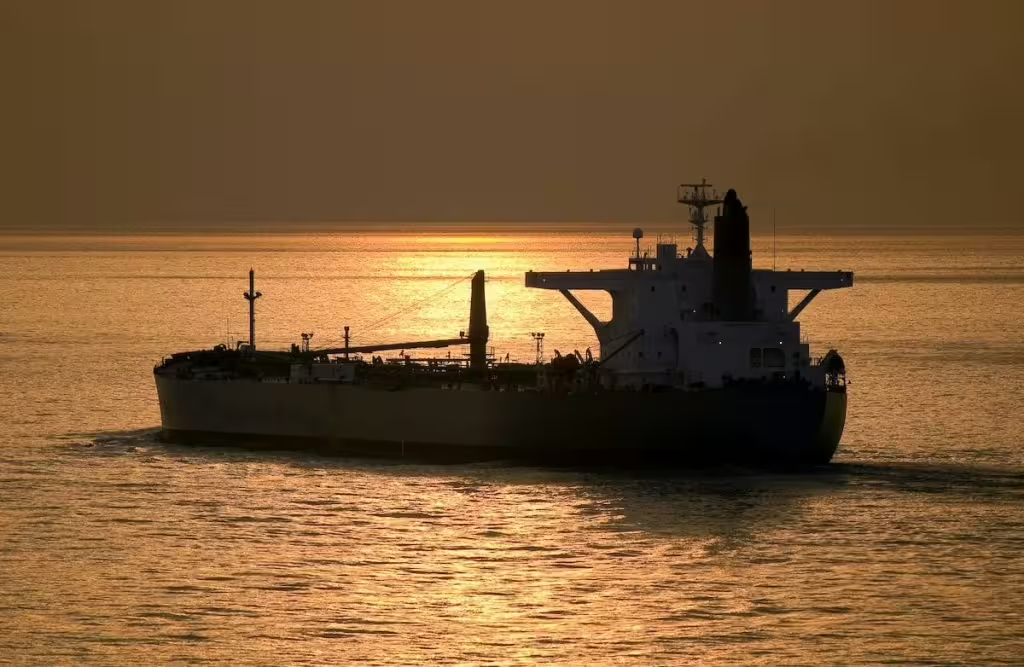
Saudi Arabia’s state news agency confirmed that the ENCELIA oil tanker, operated by a Saudi company, was attacked while sailing in the Red Sea, causing a fire at the vessel’s bow. All crew members were reported safe. The announcement came hours after the Iran-backed Houthis claimed responsibility for attacking the Saudi-flagged tankers ENCELIA and Layla.
Details
- Saudi confirmation: The Saudi Press Agency said ENCELIA was struck while transiting the Red Sea, igniting a fire in its forward section. No casualties were reported among the crew.
- Houthi claim: The group said it used missiles and drones to target the tankers ENCELIA and Layla, claiming the vessels had violated what it described as its naval blockade on Saudi Arabia.
- Independent verification: Maritime security sources and the UK-based risk consultancy Vanguard reported that ENCELIA transmitted a distress call after sustaining damage near Jizan. A separate attack on Layla has not been independently confirmed.
- Shipping disruption: Vessel-tracking data and reports from Clarksons, Kpler, and MarineTraffic showed several oil tankers and commercial ships changing course or delaying voyages following Houthi warnings.
- European warning: The EU naval mission Operation Aspides advised vessels linked to Saudi Arabia, the United States, or Israel to enhance security measures and reduce their electronic signature while transiting the Red Sea.
Background
Yanbu Port and Saudi Arabia’s East-West pipeline have become vital alternatives to the Strait of Hormuz for exporting crude oil. Houthi attacks on commercial shipping since late 2023 significantly disrupted Red Sea trade before easing following the Gaza ceasefire. The group’s newly declared naval blockade of Saudi Arabia now threatens to reopen a second maritime front, placing both Bab al-Mandab and Hormuz—two of the world’s most critical energy chokepoints—under simultaneous pressure as U.S.-Iran tensions continue to escalate.
Between the lines
The attack marks the first confirmed strike on a Saudi tanker since the Houthis announced their maritime blockade. If the campaign continues, Saudi Arabia could face growing challenges protecting its alternative export corridor through the Red Sea, while simultaneous threats to both Bab al-Mandab and the Strait of Hormuz would sharply increase shipping costs, insurance premiums, and concerns over global oil supplies.
What to watch
Attention will now focus on whether Saudi Arabia announces additional security or military measures to protect maritime traffic, how international shipping companies respond to the escalating threat, and whether multinational naval forces revise their threat assessments for the Red Sea and Bab al-Mandab.