

The latest
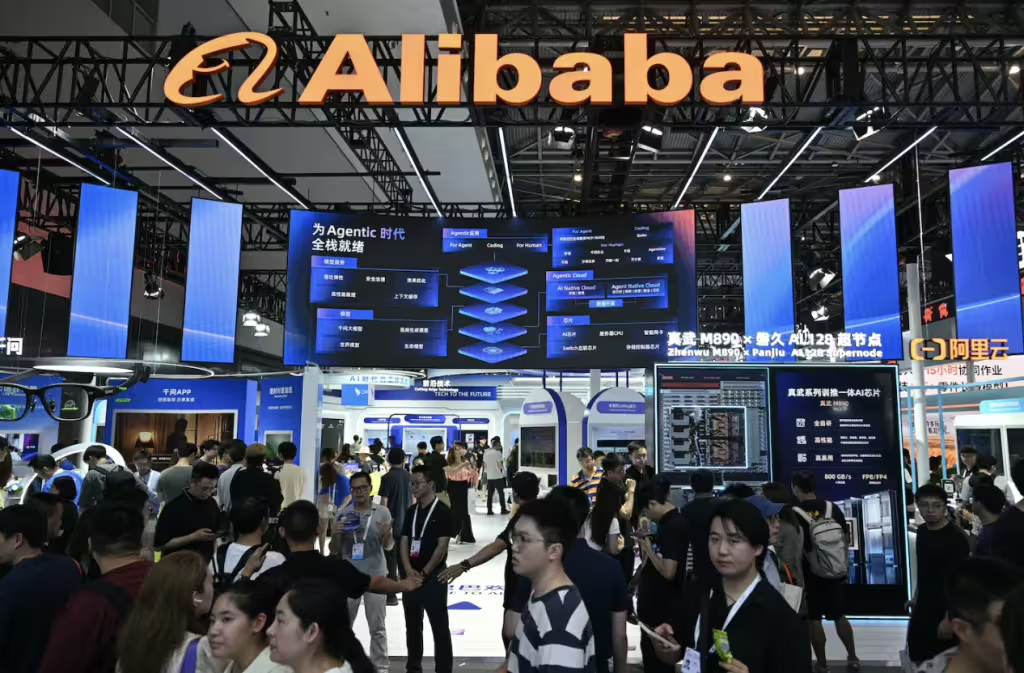
The Trump administration faces a new test in the artificial intelligence race after Chinese companies released advanced models that experts say are quickly closing the gap with the United States. The new wave is led by Moonshot’s Kimi K3 and Alibaba’s Qwen3.8, which are expected to become available to users with enough computing power to run them locally.
China’s advance came as the U.S. government delayed the release of some of OpenAI’s and Anthropic’s most powerful models over concerns that they could be used in cyberattacks. Hugging Face said it turned to a Chinese model while responding to an attempted breach after safeguards in commercial American tools blocked some defensive actions.
American models still lead in raw capability. But British security researchers estimated that one Chinese model’s hacking performance was comparable to U.S. systems from four to seven months earlier, narrowing from a gap of six to 10 months last year.
Details
- Washington’s dilemma: The administration wants to remove barriers that slow innovation while confronting growing security risks from advanced models.
- China’s advantage: Chinese companies release open-weight models that developers can copy, modify and operate independently.
- U.S. model: Leading American companies rely on closed systems and paid subscriptions to cover high development and operating costs.
- Cost factor: Chinese models appeal to companies that do not require maximum performance and want cheaper, more customizable tools.
- Chip advantage: American companies still produce the world’s most powerful AI chips, while export controls restrict China’s access to them.
- Demand pressure: Moonshot temporarily suspended new registrations after demand for Kimi K3 exceeded its available computing capacity.
Between the lines
America’s challenge is no longer limited to who owns the most powerful model. If Chinese systems remain slightly less capable but are cheaper, open and easier to adopt, Beijing could win the deployment race even while Washington retains the technical lead.
What to watch
The Trump administration’s response will be measured by whether it can accelerate U.S. model releases without increasing the risk of misuse. Chip restrictions will also help determine whether China can turn improving model performance into global adoption that challenges American control of the world’s digital infrastructure.