Summary
1- Four Kuwaiti navy personnel were injured in a new wave of Iranian attacks on the country.
2- The attacks involved five cruise missiles, one ballistic missile and 33 drones, according to Kuwait’s Defense Ministry.
3- The barrage marked the highest number of projectiles and injuries in a single day since Kuwait International Airport was attacked in June.
The latest
Four Kuwaiti navy personnel were injured in a new wave of Iranian attacks as the United States resumed its blockade on shipping to and from Iranian ports and coastal areas.
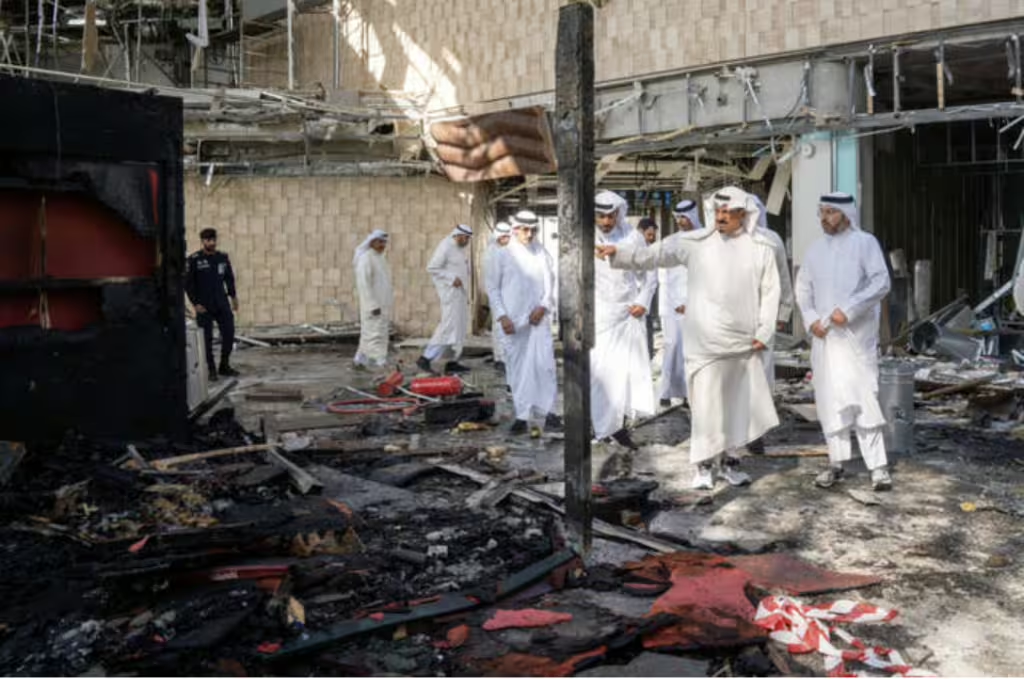
Kuwait’s Defense Ministry said the attacks involved five cruise missiles, one ballistic missile and 33 drones. They targeted vital and civilian institutions that the military did not identify. Debris fell in several locations and caused damage.
The four service members were injured when a Kuwaiti navy vessel was struck. The barrage produced the highest daily number of projectiles and injuries since the second attack on Kuwait International Airport in June, which killed one person and injured more than 60 others.
Details
- Critical infrastructure: Military bases, oil refineries, Kuwait Petroleum Corp.’s headquarters, the airport and other vital facilities have faced repeated attacks during the war.
- Oil platform: A drone targeted an offshore Kuwait Oil Co. drilling platform earlier in the week, causing damage and injuring one worker.
- Border sites: Attacks on three locations along Kuwait’s northern border caused material damage.
- Attack toll: Kuwait has faced at least 16 attacks since the United States and Iran agreed to a truce on April 8.
- Regional casualties: Kuwait has recorded more casualties than any other Gulf Arab country during that period.
- U.S. presence: Kuwait hosts thousands of American military personnel at five bases, including Ali Al-Salem, which has been repeatedly struck since the war began in February.
- Truce collapse: Attacks on tankers in the Strait of Hormuz and on countries including Qatar, Jordan and Bahrain resumed after the ceasefire collapsed.
- U.S. action: Washington reinstated its blockade on Iranian shipping and launched fresh strikes intended to weaken Tehran’s ability to target commercial vessels.
Between the lines
Kuwait’s role as a host to U.S. military forces, combined with the importance of its oil infrastructure, leaves it exposed to attacks linked to the confrontation between Washington and Tehran. The expansion of strikes to civilian facilities increases the risks to residents and critical infrastructure.
What to watch
Attention now turns to whether the attacks continue following the renewed U.S. blockade and whether Kuwait’s defenses can protect military, oil and civilian facilities from missiles and drones.