The latest:
Weeks of US diplomatic pressure on Iran’s neighbors to shut their land crossings have failed, according to three Iraqi officials and one American official briefed on the talks who spoke on condition of anonymity. Washington now wants the land routes closed after a naval blockade cut Iranian shipping and new sanctions grounded much of its air network. Turkey has largely refused to change its border policy.
Details:
- The task force: US Central Command announced on Saturday a unit called Iron Gate, which it said would block advanced weapons systems, dual-use technologies, sanctioned materials and illicit revenue flows across Iran’s land borders and the Caspian Sea. Centcom said the team numbers 20 civilian and military personnel based in Florida.
- How it operates: A US military official, speaking anonymously about operational matters, said the task force will not conduct military operations but may urge neighboring states to use their own armies against unlicensed and illicit trade. Centcom did not set out how the unit would function in practice.
- The Iraqi file: Two of the three Iraqi officials said Baghdad holds weekly talks with American diplomats, including regional envoy Thomas Barrack, and was asked to shut every crossing with Iran except two. Iraq has refused so far but temporarily closed one or two crossings, triggering public anger.
- Baghdad’s framing: Iraqi officials said publicly the closures were meant to improve monitoring and security procedures that would help curb money laundering and weapons smuggling. Iraq shares a rugged 994-mile frontier with Iran that it cannot fully control.
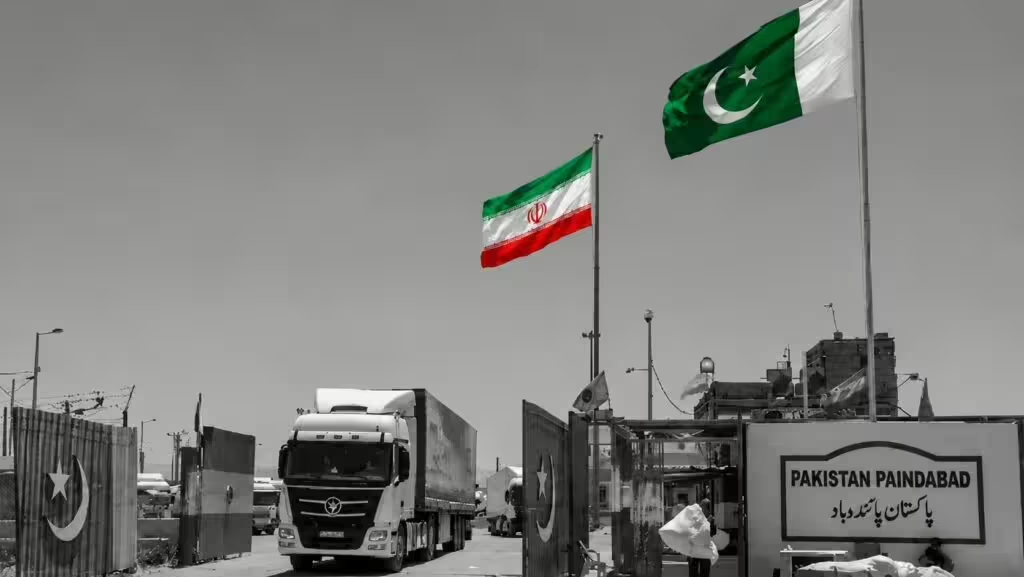
- Pakistan: Analysts said Pakistan, whose official annual trade with Iran reaches 3 billion dollars, has opened and closed some crossings in recent weeks. Pakistani officials cited security issues and new electronic import procedures; Iranian officials linked the step to American sanctions.
- The warning: A US official briefed on the talks said several neighboring governments raised the risk of a civilian uprising if smuggling and trade routes vital to businesses and residents on both sides were severed, and said the American effort is deepening resentment among regional allies.
- Tehran’s leverage: Elli Geranmayeh of the European Council on Foreign Relations said Iran can apply economic pressure of its own. Pakistan depends heavily on Iranian fuel imports, especially liquefied petroleum gas, while Iraq relies on Iran for more than a third of the gas powering its electricity grid.
- The counter-campaign: President Masoud Pezeshkian said last month that Iran is continuing its efforts and dialogue with neighboring states and hopes to succeed. Iran’s deputy foreign minister said Tuesday he met the Russian ambassador in Tehran to discuss countering unilateral American measures and the Iron Gate plan.
- Washington’s line: Secretary of State Marco Rubio told reporters after a G7 meeting in Paris on Tuesday that the economic pain being inflicted on Iran is unprecedented, adding strikes are unnecessary if the same objective is achieved economically. No nuclear agreement has been reached.
- Centcom denial: Central Command rejected media reports that Admiral Brad Cooper told senior Israeli commanders to prepare for an imminent joint strike or a third wave against infrastructure deep inside Iran. Western diplomatic sources told Erem News the denial reflects an effort to keep escalation under White House control.
Background:
The blockade followed February’s war alongside Israel, which regional capitals had urged Washington not to launch. Analysts say the naval siege has effectively halted Iranian oil exports, with some Iranian officials saying this summer that sales were near zero.
Between the lines:
Political analyst Mohanna al-Droub told Erem News the Centcom denial is a political message that Washington is not seeking a regional war now, favoring combined pressure while holding strikes in reserve. Geranmayeh assessed that after the midterm results, regional states may simply ignore American demands, judging Washington unpredictable while Iran remains a permanent neighbor.
What’s next
Watch whether Iraq closes additional crossings beyond the temporary shutdowns, whether Turkey shifts its border policy, and how Iron Gate operates in practice from its Florida base.