The latest
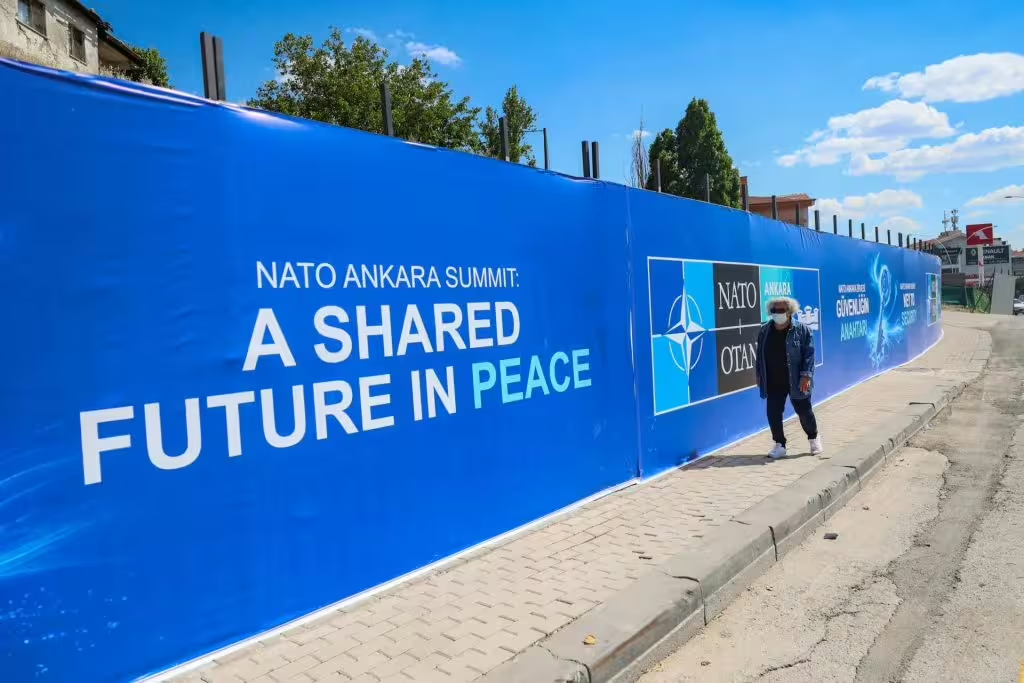
Shifting security dynamics in Europe and the Middle East, combined with President Donald Trump’s return to the White House, have reshaped Turkey’s role within NATO. According to The New York Times, allies increasingly view Ankara as an indispensable military and industrial partner as the alliance seeks stronger deterrence and less dependence on the United States.
Details
• Strategic shift: After years of friction over Russia ties and the S-400 missile system, many NATO members now regard Turkey as a central pillar of the alliance’s security.
• Military strength: Turkey has NATO’s second-largest military after the United States and controls access to the Black Sea through the Turkish Straits, making it vital to regional defense.
• Defense industry: Turkish defense exports exceeded $10 billion last year, driven by rapid production of drones, ammunition and armored vehicles at competitive costs.
• Diplomatic reach: Ankara has maintained communication channels with Russia, Ukraine and Iran while serving as a mediator in several regional crises, increasing its political value to NATO.
• Democracy concerns: Although Western governments continue to criticize Turkey’s democratic backsliding and crackdown on the opposition, security priorities have pushed those concerns lower on the alliance’s agenda.
Background
Turkey joined NATO in 1952, but its relationship with allies has often been strained. The purchase of Russia’s S-400 air defense system in 2019 led to its removal from the F-35 fighter program and triggered U.S. sanctions. Russia’s invasion of Ukraine and growing uncertainty over America’s long-term security commitments have prompted NATO members to reassess Turkey’s military and industrial importance. Europe’s drive to expand defense production has also highlighted Turkey’s ability to manufacture weapons quickly and at lower cost, reinforcing Ankara’s ambitions to play a larger role in European security despite persistent political disagreements with some allies.
What to watch
NATO leaders are expected to focus on higher defense spending and expanding military production capacity. Attention will also center on whether Turkey makes progress toward rejoining the F-35 program or securing deeper defense cooperation with the United States and European allies.