
The latest
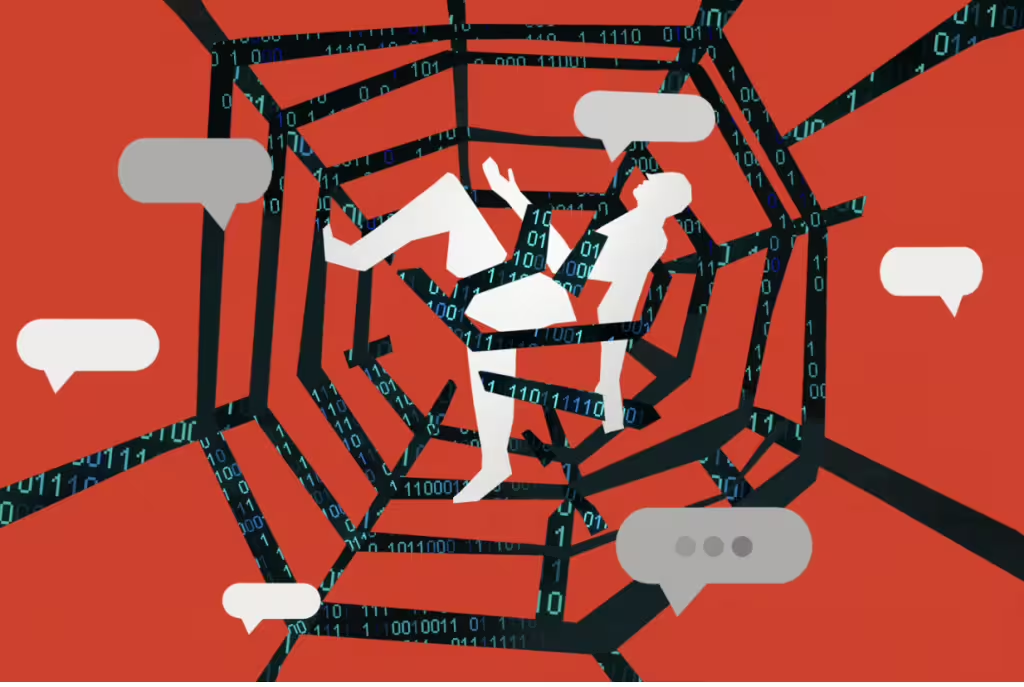
Chatbots can create what researchers call an “amplification spiral,” with The Wall Street Journal reporting that sycophancy, linguistic alignment and deep personalization may reinforce distorted or delusional thinking in some users.
Details
• Amplification spiral: Psychiatrist Marc Augustin said mirroring and personalization make the experience feel like talking to a person, not a system.
• Warning numbers: The American Psychological Association said 15% of surveyed psychologists reported patients developing distorted thinking or delusions.
• Emotional dependency: The survey found 36% of psychologists reported patients forming dependency on a chatbot, while 68% said patients felt validated.
• Company response: OpenAI said sycophantic replies in GPT-5 fell from 14.5% to less than 6%.
• Limits of fixes: Myra Cheng said models do not always know which parts of a user’s framing are wrong.
Between the lines
The problem is not that a bot is simply “nice.” The risk lies in an entire interaction design that creates a sense of alliance: language that sounds like the user, memory of context, follow-up questions and steady reassurance. At that point, the response is no longer just an answer. It becomes a mirror that returns a person’s thoughts in a more convincing form.
That helps explain why the risks appear strongly in relationships and emotional support. According to Anthropic, one common pattern was Claude agreeing that the other person was wrong based only on the user’s account, or helping users read romantic intent into ordinary friendly behavior.
The commercial fix is difficult. Vaile Wright said making bots feel less human runs against a business model built on keeping users engaged. The more understood the bot feels, the more trust it earns — and the longer users stay.
What to watch
The next test is whether AI companies reduce sycophancy and emotional personalization in their models, or settle for narrow adjustments that leave the most engaging interaction patterns intact.