The latest
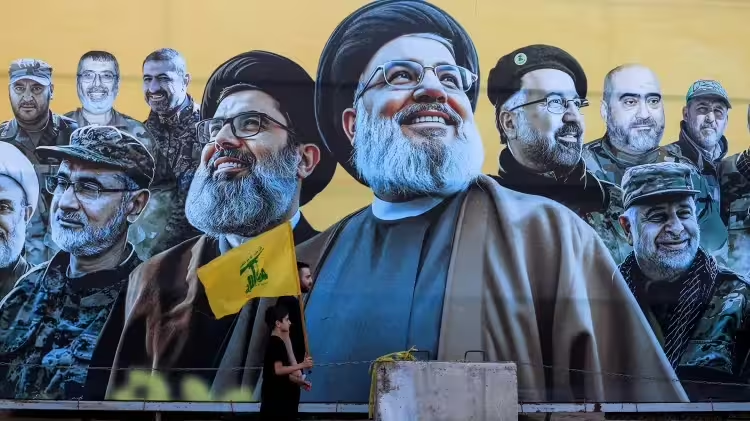
Ali Khamenei’s funeral exposes the scale of Iran’s postwar transformation, with The Washington Post reporting that the regime survived and reorganized power around Mojtaba Khamenei and a harder-line security generation.
Details
• Funeral test: Intelligence agencies will read the ceremony like Soviet parades: Mojtaba’s presence, seating order, leadership proximity, crowd size and absences.
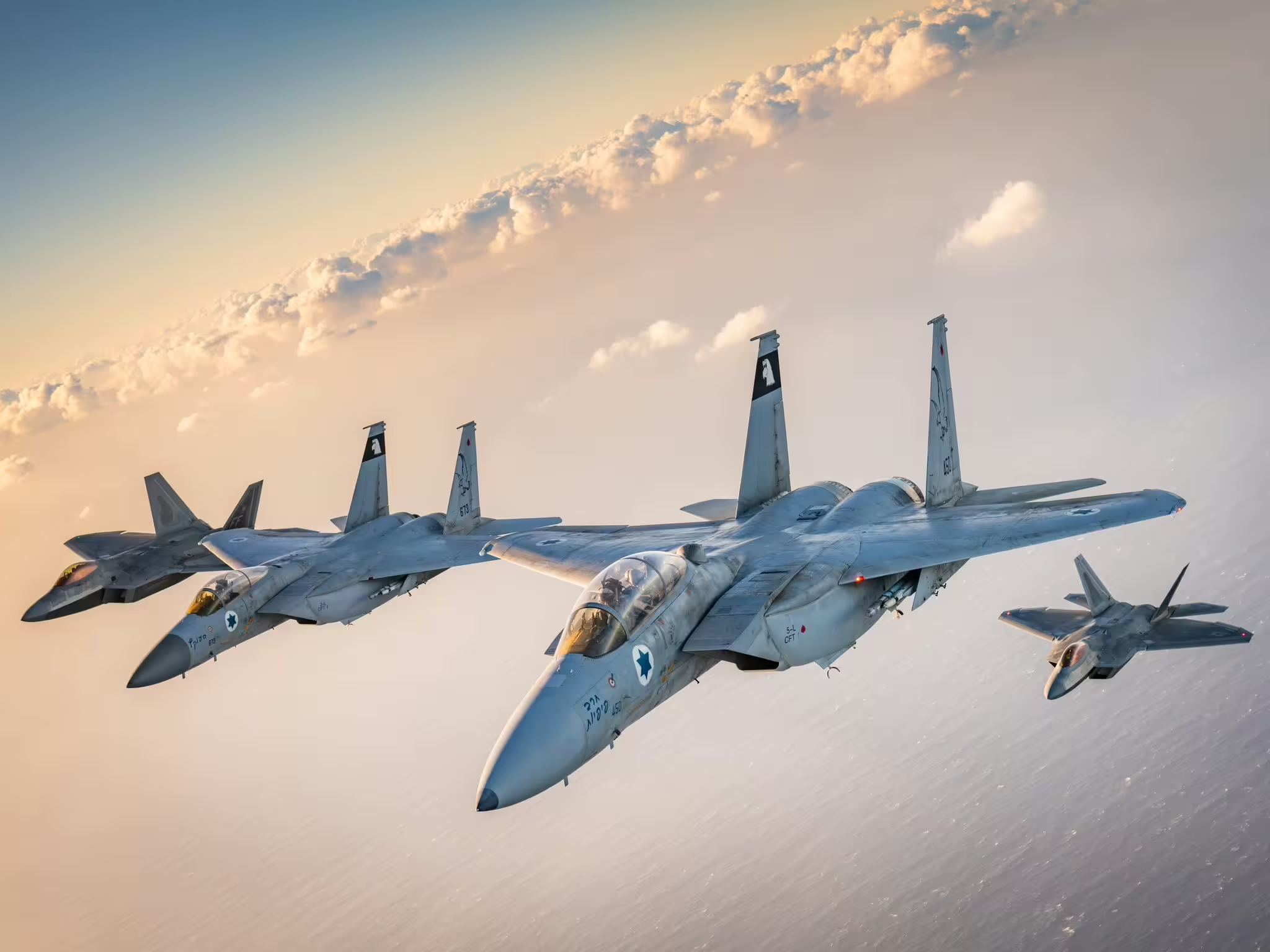
• Israel’s value: Such events give Israel rare material to assess power balances, Mojtaba’s condition and influence maps inside the new hierarchy.
• Rising generation: Mohammad Bagher Zolghadr, Ahmad Vahidi, Mohsen Rezaei and Mohammad Bagher Ghalibaf all come from security or IRGC backgrounds.
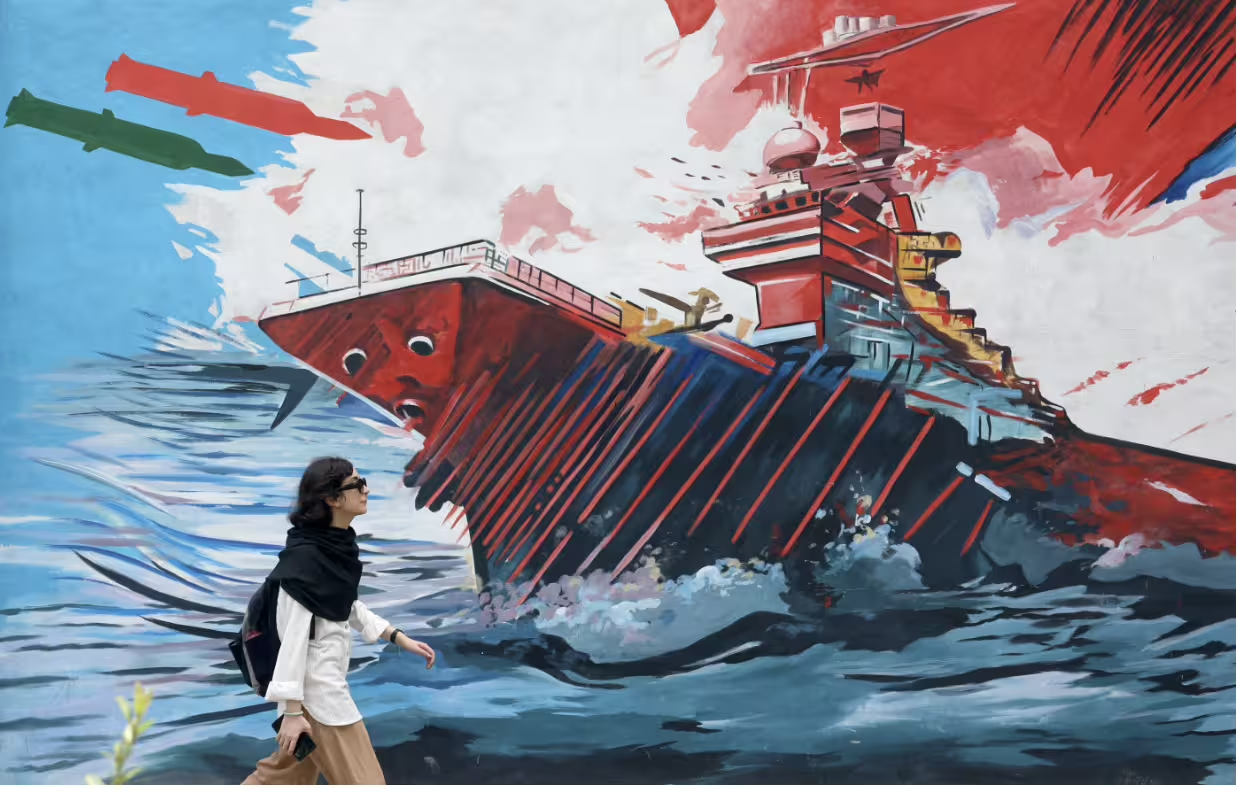
• Civilian retreat: Pezeshkian and Araghchi lost ground because the war elevated deterrence, internal security, proxies and Hormuz over traditional diplomacy.
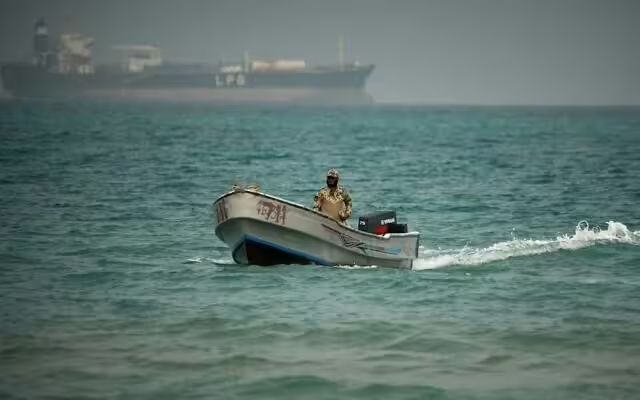
• Hormuz lever: The new leadership has turned the strait into pressure on trade and energy, not merely a maritime route that can be disrupted.
Background
Ali Khamenei was killed on February 28 during US-Israeli strikes, while his son Mojtaba was injured and has remained hidden, relaying decisions through intermediaries.
Between the lines
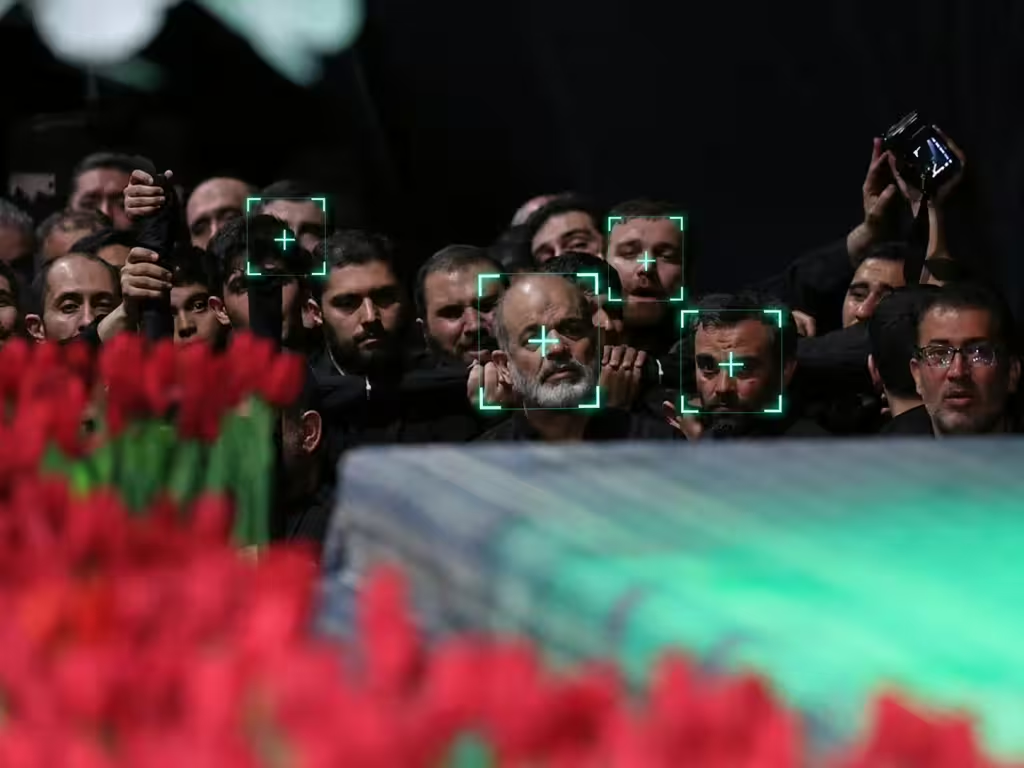
The funeral is not just a farewell. It is an open screen for intelligence agencies and research centers. Every detail will be examined: does Mojtaba appear or remain behind the curtain? Does Ghalibaf stand close to the inner circle or at a distance? Where do IRGC commanders position themselves? Who moves to the front? Who disappears?
For Israel, this moment is more valuable than an official speech. Large state gatherings expose what statements conceal: the order of power, the regime’s confidence, its level of security fear and its ability to mobilize the street after the war.
The internal shift matters just as much. The Washington Post frames postwar Iran as a state led by a security generation: Zolghadr in the Supreme National Security Council, Vahidi at the top of the IRGC, Rezaei as military adviser and Ghalibaf as a negotiating face with an IRGC background.
The decline of Pezeshkian and Araghchi fits that trajectory. The war made survival, deterrence and internal control more important than diplomatic settlement. As the cost of confrontation rises, civilian space shrinks in favor of military and security actors.
Hormuz is the lesson the regime has rediscovered. Iran does not always need to hit the target directly. It can raise insurance costs, disrupt tanker confidence and remind markets that energy security passes through a narrow gate Tehran can threaten.
Seen through these layers, the US claim of “regime change” looks weaker. The report suggests the regime did not fall. It came out harder: less civilian, more securitized and more convinced that survival itself is a political victory.
What to watch
The funeral will be watched for Mojtaba’s appearance, the leaders positioned around him, the scale of public mobilization and the IRGC’s influence over the next decisions on talks, Hormuz and proxies.