The News
A new book chronicling Donald Trump’s second term offers a rare glimpse inside a White House shaped by personal loyalty, back-channel diplomacy and an increasingly centralized style of decision-making.
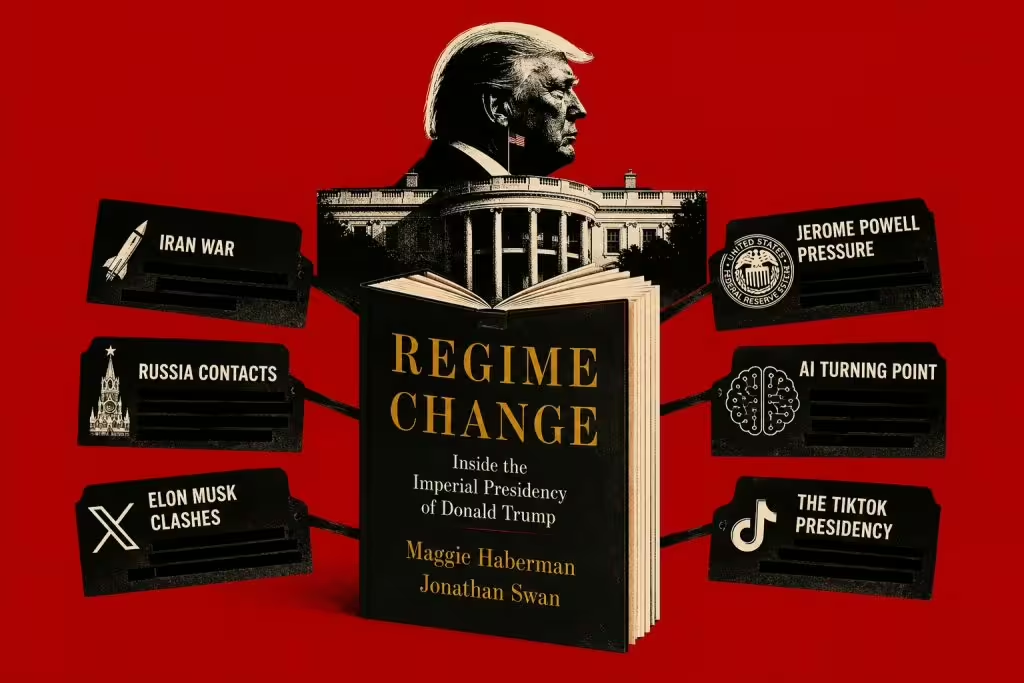
In Regime Change: Inside the Imperial Presidency of Donald Trump, New York Times White House reporters Maggie Haberman and Jonathan Swan recount behind-the-scenes episodes surrounding the Iran war, secret contacts with Russia, tensions with Elon Musk, clashes with Federal Reserve Chair Jerome Powell and Trump’s evolving views on artificial intelligence.
Details
According to the authors, Trump gradually shifted responsibility for sensitive contacts with Moscow to Middle East envoy Steve Witkoff, effectively sidelining Ukraine envoy Keith Kellogg from discussions with Russian officials.
The book also claims Saudi Crown Prince Mohammed bin Salman encouraged the diplomatic channel and offered to facilitate communications with the Kremlin.
Another chapter focuses on Elon Musk’s brief but turbulent role inside the administration. The authors argue that the controversial email demanding federal employees justify their weekly work sparked widespread anger across the White House and Cabinet, becoming a turning point in Musk’s relationship with senior officials.
The book portrays Trump’s relationship with Federal Reserve Chair Jerome Powell as increasingly confrontational. Rather than dismiss Powell, Trump allegedly chose to maintain constant political pressure over interest rates and the costly renovation of the Federal Reserve headquarters.
Haberman and Swan also argue that Trump became far less concerned with public opinion during his second term. Despite political fallout from the Iran war, tariffs, the Epstein files and inflation, he reportedly relied more on instinct than polling data when making major decisions.
The authors further describe Trump’s changing attitude toward artificial intelligence. Initially skeptical, he reportedly became fascinated after watching an OpenAI demonstration of ChatGPT, later embracing the technology and developing closer ties with leading figures in the AI industry.
One of the book’s most striking scenes comes during the seventeenth day of the U.S. war with Iran. While the conflict dominated international headlines, Trump reportedly spent part of a meeting discussing landscaping plans for the White House and the growing number of views on his TikTok videos.
What’s Next?
The book does not merely revisit familiar controversies. It presents a portrait of a presidency increasingly driven by personal relationships, informal diplomacy and executive authority, raising fresh questions in Washington about how major national security and foreign policy decisions were made during Trump’s second term.
Sources: The Washington Post, The New York Times, Regime Change: Inside the Imperial Presidency of Donald Trump.