The latest
The Strait of Hormuz is increasingly becoming a battleground over control of maritime traffic rather than solely a military flashpoint after a commercial vessel was struck by a drone off the coast of Oman.
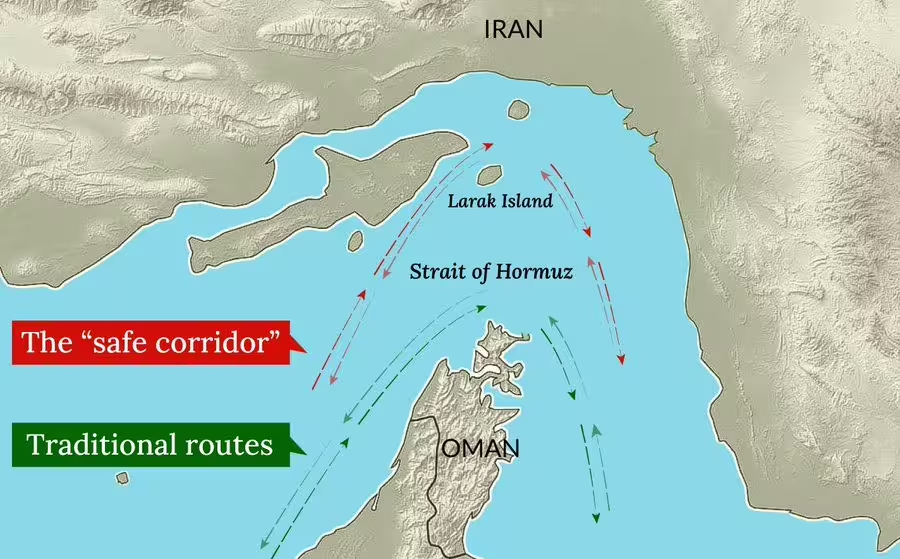
Iran says the vessel had sailed through what it described as an “unauthorized” shipping lane, while the United States has so far remained silent on the attack.
According to international reports, the drone damaged the ship’s bridge but caused no casualties. The incident nevertheless disrupted shipping through the waterway, a vital artery for global energy supplies.
Details
- An Iranian source told The New York Times that the vessel had used a route not approved by Tehran, describing the strike as a response to violating Iranian navigation instructions.
- The Islamic Revolutionary Guard Corps (IRGC) had earlier warned ships against using southern navigation lanes near Oman’s coastline, saying vessels that ignored what it considers recognized routes could face action.
- The IRGC also escalated its rhetoric toward Israel, claiming Israeli military aircraft were operating in the airspace of neighboring countries and warning that Iran would not tolerate threats originating from those territories. It also urged Washington to restrain Israel.
- The escalation comes as Oman and Iran continue discussions on a future mechanism to manage navigation and maritime services in the Strait of Hormuz following understandings announced earlier this week. Both countries have said the consultations would include other littoral states and would seek to preserve freedom of navigation under international law.
- At the same time, Muscat is facing U.S. pressure to reject any arrangement that would allow Iran to impose transit fees on vessels using the strait, one of the most contentious issues in the ongoing U.S.-Iran negotiations.
Background
The Strait of Hormuz is the world’s most strategically important energy chokepoint, linking the Persian Gulf with the Gulf of Oman and the Arabian Sea. Under normal conditions, roughly one-fifth of global seaborne oil passes through the waterway.
Since the outbreak of the latest U.S.-Iran confrontation, shipping in the strait has faced repeated attacks and disruptions. The two sides later reached a 60-day memorandum of understanding that opened negotiations on the future security and governance of navigation through the strait.
Oman occupies a unique position in those talks. Besides controlling the southern shoreline of the strait, it has long served as a trusted intermediary between Washington and Tehran. That role, however, has become increasingly difficult as negotiations expand beyond security to include the future management of the waterway and the politically sensitive issue of transit fees.
What to watch
Attention is now turning to whether Washington will respond to the attack or treat it as a breach of the recent understandings with Tehran. The outcome of the Oman-Iran negotiations could also shape the future governance of the Strait of Hormuz and determine whether the region moves toward a more stable arrangement or another round of confrontation.