The latest
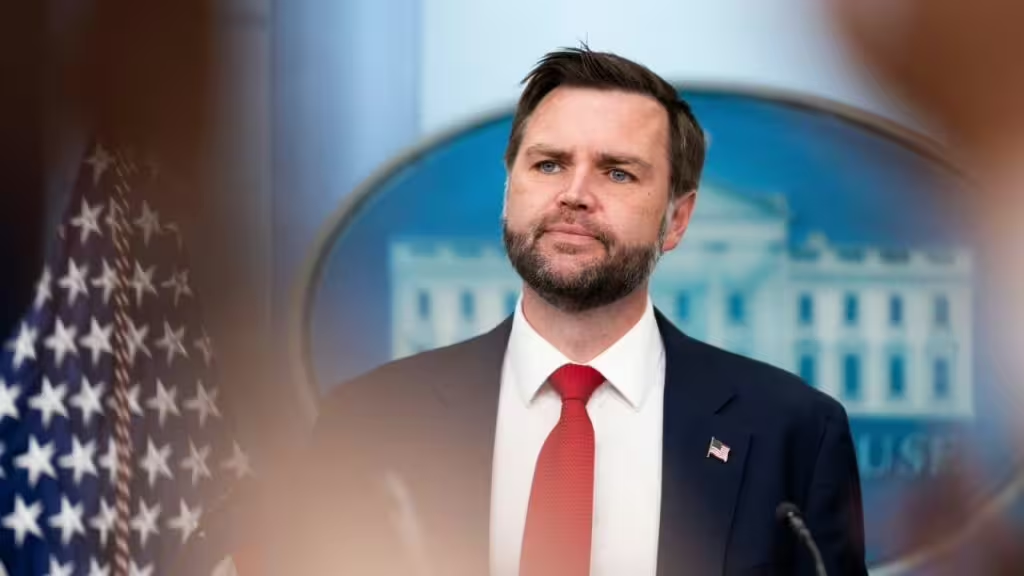
A new U.S.-Iran deconfliction effort faced an immediate test after Vice President JD Vance disclosed plans for direct military talks with Iran’s Revolutionary Guard, while U.S. officials accused Tehran of attacking a commercial vessel in the Strait of Hormuz.
According to The Wall Street Journal, citing senior U.S. officials, a Singapore-flagged cargo ship was struck off the coast of Oman, damaging its bridge but causing no casualties. Officials described the incident as an early test of the Trump administration’s agreement with Iran aimed at restoring normal shipping through the strategic waterway.
The UK’s Maritime Trade Operations (UKMTO) also reported the attack, saying an unidentified projectile hit the vessel. The International Maritime Organization later suspended an evacuation plan for hundreds of ships still waiting inside the Gulf pending a new security assessment.
Details
- In an interview with UnHerd, Vance said Washington and Tehran had agreed to establish a direct communication channel between U.S. Central Command (CENTCOM) and the IRGC to prevent future military escalation.
- He said military officials from both sides are expected to meet in Doha to resolve operational disputes and reduce tensions before they spiral into broader conflict.
- Vance also revealed that the United Arab Emirates has opened unprecedented channels with Iran, including direct discussions with the IRGC on possible economic incentives.
- Direct U.S. military engagement with the IRGC has been exceptionally rare for decades, with communication typically taking place through intermediaries or informal backchannels.
- The Strait of Hormuz remains one of the world’s most important energy chokepoints, carrying a significant share of global oil and liquefied natural gas exports. Any disruption quickly affects international energy markets and global shipping.
The Gulf message
Separately, Secretary of State Marco Rubio met Gulf Cooperation Council foreign ministers in Bahrain, where both sides pledged closer strategic coordination on regional security.
The joint statement backed continued U.S.-mediated negotiations between Israel and Lebanon, called for the full disarmament of all non-state armed groups in Lebanon, and stressed that Lebanese sovereignty requires the state to maintain an exclusive monopoly on the use of force.
The statement also reaffirmed the importance of keeping the Strait of Hormuz open to international shipping and linked broader economic engagement with Iran to its compliance with the new security arrangements.
What to watch
The first direct meeting between CENTCOM and IRGC officials could become a defining test of the new U.S.-Iran framework. Whether both sides can prevent further incidents in the Strait of Hormuz may determine whether the fragile understanding develops into a lasting de-escalation or quickly unravels.