The latest
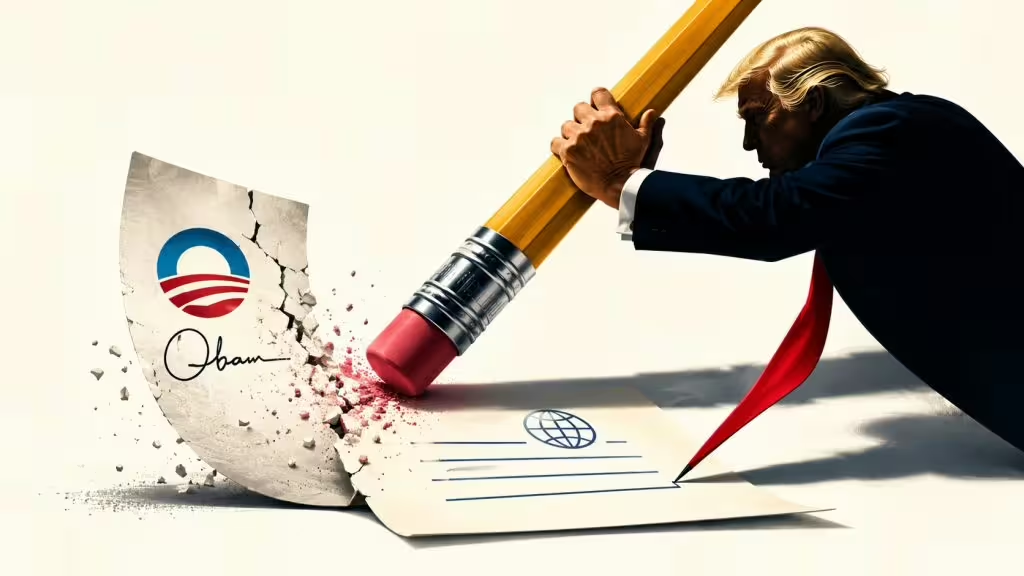
Eight years after withdrawing from the Iran nuclear deal, Trump faces an unusual political reality: he is moving toward an agreement that shares some of the same features he once used to justify abandoning President Barack Obama’s landmark accord.
The comparison is not exact. The 2015 Joint Comprehensive Plan of Action (JCPOA) was a detailed agreement negotiated over many months, while Trump’s current arrangement remains a preliminary memorandum with major questions still unresolved.
But as negotiations advance, the similarities and differences are becoming clearer.
Details
• The Obama-era deal imposed strict limits on uranium enrichment, stockpiles, and centrifuges in exchange for lifting U.S. and international sanctions, backed by extensive international inspections.
• Trump’s proposed agreement remains far less detailed and pushes the most sensitive nuclear issues into follow-up negotiations during a 60-day transition period that could be extended.
• Unlike the 2015 deal, which allowed Iran to enrich uranium up to 3.67% under international monitoring, the new framework has yet to settle the future of enrichment inside Iran.
• The International Atomic Energy Agency says Iran’s nuclear program is far more advanced today than it was when the JCPOA was signed, with stockpiles enriched to levels much closer to weapons-grade material.
• One of Trump’s main criticisms of the Obama deal was that it did not address Iran’s ballistic missile program or its support for regional proxy groups. The current framework does not include binding provisions on either issue.
• Trump says those matters will be handled through a separate track involving Gulf states, effectively separating them from the nuclear negotiations.
• On sanctions, the proposed agreement points toward broad relief measures and the release of frozen Iranian assets if Tehran complies with its commitments, echoing one of the central pillars of the 2015 deal.
• The new framework also includes discussions about a longer-term economic plan aimed at reintegrating Iran into regional commerce and supporting reconstruction and development projects.
• Supporters argue diplomacy remains the least costly option after months of conflict. Critics counter that sanctions relief could provide Tehran with a major economic lifeline before key security concerns are resolved.
Why it matters
The debate is no longer whether Trump will strike a deal with Iran. The real question is whether the agreement now taking shape delivers the tougher and more comprehensive framework he promised when he left the Obama deal in 2018.
So far, the administration appears focused on a faster and more flexible arrangement designed to end hostilities and contain the nuclear issue, while leaving missiles and regional influence for future negotiations.
What to watch
The next phase of talks will likely focus on uranium enrichment limits and international verification mechanisms. Those discussions will determine whether Trump’s agreement represents a genuine break from Obama’s approach—or a revised version of the same formula under very different regional conditions.