The latest
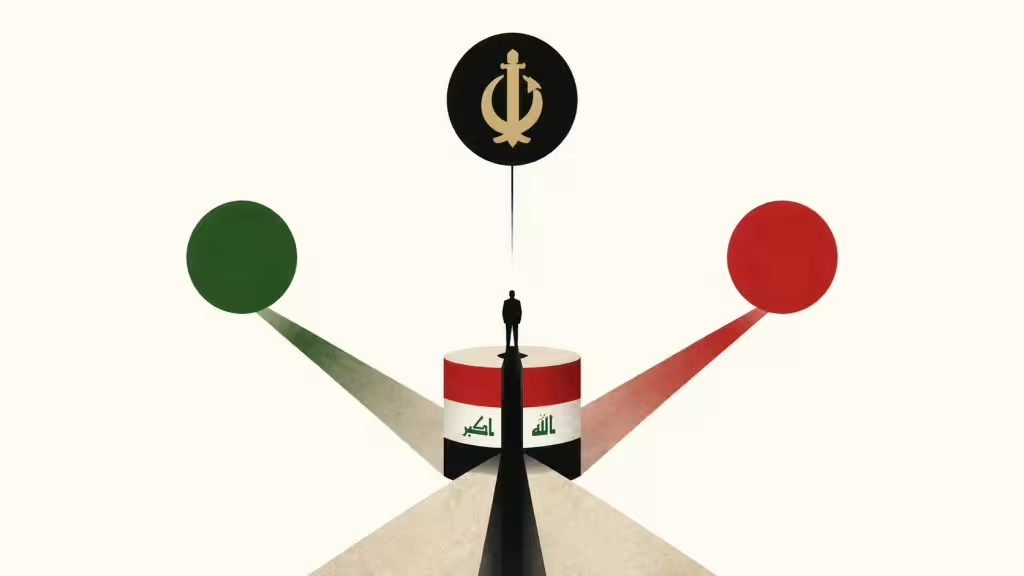
As some Iraqi factions discuss handing their weapons to the state, reports point to a quieter and more sensitive development: small clandestine groups operating directly under the supervision of Iran’s Revolutionary Guards rather than through established proxy organizations.
Eight Iraqi sources said the Revolutionary Guards set up several covert cells in recent months to launch drone attacks against Gulf countries hosting U.S. forces. The effort appears designed to preserve Iranian influence while reducing reliance on well-known militia networks.
According to the sources, each cell consists of a small number of fighters with expertise in drone operations and communications. They reportedly answer directly to the Revolutionary Guards rather than the command structure of the Islamic Resistance in Iraq.
Details
• The sources said the cells carried out or attempted attacks against targets in Kuwait, Saudi Arabia, and the United Arab Emirates between April and May, operating from desert areas in southern Iraq.
• Iraqi security officials believe the use of smaller, secretive groups gives Tehran greater deniability while reducing political pressure on established Iran-backed factions.
• The reports come as prominent groups, including Asaib Ahl al-Haq and Kataib Imam Ali, have announced steps to place their weapons under state authority, in what many see as one of Baghdad’s most significant efforts to consolidate control over arms.
• Iraq has faced growing U.S. pressure in recent months to curb the influence of armed groups operating outside state institutions, while Prime Minister Ali al-Zaidi has pledged to strengthen the government’s monopoly on weapons.
• Relations between Iraq and several Gulf states have also come under strain following allegations that drone attacks originated from Iraqi territory, prompting official protests from Kuwait, Saudi Arabia, and the UAE.
Why it matters
If the reports are accurate, they point to a shift in Iran’s strategy inside Iraq. Rather than relying entirely on large, well-known militias that face increasing scrutiny, Tehran may be moving toward smaller, more agile, and less costly networks.
Such a model could allow Iran to maintain regional leverage even if Baghdad succeeds in dismantling or integrating parts of the traditional militia infrastructure into state institutions.
What to watch
The key question is whether Prime Minister Ali al-Zaidi’s government can identify and disrupt these networks before they become a permanent feature of Iraq’s security landscape.
Success could strengthen Baghdad’s relations with Gulf states. Failure, and any future attacks launched from Iraqi territory, could reignite regional tensions and increase pressure on the Iraqi government.