The latest
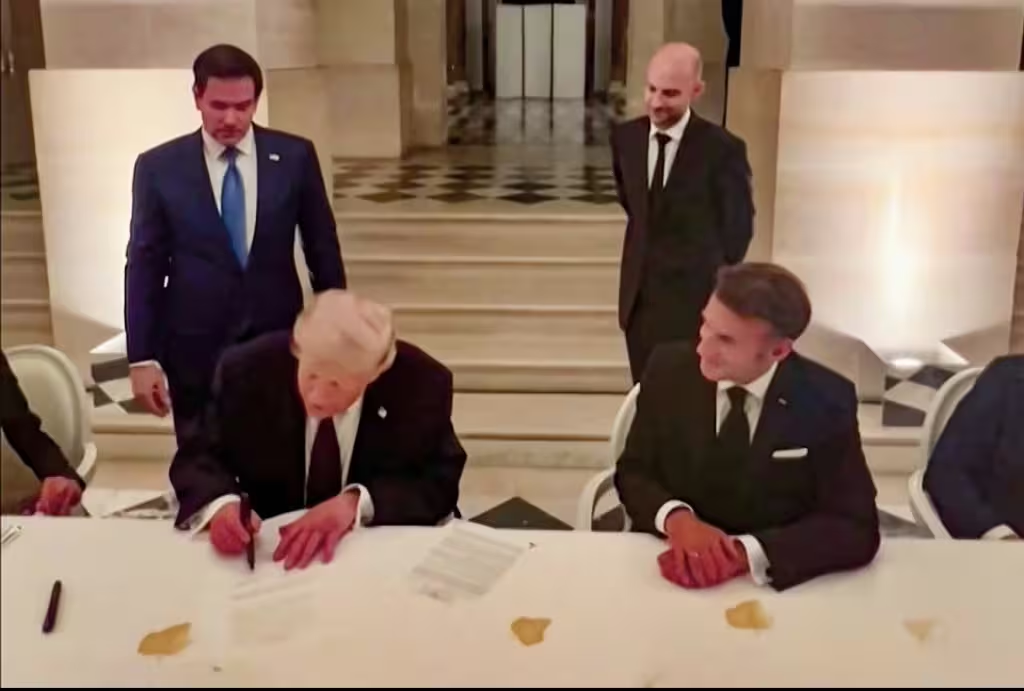
Trump is pushing the Iran deal forward through the language of markets and peace.
In a post on his platform, he said the United States is “committed to peace” and urged all sides in the Middle East to allow the negotiations to “unfold beautifully.” He added that markets “love what is happening,” pointing to lower oil prices and rising stocks.
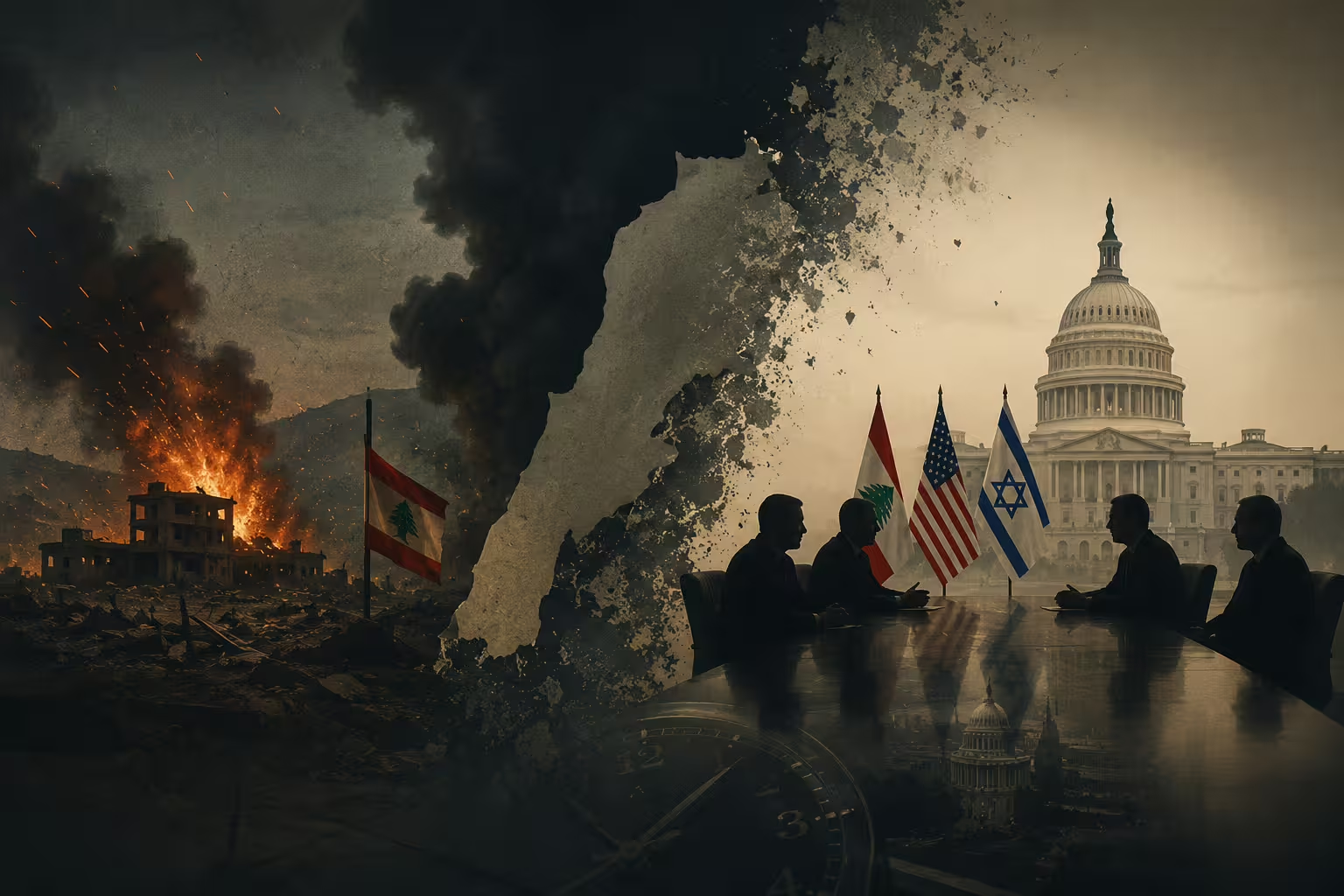
Then he set the political bar: a full ceasefire on every front, including Lebanon, Hezbollah and Israel.
From Tehran, the message attributed to Mojtaba Khamenei sounds very different.
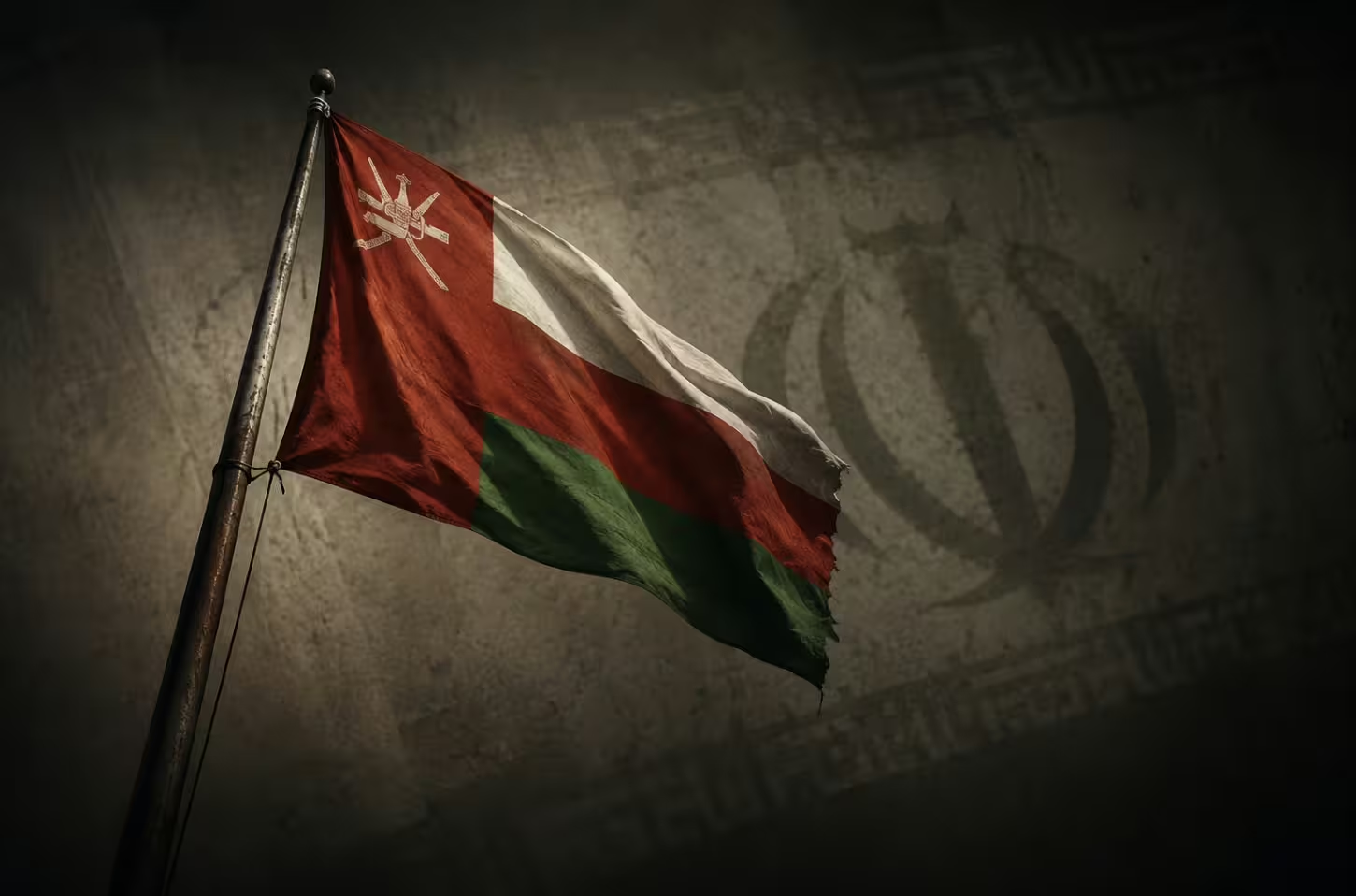
Khamenei gives permission for the agreement, but not without conditions. He says he held a “different view,” and that his approval came only after President Masoud Pezeshkian pledged to protect Iran’s rights and the “Resistance Front.”
The younger Khamenei is distancing himself from the deal and placing the burden on the government.
Details
• Trump is trying to frame the agreement as a regional peace track, not just a bilateral understanding with Iran.
• By naming Lebanon, Hezbollah and Israel, he extends the deal into the most sensitive active front.
• The White House wants to show that traffic through Hormuz is moving, oil prices are falling and stocks are rising.
• The statement attributed to Khamenei says future in-person talks do not mean accepting the “enemy’s” position.
• Khamenei ties his approval to Pezeshkian’s pledge to safeguard the “rights of the Iranian people” and the “Resistance Front.”
• That phrasing gives the regime domestic cover: it can negotiate with Washington without looking like it is abandoning Hezbollah or its wider network of allies.
• The statement does not mention Mohammad Bagher Ghalibaf, despite his role in the agreement track, leaving Pezeshkian at the front of the political responsibility.
• That arrangement protects Khamenei if negotiations stall or if the government is accused of making concessions.
• Vance is also selling the deal through fast implementation, after more than 12.5 million barrels of oil moved through Hormuz.
• But the files that helped trigger the war remain open: missiles, drones and militias.
Behind the story
There are now two narratives for one agreement.
Trump says peace is moving, markets are relaxing and the fronts must go quiet.
Khamenei says Tehran agrees, but does not trust Washington, does not accept the enemy’s position and will not abandon the “Resistance Front.”
That is the core of the story.
Washington wants a broad ceasefire that calms oil markets, Lebanon and Israel.
Tehran wants the benefits of the deal without paying a clear ideological price.
So far, the agreement appears to be working economically before it has been translated politically.
What to watch
First, Lebanon.
If Israel keeps operating against Hezbollah, the ceasefire-on-all-fronts clause could become the first flashpoint.
Second, Tehran.
If Pezeshkian enters the 60-day talks under Khamenei’s hard ceiling, the negotiation window could become an internal loyalty test as much as a diplomatic process.
The deal opens a path.
But each side is walking it with a different calculation.