
The latest
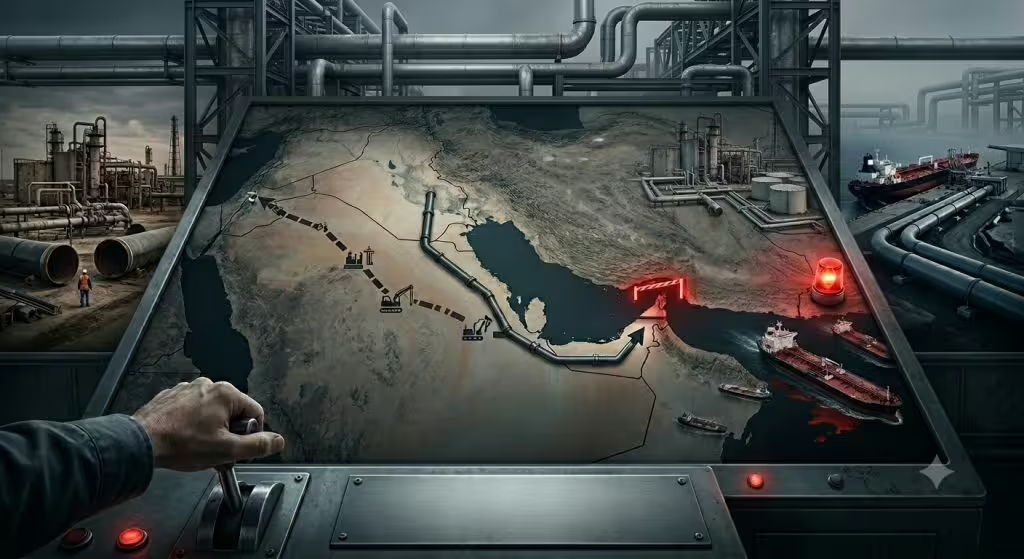
Iraq and the UAE are moving to expand oil export routes outside the Strait of Hormuz as they seek to limit the impact of disruptions along one of the world’s most important energy corridors. Analysts warn, however, that existing and planned alternatives will not be enough to replace the full volume of oil that once flowed through the strait.
Details
• Abu Dhabi is accelerating work on a new pipeline to Fujairah, a project expected to begin operations in 2027 and significantly expand ADNOC’s export capacity outside the Strait of Hormuz.
• Abu Dhabi Crown Prince Sheikh Khaled bin Mohamed bin Zayed Al Nahyan called in May for the project to be completed more quickly to meet growing global energy demand.
• While the UAE retains an alternative export outlet through Fujairah, energy infrastructure across the region remains vulnerable to security threats and attacks.
• The International Energy Agency estimates that alternative pipelines in Saudi Arabia and the UAE provide between 3.5 million and 5.5 million barrels per day of spare capacity, compared with roughly 20 million barrels of oil and petroleum products that moved through Hormuz daily before the war.
• Building new export routes requires major investment, cross-border agreements and years of construction.
• Iraq’s cabinet last week approved plans to accelerate exports through the Kurdistan-Turkey pipeline network, potentially increasing capacity from 220,000 barrels per day to 770,000 barrels per day.
• The route provides access to Turkey’s Mediterranean port of Ceyhan, offering Baghdad an export corridor that bypasses the Gulf.
• Data from QuantCube Technology showed a sharp decline in Iraqi exports since the war began, reflecting the country’s heavy dependence on the Strait of Hormuz.
• QuantCube chief economist Alan Le Maignan said Iraq faces a more difficult situation than the UAE or Saudi Arabia because it has fewer options to reroute exports.
• Baghdad said in May that it exported about 10 million barrels through Hormuz in April, down from 93 million barrels before the conflict.
What to watch
The pace of pipeline expansion projects will determine how effectively Gulf producers can adapt to prolonged disruptions in the Strait of Hormuz. But securing those alternative routes may prove just as important as building them.