The latest
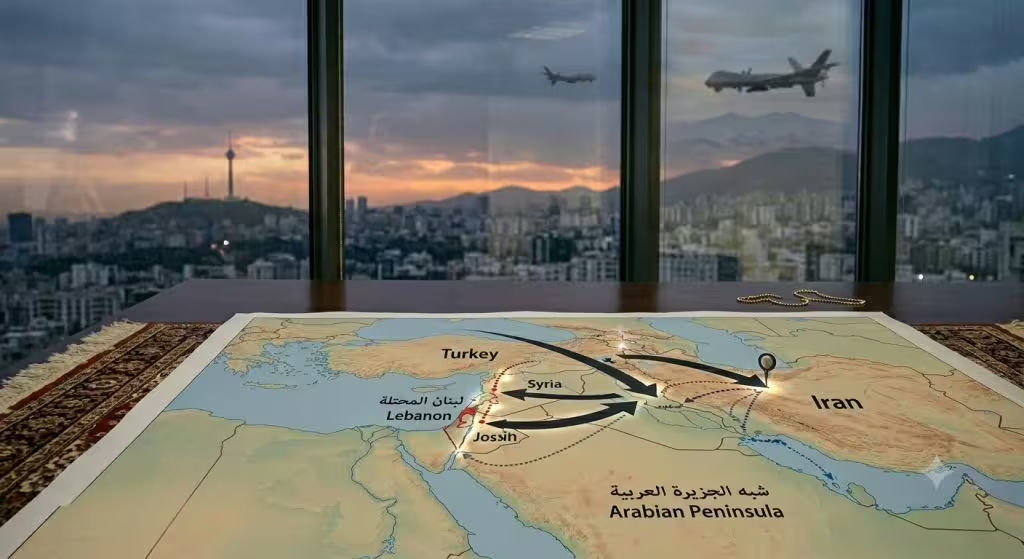
Iran did not see its recent attack on Israel as simply retaliation for strikes targeting Hezbollah in Lebanon. It viewed the move as a strategic message aimed at reinforcing new rules of engagement and preventing what it sees as an Israeli effort to reshape the regional balance of power.
While the attack carried the risk of a broader conflict, Tehran’s calculations were different. Iranian leaders appear to believe that remaining silent after Israeli strikes on Beirut’s southern suburbs would have damaged Iran’s credibility with its allies and weakened its deterrence posture.
Ali Vaez, Iran project director at the International Crisis Group, said that failing to respond would have been interpreted as weakness at a time when Tehran is trying to preserve its regional influence while negotiating with Washington.
Details
• For weeks, Iran largely limited itself to condemning Israeli attacks on Hezbollah. However, it had repeatedly warned that strikes on Beirut’s southern suburbs would cross a red line.
• Sadegh Larijani, chairman of Iran’s Expediency Council, described the response as part of a strategic doctrine under which any attack on a member of the “Axis of Resistance” would trigger a response beyond the immediate battlefield.
• Tehran is seeking to restore its image as a reliable protector of its regional allies after criticism over its limited responses to earlier Israeli operations that weakened Hezbollah and killed its former leader, Hassan Nasrallah.
• Since the recent war with the United States and Israel, Iran’s new leadership has embraced a tougher approach and believes pressure tactics, including threats to shipping through the Strait of Hormuz, have provided valuable leverage.
• Iranian officials and analysts argue that a more aggressive posture has helped the country withstand military and economic pressure while forcing its adversaries to take its interests more seriously.
• Tehran still sees Hezbollah as a central pillar of its deterrence strategy. Further weakening the group, Iranian analysts argue, would make any future confrontation with Israel significantly more costly for Iran.
• Iranian leaders also view Israeli operations in Lebanon as part of a broader effort to erode the strategic gains Tehran believes it secured during the last conflict, even as diplomatic efforts continue to end the war.
• Concerns are also growing in Tehran over U.S. activity in the Gulf and around the Strait of Hormuz, which Iranian officials see as an attempt to contain their economic and military influence during the current ceasefire period.
What to watch
The key question is whether Iran’s response will establish a new deterrence framework or push the region toward another cycle of escalation. Tehran appears to be betting that President Donald Trump has little appetite for a new large-scale war, giving Iran greater room to take risks and project power in pursuit of its regional objectives.