The latest
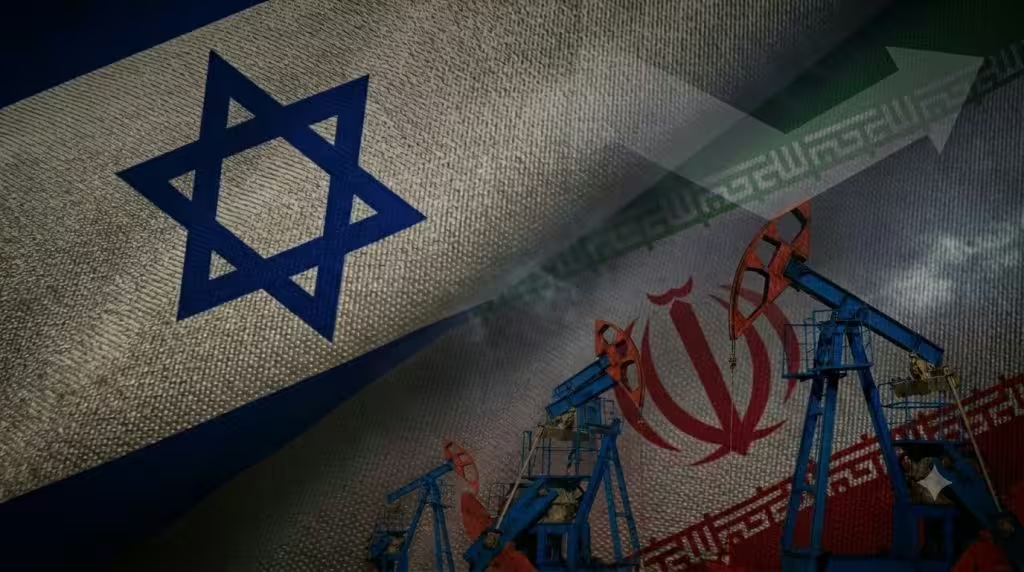
Oil prices surged on Monday as escalating tensions between Iran and Israel reignited concerns about the durability of the ceasefire and the risk of a wider conflict in the Middle East.
U.S. West Texas Intermediate crude for July delivery rose 3.18% to $96.05 a barrel, while Brent crude for August delivery gained 3.46% to reach $93.67 a barrel.
The rally followed an Israeli military announcement that its air force had struck military targets in western and central Iran in the latest round of exchanges between the two countries.
In Washington, the White House confirmed that President Donald Trump received a briefing after an Iranian missile struck Israel for the first time since the ceasefire took effect. Trump told Fox News that the missile attacks would “certainly not help” ongoing negotiations.
A senior Iranian official involved in talks with Washington told MS NOW that reaching an agreement with the Trump administration was “no longer possible at this stage.”
Meanwhile, Iranian Parliament Speaker Mohammad Bagher Ghalibaf said the U.S. naval blockade and military actions linked to Lebanon amounted to violations of the ceasefire. In a post on X, he warned that U.S. bases and assets in the region had become “legitimate targets.”
Details
• Oil markets reacted to growing fears of a wider regional escalation.
• Israel said it carried out fresh strikes inside Iran.
• Trump warned that the latest attacks could undermine diplomatic efforts.
• An Iranian official signaled that negotiations with Washington had reached a dead end.
• OPEC+ approved a production increase of 188,000 barrels per day starting in July.
What to watch
Markets are focused on two key questions: whether the military exchanges will expand into a broader conflict that threatens energy supplies, and whether U.S.-Iran diplomacy can survive the mounting pressure from events on the ground.