The latest
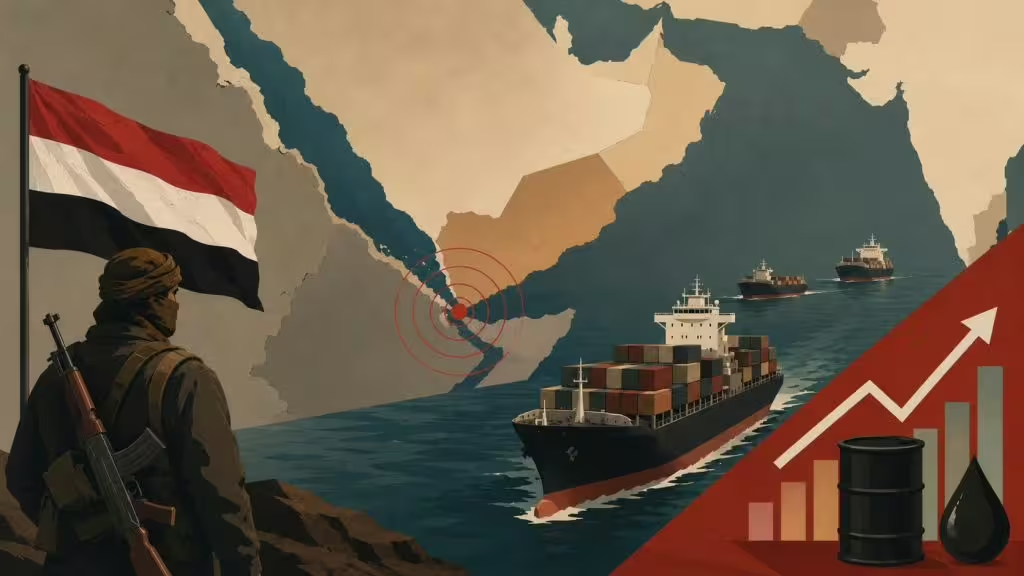
The Houthis have pushed the Bab el-Mandeb Strait back to the center of global economic concerns after announcing a ban on Israeli shipping in the Red Sea, amid renewed regional tensions involving Iran.
While the declaration is formally directed at Israeli vessels, previous disruptions in the Red Sea showed that the economic fallout reaches well beyond Israel, affecting global trade routes, supply chains, and energy markets.
Details
• Bab el-Mandeb serves as the southern gateway to the Suez Canal, one of the world’s most important maritime corridors. A significant share of trade between Asia and Europe passes through the route, making any disruption a global economic issue rather than a purely regional one.
• During the previous wave of attacks between 2023 and 2025, shipping companies rerouted vessels around the Cape of Good Hope to avoid security risks. The detours added days to voyages and increased fuel, insurance, and freight costs.
• The impact was not limited to Israel. Egypt suffered a sharp decline in Suez Canal revenues, while companies worldwide faced supply chain disruptions and higher transportation costs.
• The risks may be greater this time. The Red Sea has become increasingly important for energy markets as uncertainty around the Strait of Hormuz has grown. The route has emerged as a key alternative corridor for Gulf oil exports, making any threat to navigation a potential driver of higher oil prices and supply concerns.
• Global shipping companies continue to approach the region cautiously. Several major carriers have either maintained or resumed diversions away from the Red Sea because of ongoing security concerns.
• Within Israel, the Port of Eilat is again expected to be the most exposed asset. However, most Israeli maritime trade flows through Mediterranean ports, limiting the direct impact compared with the broader consequences for regional commerce and energy markets.
What to watch
The key question is whether the Houthis will move beyond rhetoric and resume attacks on commercial vessels in the Red Sea. If they do, the consequences are unlikely to stop at Israel’s borders. Gulf economies, Egypt, global energy markets, and international supply chains could all face renewed pressure.