The latest
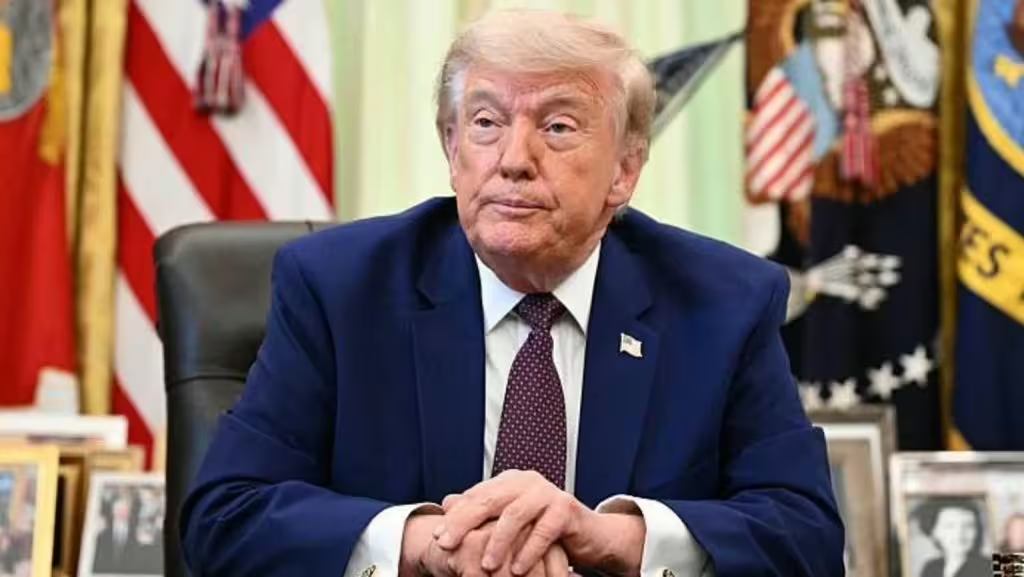
President Donald Trump signaled a possible shift in U.S. priorities on Iran’s nuclear file, suggesting that the fate of Tehran’s enriched uranium stockpile is less important than ensuring Iran never obtains a nuclear weapon.
Speaking to reporters on Thursday evening, Trump played down reports that the United States could seek to seize or recover Iran’s remaining nuclear material. He said there was “no reason” to retrieve what he described as Iran’s nuclear “dust,” arguing that it is effectively buried.
Trump also said Washington is not considering a covert operation to recover Iranian uranium. Instead, he said the United States has advanced monitoring capabilities and remains confident in its ability to track developments.
The comments mark a notable change in emphasis. Trump had previously spoken about America’s ability to recover the material, but his latest remarks suggest the issue may no longer be at the center of U.S. calculations.
Instead, he said the “main part” of any future agreement would be ensuring that Iran does not possess a nuclear weapon. He added that a broader deal could also include guarantees aimed at keeping the Strait of Hormuz open to global trade.
Details
• Trump said talks with Tehran are “going well” and reiterated his optimism about diplomacy.
• He again suggested that a successful agreement could eventually lead to a meeting with Iranian Supreme Leader Ali Khamenei, saying it would be an “honor” to meet him.
• Trump maintained a hard line on Iran’s military capabilities, saying the United States would prevail in the end “theoretically or militarily.”
• He warned that any future attack resulting in American casualties would trigger a rapid response from Washington.
• Trump claimed Iran’s military capabilities have been severely degraded and said Tehran now has only a limited number of missiles remaining.
• He also argued that Iran’s naval and air forces suffered major setbacks during the recent conflict.
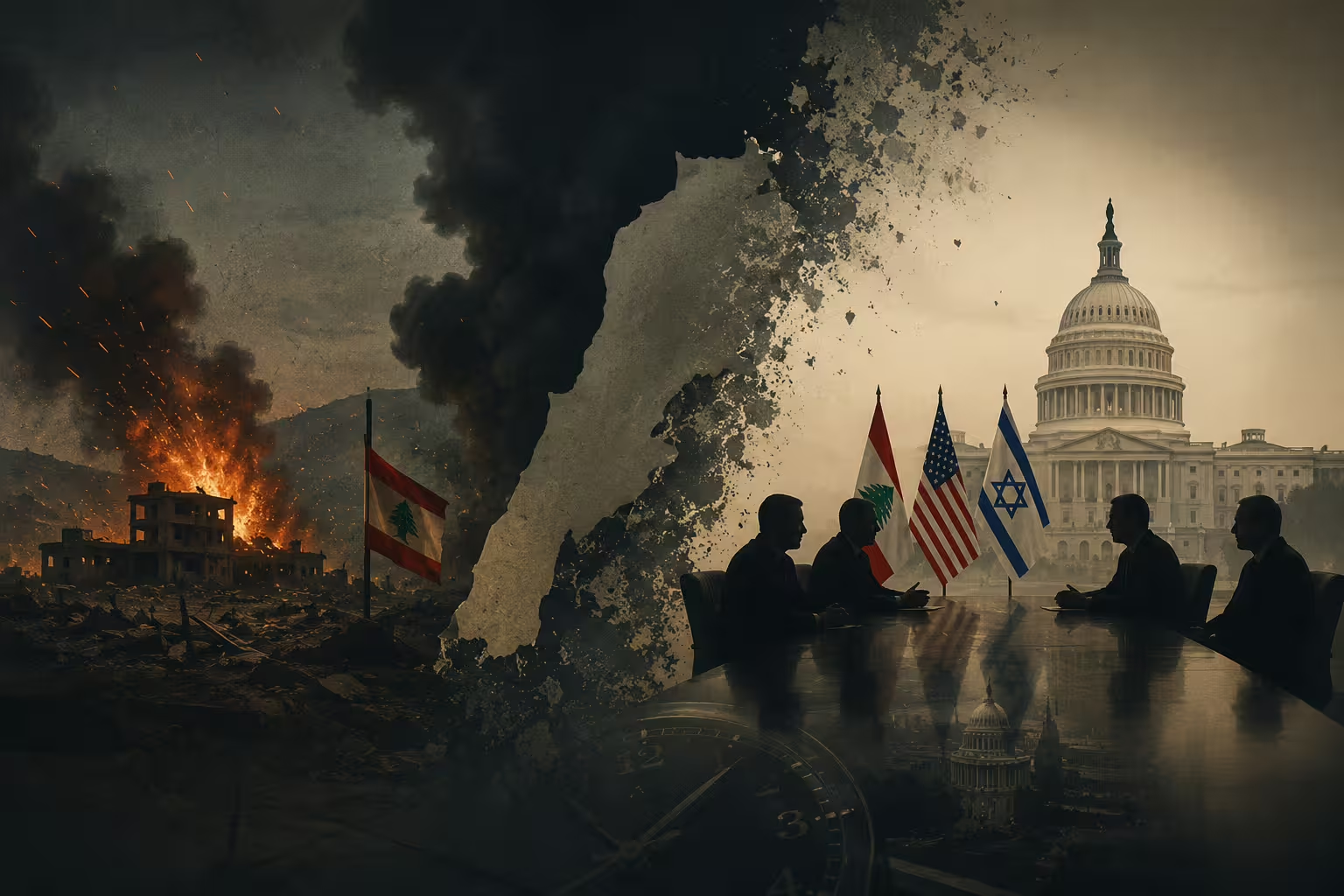
• On regional issues, Trump described Lebanon as part of the wider confrontation with Iran and said the various fronts in the region are interconnected.
• He revealed that he discussed Lebanon with Israeli Prime Minister Benjamin Netanyahu and said he hopes the country can achieve a period of stability.
• Trump also claimed that Hezbollah contacted the United States during the crisis, though he provided no further details.
What to watch
The key question is whether Trump’s remarks reflect a genuine shift in the U.S. approach to Iran’s enriched uranium stockpile or a negotiating strategy aimed at narrowing the focus to nuclear weapons while leaving more contentious issues for later stages of a potential agreement.