Details
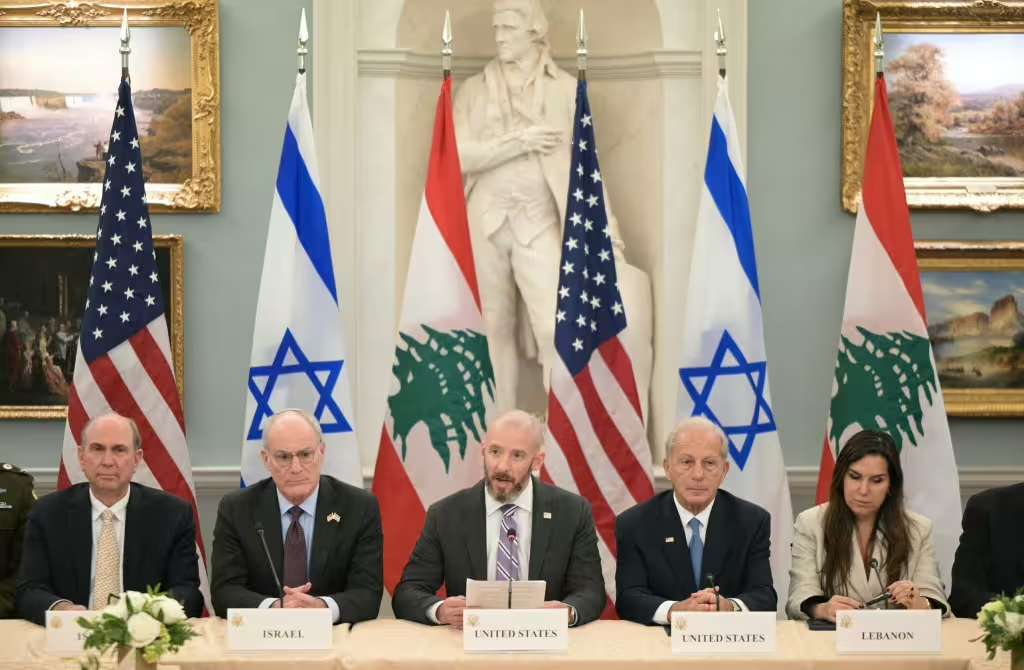
- Israel and Lebanon agreed to renew their ceasefire after US-mediated talks in Washington, with both sides committing to continue negotiations toward a broader agreement.
- The two countries do not have formal diplomatic relations, making the Washington talks significant even as the ceasefire remains fragile.
- The agreement requires a complete halt to Hezbollah attacks and the withdrawal of the group’s fighters from areas south of the Litani River near the Israeli border.
- Hezbollah was not part of the negotiations and is not controlled by Lebanon’s government. A Hezbollah official said the group would not accept a partial ceasefire, although reports said it may support a broader truce if Israeli attacks also stop.
- The deal also proposes “pilot zones” where the Lebanese Armed Forces would take exclusive security control and all non-state armed groups would be excluded.
- Despite the announcement, Israeli forces carried out strikes in southern Lebanon, while Hezbollah claimed new rocket and drone attacks against Israeli positions.
- Israeli Defence Minister Israel Katz said Israeli troops would remain in occupied areas of southern Lebanon for now, describing them as a security buffer zone.
- The renewed ceasefire follows earlier truce attempts that failed to fully hold, with both sides accusing the other of violations.
- The Lebanon front has become a major obstacle in US-Iran diplomacy. Tehran has insisted that Lebanon be included in any broader settlement, while Trump has pushed to separate the Lebanon conflict from the Iran-war talks.
- Netanyahu had threatened to strike Beirut earlier in the week, but backed off after pressure from Trump, who said he wanted the ceasefire restored.
- More than 3,200 Lebanese and at least 30 Israelis have been killed in the renewed fighting, according to authorities cited in the reporting.
- Israeli and Lebanese representatives are expected to meet again the week of June 22 to work on implementation and broader security arrangements.
What Else
The main test is whether Hezbollah accepts the ceasefire conditions and whether Israel reduces operations long enough for the pilot zones and Lebanese army deployment plan to take shape. If the truce holds, it could remove one of the biggest obstacles in US-Iran talks. If fighting continues, Lebanon may remain a pressure point in the wider regional conflict.