The Story
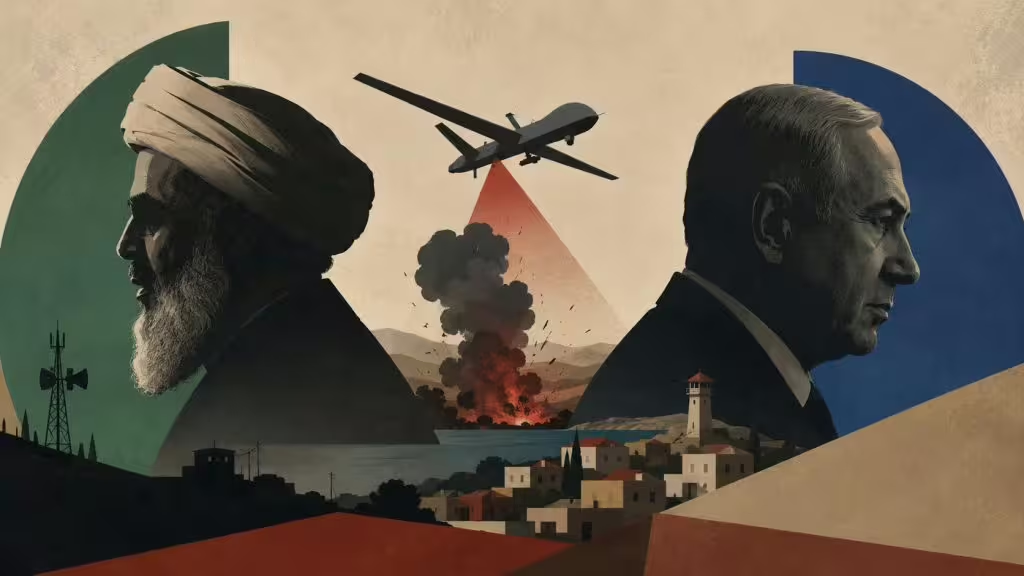
Hezbollah Secretary-General Naim Qassem on Thursday rejected the ceasefire understandings announced between Israel and Lebanon, stating that the group would not accept any agreement that allows Israeli forces to remain on Lebanese territory.
Qassem said the proposed arrangements amount, in his view, to a response to American and Israeli demands. He argued that any framework linking a halt in military operations to conditions concerning Hezbollah or its weapons is unacceptable.
He added that the priority of any agreement should be ending Israeli military operations and securing a withdrawal from Lebanese territory before addressing any other issues.
Developments on the Ground
Shortly after Qassem’s speech, air raid sirens sounded across several communities in the Western Galilee following the detection of drones.
Israeli authorities reported that a drone crashed near the town of Shlomi approximately 20 minutes after Netanyahu and Defense Minister Israel Katz had left the area, where they had been meeting with local officials.
No immediate injuries were reported. Footage from the scene showed residents rushing to shelters amid heightened alarm.
What Did Qassem Say?
- He argued that calls to disarm Hezbollah as a prerequisite for any settlement are intended to weaken Lebanon and undermine its stability.
- He said that as long as Israeli military forces remain present, resistance will continue, stressing that Hezbollah has not committed to ending what he described as responses to “aggression.”
- He called on the Lebanese government to halt direct negotiations with Israel, arguing that the current security track leads to “surrender” rather than a sustainable settlement.
- He emphasized that the future of Hezbollah and its weapons is an internal Lebanese matter and that no external party has the right to impose conditions on it.
Israel: The Agreement Is a Test, Not the End of the War
Israeli officials, meanwhile, insist that the new understandings do not mark the end of the military campaign but rather the beginning of a test of the Lebanese state’s ability to assert control in the country’s south.
According to Israeli officials, the ceasefire is contingent on a complete halt to Hezbollah fire and the withdrawal of its operatives from areas south of the Litani River.
Israel also maintains that it retains freedom of military action against what it considers emerging threats and has warned that any new attack would be met with a forceful response that could include targets in Beirut.
What Comes Next?
The understandings announced in Washington call for the establishment of zones in which the Lebanese Armed Forces would assume exclusive responsibility for security, while prohibiting any armed presence outside state institutions.
Israel argues that the success of these arrangements will shape the future of political and security relations between the two sides. Hezbollah’s continued rejection of the terms, however, remains the biggest obstacle to implementation.
In the background, the United States is pushing to strengthen the role of the Lebanese state and reduce Iranian influence in Lebanon through support for the Lebanese military and state institutions.
With Hezbollah continuing to reject the agreement’s conditions, the ceasefire remains fragile and could unravel quickly if the border witnesses renewed escalation or violations of the announced understandings.