News
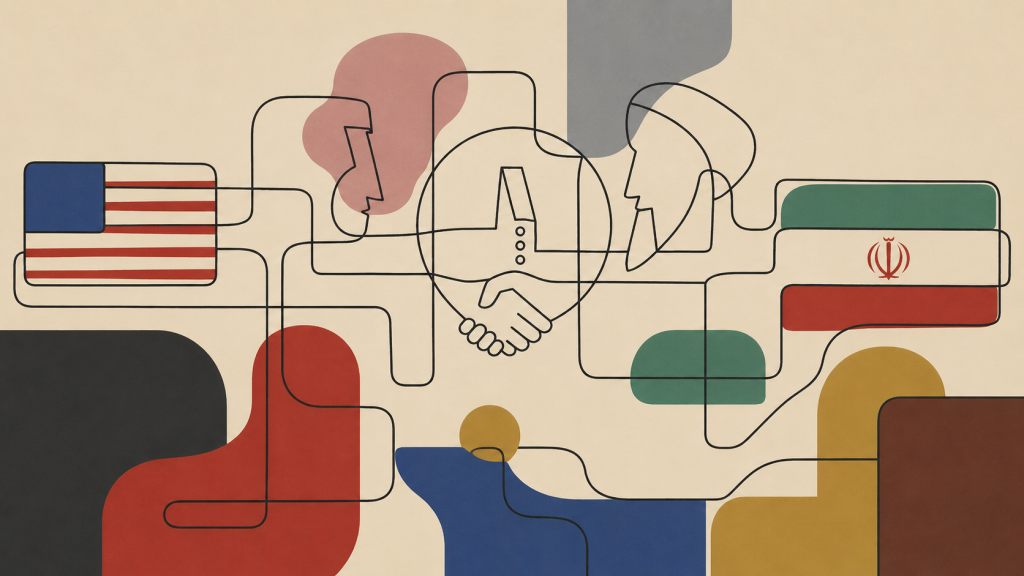
U.S.-Iran negotiations are moving along a track that may be the closest to a breakthrough in weeks, but it remains an incomplete and uncertain breakthrough.
According to reports, Qatar and Pakistan, with the participation of other regional mediators, drafted an amended peace memo to try to bridge the gaps between the United States and Iran, as Trump weighs whether to resume a major strike on Iran or give diplomacy one last chance.
The new track is based on the idea of a letter of intent that Washington and Tehran could sign to formally end the war and open a 30-day negotiation period on major files:
- Iran’s nuclear program
- Reopening the Strait of Hormuz
- The gradual release of frozen Iranian funds
- Guarantees against a return to war
Details:
• Qatar entered the Tehran track directly, as Axios reported that a Qatari delegation visited Iran this week to discuss the latest draft, as part of an effort involving Pakistan, Saudi Arabia, Turkey and Egypt to narrow the gaps.
• Informed sources say Islamabad’s channel has remained central to the exchange of messages. Dawn reported that Washington sent a response to Iran’s 14-point proposal through Pakistan, and that Tehran is currently reviewing it, while Pakistani Interior Minister Mohsin Naqvi returned to Tehran for the second time in less than a week.
• The nuclear dispute remains the biggest obstacle: Iran wants to discuss the nuclear file within 30 days after a permanent end to the war, while Washington wants it resolved before any permanent agreement. This means talk of a breakthrough does not mean the deal is ready.
• On the Saudi side, Foreign Minister Faisal bin Farhan’s statement came as a clear signal of support for the diplomatic track.
Bin Farhan said the kingdom appreciates Trump’s response in giving negotiations an additional chance to reach an agreement that ends the war and restores security and freedom of navigation in the Strait of Hormuz to what it was before February 28, 2026. He also praised Pakistan’s mediation and urged Iran to seize the opportunity.
• Yedioth Ahronoth focused on Iran saying that the exchange of messages with the United States is continuing and is based on its 14-point proposal.
Yedioth’s coverage also indicated that the Iranian proposal includes demands related to ending the war, lifting restrictions, releasing frozen funds, and establishing new arrangements for the Strait of Hormuz, in exchange for limited flexibility on discussing the nuclear file later.
• On the Israeli side, the crisis appears deeper. Axios reported that Trump held a long and difficult call with Netanyahu, and that the disagreement centered on whether to wait for an agreement or resume the war.
• A U.S. source said Netanyahu’s hair was on fire after the call, while Netanyahu believes resuming the war is necessary to weaken Iran’s military capabilities and the regime’s critical infrastructure.
• Trump is trying to keep both the stick and the carrot on the table. He said the only question is whether Washington will finish the matter militarily or whether the Iranians will sign a document. He also said Netanyahu will do what he wants on Iran.
• On the UAE side, there is no political statement parallel to the Saudi one so far, but the cautious wait-and-see approach is understandable. The UAE sits at the heart of the Hormuz and energy equation, and has faced direct security pressure in recent weeks. Reports have also discussed a long-term Emirati path to reduce dependence on Hormuz through an alternative pipeline toward Fujairah.
• Economically, the first market signal of possible de-escalation appeared after the Financial Times reported that three supertankers attempted to cross the Strait of Hormuz on a route described as designated by Iran, pushing Brent prices down by around 6% on hopes of renewed oil flows.
What next?
The decisive indicator in the coming hours is not the volume of messages, but the content of Iran’s response to the latest draft:
- Will Tehran accept concrete nuclear commitments from the start, or will it insist on delaying the nuclear file until after the war ends and Hormuz is reopened?
So far, there is serious diplomatic movement, clear Saudi cover, an active Pakistani-Qatari role, and visible Israeli anger. But there is no announced agreement.
Sources: Al Arabiya, Arab News, Financial Times, The Wall Street Journal, The National.