News
Taiwan Travelogue has entered the history of the International Booker Prize after the judging panel awarded the 2026 prize to Taiwanese author Yang Shuang-zi and translator Lin King.
The prize was announced at a ceremony at London’s Tate Modern. It is worth £50,000 and is split equally between the author and the translator, reflecting the central role of translation in the award.
Details
• The novel won as the first work translated from Mandarin Chinese to receive the International Booker Prize, one of the world’s most important awards for fiction translated into English.
• The novel was originally published in 2020, before reaching English-language readers through Lin King’s translation, published by And Other Stories in the UK and Graywolf Press in the United States.
• The judging panel selected the novel from a six-book shortlist that included works translated from German, Bulgarian, Portuguese and French.
• Chair of judges Natasha Brown described the work as a captivating and slyly constructed novel that combines romance with postcolonial critique.
• The novel had already gained major international recognition, winning the 2024 U.S. National Book Award for Translated Literature, as well as Taiwan’s Golden Tripod Award.
The idea of the novel
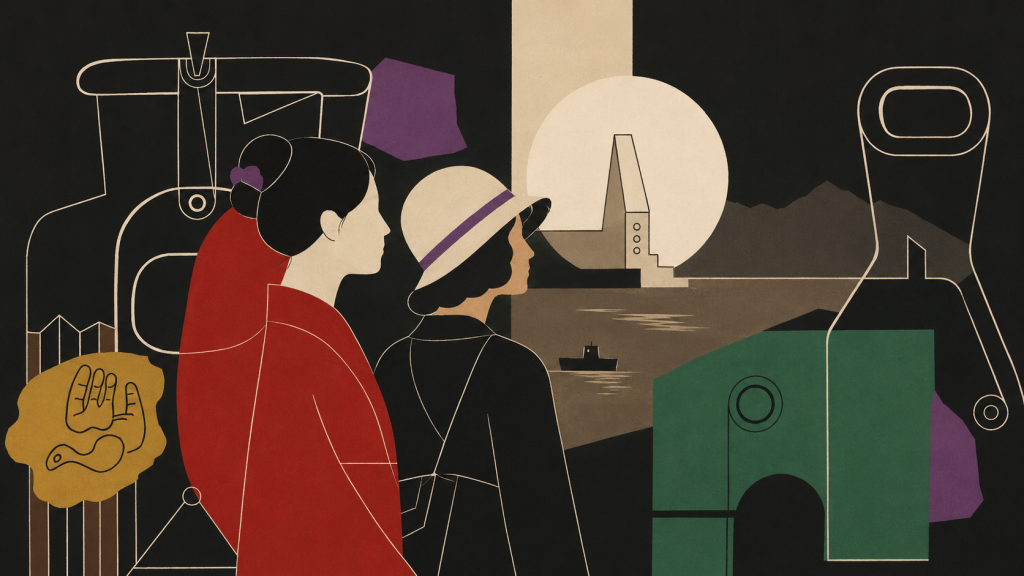
Taiwan Travelogue is set in Taiwan in the 1930s, during Japanese colonial rule.
But the novel is not told as a straightforward historical narrative. Instead, it presents itself as a contemporary translation of an old, lost text: a travel memoir supposedly written by a fictional Japanese novelist named Aoyama Chizuko after her visit to Taiwan in 1938.
During the journey, the Japanese writer is accompanied by a local Taiwanese interpreter. Through food, travel, language and misunderstanding, a complicated emotional relationship develops between two women standing on unequal sides of power: one from a colonial empire, and the other living in a land under that empire’s rule.
The novel is not only a love story. Its deeper question is sharper: can love or friendship ever be innocent inside an unequal colonial relationship? And who has the right to tell history — the colonizer, the local people, or the translator standing between two languages?
What next?
The win for Taiwan Travelogue looks like more than a literary honor for a successful novel. It is also a wider moment of recognition for Taiwanese literature in the global translation market.
What matters most is that the novel reached the prize from a politically and culturally sensitive space: Taiwan, the Chinese language, Japanese memory and colonial history. That means its impact will likely go beyond one award, potentially opening the door for more Taiwanese literature to reach English-language readers.