News
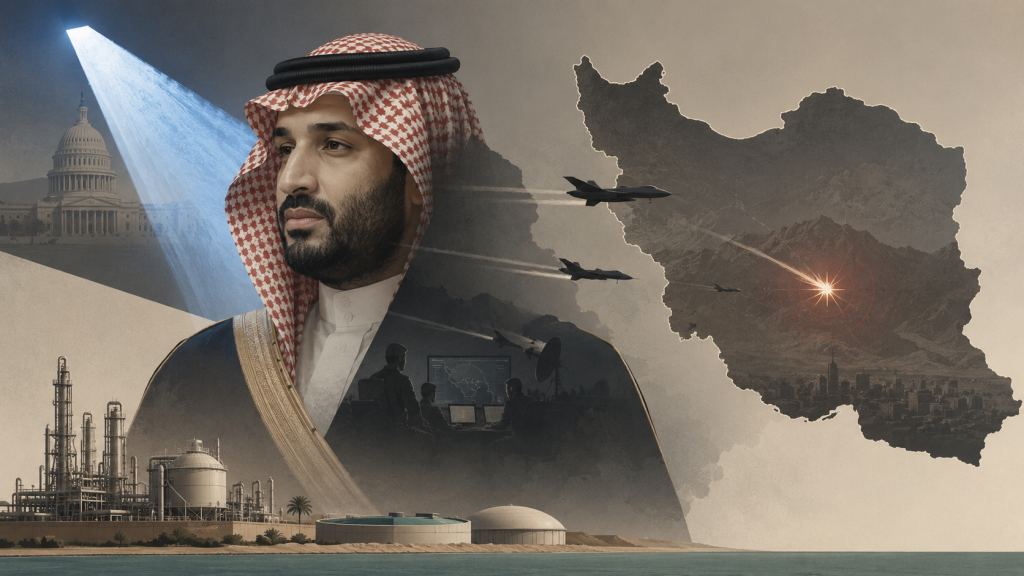
New U.S. and Western leaks have put the official Saudi narrative under difficult scrutiny, after Prince Turki Al-Faisal presented the kingdom in an Asharq Al-Awsat article as a party that chose patience, de-escalation, and avoiding the trap of war with Iran, while Reuters and The New York Times reported secret Saudi strikes inside Iranian territory during the regional war.
Details
• Prince Turki Al-Faisal wrote on May 9, 2026, that Saudi Arabia had worked since the beginning of the U.S.-Israeli war on Iran on February 28 to prevent it from breaking out, then to stop it diplomatically, stressing that Riyadh acted away from theatrics and noise to help pull the region out of the bloody conflict.
• The core of Al-Faisal’s article was clear: Saudi Arabia was not dragged into war. He said the leadership chose to endure the harm caused by a neighbor to protect the lives and property of its citizens, warning that retaliating in kind against Iran could have opened the door to the destruction of Saudi oil facilities and desalination plants.
• In the same piece, Al-Faisal linked the danger to Israel, not Iran alone, saying that if the Israeli plan to ignite a Saudi-Iranian war had succeeded, the region would have been plunged into destruction, leaving Israel as the only effective actor in the regional environment.
• But just three days later, Reuters cited Iranian and Western officials as saying that Saudi Arabia carried out strikes against Iran, then informed Tehran through backchannels before intensive diplomatic contacts led to an undeclared de-escalation understanding.
• This is where the contradiction appears, not in the principle of self-defense, but in the broader picture: Al-Faisal’s article presents Saudi Arabia as a state that avoided war, while the leaks portray it as a party that used force inside Iran and then returned to diplomacy to contain the ceiling of escalation.
• According to Reuters, the Saudi track was not similar to the Emirati one. The UAE adopted a more hardline posture, while Saudi Arabia maintained regular contact with Iran, including through Tehran’s ambassador in Riyadh. This point is sensitive because it frames the Saudi strikes, if accurate, as a limited and calculated response, not an actual entry into the war.
• Reuters also said Iranian attacks on Saudi Arabia dropped from more than 105 missile and drone attacks during the week of March 25-31 to just over 25 attacks between April 1-6, after the contacts and the Saudi threat of further retaliation.
• The New York Times, in a report republished by U.S. and European outlets, cited current and former U.S. officials as saying that Saudi Arabia and the UAE carried out separate strikes inside Iran, and that this was the first known time the two countries had directly attacked Iran. The report said both governments did not publicly acknowledge carrying out the attacks and had presented themselves publicly as defensive parties or observers of the war.
• The timing is striking: Al-Faisal’s article was published on May 9, Reuters published its leaks on the Saudi strikes on May 12, and The New York Times followed on May 14 with broader U.S. confirmations. This sequence makes the leak look like an indirect response to a Saudi attempt to shape a different narrative: the kingdom was not dragged into war, but it also did not remain completely outside it.
• More importantly, the leaks do not completely undermine Al-Faisal’s message, but they reveal what was hidden between its lines. The two narratives can be read together this way: Saudi Arabia rejected the open war Israel wanted, but it carried out a limited and secret military response when Iran crossed the limits of patience.
• The UAE appears in the story only as a point of comparison. The Wall Street Journal reported that Abu Dhabi carried out secret strikes inside Iran, including an attack on a refinery on Lavan Island.
The real contradiction is not only between “peace” and “military retaliation,” but between the public narrative and the management of war from behind the scenes.
Publicly, Riyadh wanted to say it did not fall into the Israeli trap and did not give Netanyahu a Saudi-Iranian war that would serve his regional project. In practice, the leaks say the kingdom did not simply settle for patience, but used force in a limited way, then kept it politically hidden so it would not turn into open war or create domestic and Gulf embarrassment.
What’s Next?
The leaks suggest that Washington may be trying to establish a new narrative of the war: the United States and Israel were not alone in the confrontation; Gulf states also took part in retaliation when they came under Iranian attacks. For Riyadh, the risk is now not only military, but political too: how to preserve the image of a rational mediator with Iran while also avoiding the appearance of a state that absorbed attacks without responding.
So far, there has been no official Saudi confirmation or independent verification proving the details of the alleged strikes inside Iran.
Sources: