
Iranian oil shipments are continuing to flow toward China despite the U.S. naval blockade imposed in the Gulf of Oman in mid-April to choke off Tehran’s oil exports and cut its funding sources.
Washington has intensified inspections and interceptions along maritime routes leading to Asia, while the Trump administration has accused China of financing terrorism through purchases of Iranian crude. According to U.S. officials, American forces have intercepted more than 70 vessels since the blockade began, including one tanker seized in the Indian Ocean more than 2,000 miles from the Gulf of Oman.
Details
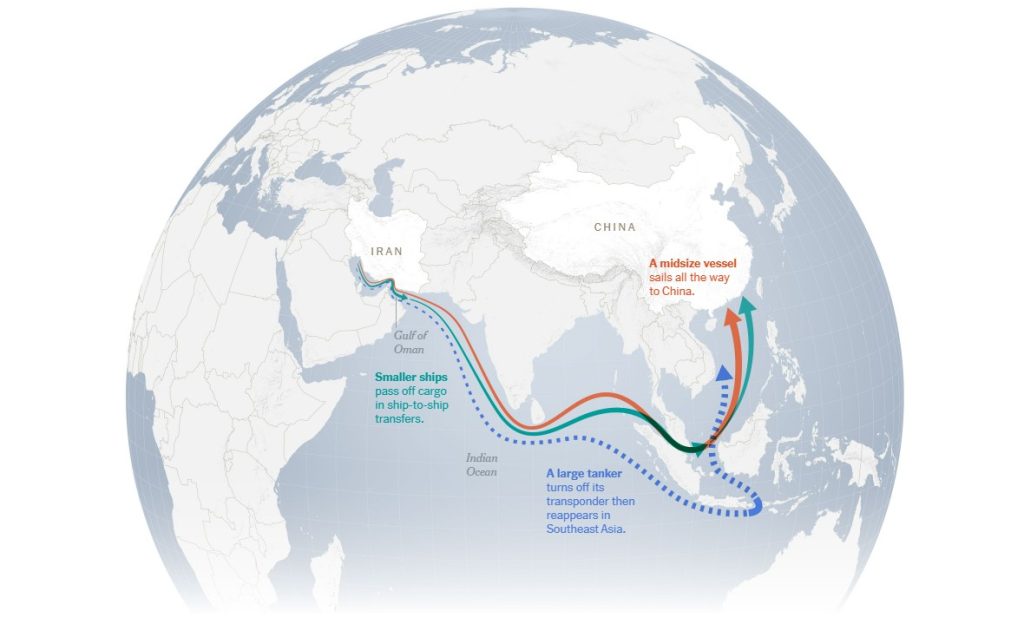
- Satellite imagery and shipping data showed that several vessels carrying Iranian crude successfully continued toward East Asia by disabling tracking systems, changing flags, and conducting ship-to-ship transfers at sea.
- One of the most closely watched vessels was the Iranian tanker Huge, which loaded nearly two million barrels of crude from Kharg Island before crossing the Strait of Hormuz with its tracking system completely switched off. It later reappeared near Indonesia before heading north toward China.
- The tanker Atomis, which is under U.S. sanctions, also continued toward Chinese waters despite using misleading navigation data and sailing under the flag of Comoros.
- Smaller vessels have relied on ship-to-ship transfers inside the Gulf of Oman or near Malaysia to conceal the Iranian origin of cargo before continuing to Chinese ports.
Data from Kpler showed floating Iranian oil storage near Malaysia falling to 51 million barrels, down from around 85 million barrels in February, reflecting the impact of the U.S. blockade on Iranian crude flows even as some shipments continue reaching Asia.
What’s Next?
Markets are closely watching whether Washington can tighten the naval blockade without disrupting commercial shipping across Asia, while China remains the decisive player in the future of Iranian oil exports.