Desert highways, pipelines, rail corridors, and alternative ports across the Gulf have become an emergency economic network, as the continued disruption of the Strait of Hormuz pushes regional states to keep trade and energy flows moving by land.
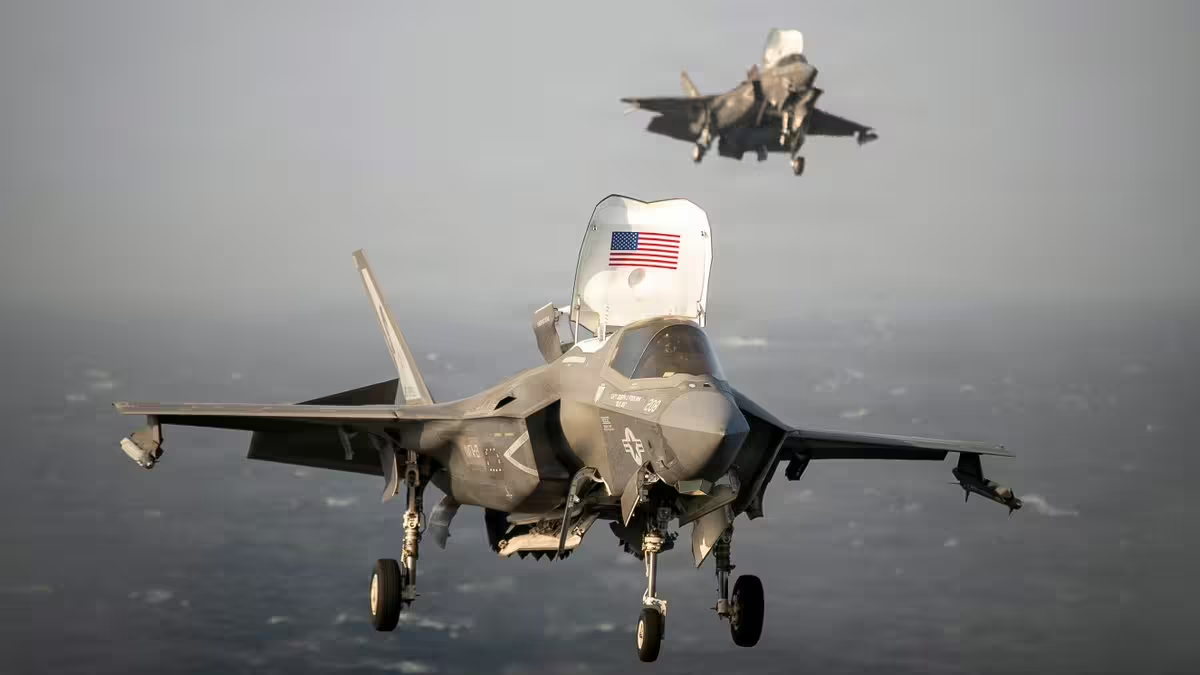
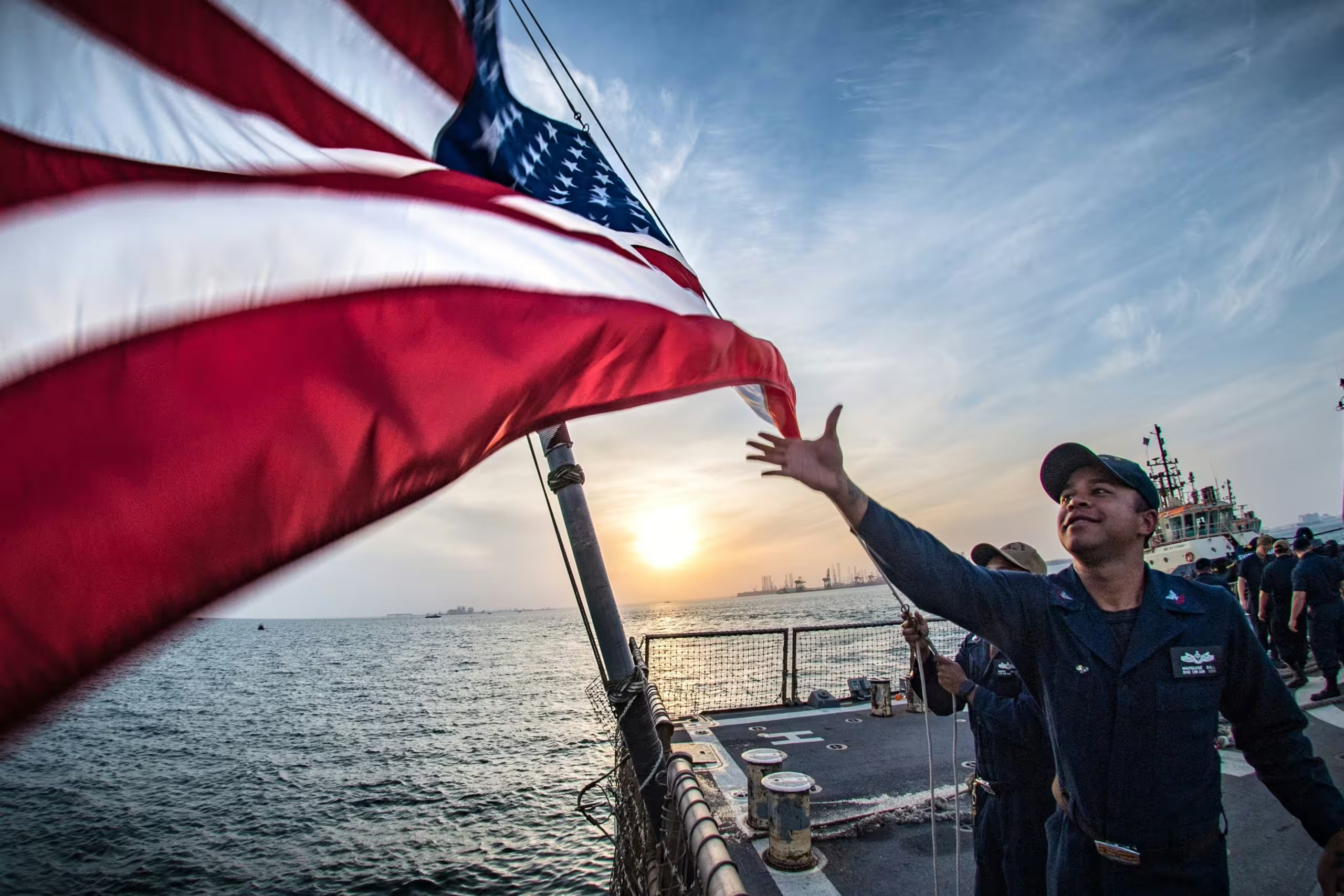
The shift comes as Iran seeks to impose a new system of permits and tolls on the world’s most important energy chokepoint, while also facing mounting pressure from a U.S. naval blockade that has sharply reduced its own ability to export crude by sea.
Ship-tracking firm TankerTrackers reported that Iran has not exported any seaborne crude shipment since the blockade began on April 13. Loading activity at Kharg Island, which handles most of Iran’s crude exports, has also been disrupted after a suspected oil spill was detected near the terminal.
Details
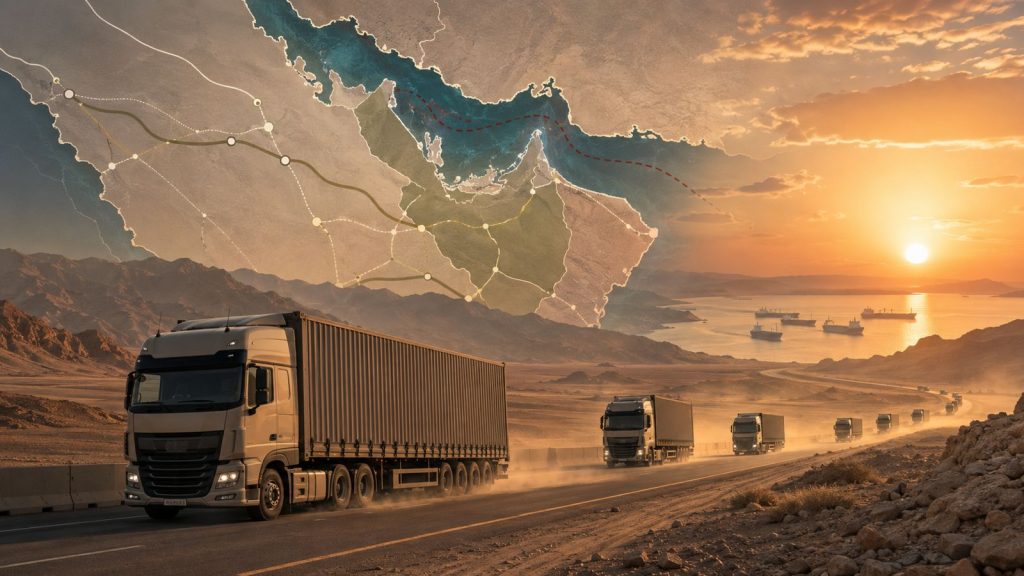
* The Wall Street Journal reported that heavy truck convoys have become a key tool for keeping goods and energy moving, after the closure of Hormuz forced Gulf states to rely more heavily on roads, rail, pipelines, and alternative ports.
* Before the closure, around 20 million barrels of crude passed through the strait each day. Traffic has since fallen to around 5% of pre-war levels, according to reports citing maritime data firm Kpler.
* Saudi Arabia’s East-West Pipeline is operating at its full capacity of 7 million barrels per day, but that capacity is not enough to replace the lost maritime flow through Hormuz.
* The value of goods crossing the Ramlet Khelah border post between Saudi Arabia and Oman rose from $300 million in February to $830 million in March, according to Omani data cited in economic reports.
* Saudi Arabian Railways is launching five new freight corridors linking the kingdom’s eastern and western coasts, while shipping companies including MSC and Hapag-Lloyd have begun using combined sea-and-land services through Red Sea ports and overland routes into the Gulf.
* A shortage of trucks and drivers remains a major bottleneck, although rising profits are drawing new players into the market. Reports said one Saudi transport company generated more revenue in March 2026 alone than it did during all of 2025.
* On Iran’s side, Iranian Army spokesman Brigadier General Mohammad Akraminia said Tehran’s control over the Strait of Hormuz could generate huge revenues exceeding twice the country’s oil income, according to Iranian media.
* Iran has divided oversight of the strait between the IRGC Navy in the western section and the Iranian Army Navy in the eastern section. The IRGC has also expanded its operational definition of the strait to an area stretching from the coasts of Jask and Sirik to beyond Greater Tunb Island.
* Tehran has created what it calls the Persian Gulf Strait Authority, requiring ships to submit ownership records, insurance documents, crew details, and transit routes before receiving authorization and paying tolls.
* Reuters reported that Iraq and Pakistan reached arrangements with Iran to secure passage for oil tankers and LNG carriers through the strait, including two Iraqi very large crude carriers, each carrying around 2 million barrels.
* The U.S. Treasury warned on May 1 that paying Iranian tolls could carry sanctions risk, and urged mariners to coordinate with the U.S. Fifth Fleet.
* Legal experts said Iran’s toll system conflicts with the principle of innocent passage under the UN Convention on the Law of the Sea, according to the Associated Press.
* In parallel, TankerTrackers reported that Iran went 28 days without seaborne crude exports, while loading at Kharg Island has been halted since May 6 after a suspected oil slick was detected nearby.
* Iran denied that the suspected spill came from its facilities. Vice President Shina Ansari said monitoring pointed instead to a non-Iranian tanker discharging contaminated ballast water, while Iran’s Oil Terminals Company said inspections found no leaks from pipelines, storage tanks, or loading infrastructure.
* Despite the halt in crude exports, TankerTrackers said some refined petroleum products have still left Iranian waters, partly because some tankers involved in that trade are not under U.S. OFAC sanctions.
* In the LNG market, Qatar’s shutdown of production in early March removed around 20% of global supply, but new liquefaction capacity, especially in the United States, has softened part of the shock.
* The International Energy Agency had expected global LNG supply to rise by 7% in 2026, driven by North American projects. Analysts say the disruption to Qatari supply reduces the expected surplus but does not erase it entirely.
What’s Next?
The next phase will show whether overland routes, pipelines, rail corridors, and Red Sea ports remain temporary emergency fixes or become a more permanent trade structure that reduces Gulf reliance on Hormuz.
For Iran, the equation is getting harder: Tehran is trying to turn the strait into a tool of leverage and revenue, while the same crisis is choking its own seaborne oil exports and raising the economic cost of the blockade.