
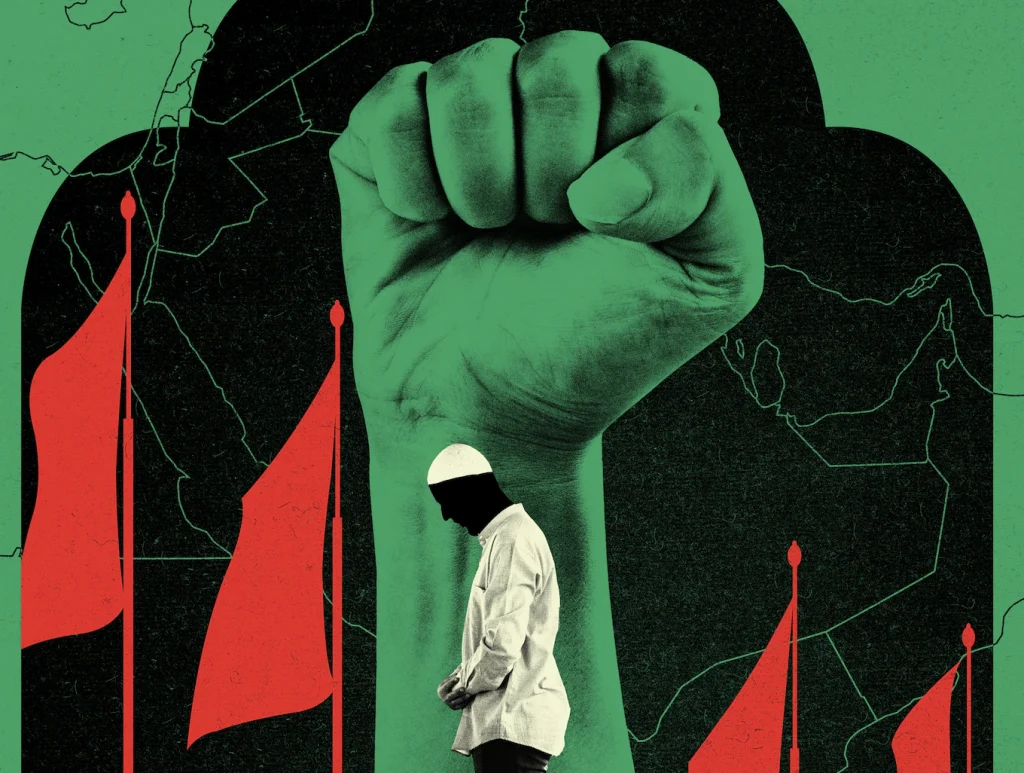
As the prospect of the Iranian regime’s collapse emerges amid recent military escalation, questions are intensifying over the future of political Islam as a dominant force in the Middle East, following decades of failed ideologies that once shaped the region.
From the rise of Arab nationalism to socialism and ultimately political Islam, sweeping promises of revival were made but ultimately gave way to compounded political, economic, and security crises.
Details
The region has experienced three overlapping ideological waves:
- Arab nationalism: Led by Gamal Abdel Nasser, it championed dignity and unity but centralized power and weakened economies, with similar outcomes in Syria and Iraq.
- Socialism: Inspired by Soviet-style systems, it resulted in economic decline and long-term developmental failure.
- Political Islam: Emerged as an alternative after earlier failures, capitalizing on political vacuums, peaking with Iran’s 1979 revolution and the rise of groups like al-Qaeda, Hezbollah, and Hamas.
Despite their differences, these movements relied on mobilizing, conflict-driven narratives and often used regional causes to mask internal shortcomings. Over time, their promises devolved into prolonged crises, from wars and terrorism to economic deterioration.
In contrast, countries such as Saudi Arabia and the United Arab Emirates have begun pursuing a different path, emphasizing economic openness and reducing the politicization of religion while maintaining religious identity within a more flexible framework.
What’s Next?
The question to be raised: will Iran as the pivotal test case. Observers are watching whether internal change could push it toward the region’s emerging path of openness, and whether a post-ideological model can take root by delivering both political stability and economic growth beyond the failures of grand ideological projects.