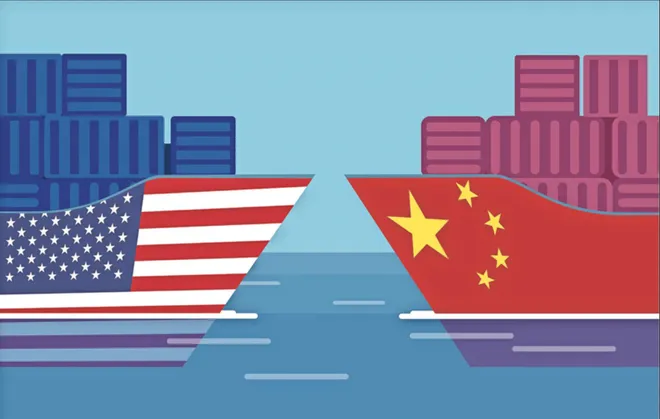
China has strengthened its global industrial dominance despite a full year of U.S. tariffs, leveraging massive investments in automation and artificial intelligence that have made its factories more efficient and lower-cost than competitors. Instead of slowing down, China’s trade surplus has surged to record levels, highlighting Beijing’s ability to absorb and adapt to trade pressures.
Data shows that while tariffs reduced direct trade with the United States, they did not significantly impact overall exports. China expanded its footprint across Asia, Africa, and Europe, while also relying on indirect exports routed through third countries.
Details
China’s industrial strength is built on several key factors:
- Market diversification: Beijing boosted exports to new regions to offset declines in the U.S. market.
- Indirect supply chains: Components are exported and assembled in other countries before entering the U.S.
- Currency weakening: Making Chinese goods more competitive globally.
- Industrial edge: Heavy reliance on robot-powered factories and cutting-edge technologies.
At the center of this transformation are smart factories. Some production lines operate with hundreds of robots in so-called “dark factories” that require no lighting due to the absence of human workers. Artificial intelligence systems are also used for quality control, monitoring every stage of production with precision.
China now surpasses the United States, Germany, and Japan in industrial robot density and installs more robots each year than the rest of the world combined. This lead is not accidental, but the result of a long-term government strategy, including the “Made in China 2025” plan, which has poured hundreds of billions into advanced manufacturing and technology.
At the same time, domestic factors have accelerated automation, particularly a shrinking young workforce and rising education levels, which have reduced interest in traditional factory jobs and pushed companies to replace labor with machines.
What’s Next?
Global industrial competition is shifting toward an automation race rather than relying solely on tariffs, with mounting pressure on the United States and Europe to accelerate investment in industrial technology to keep up with China.