Details
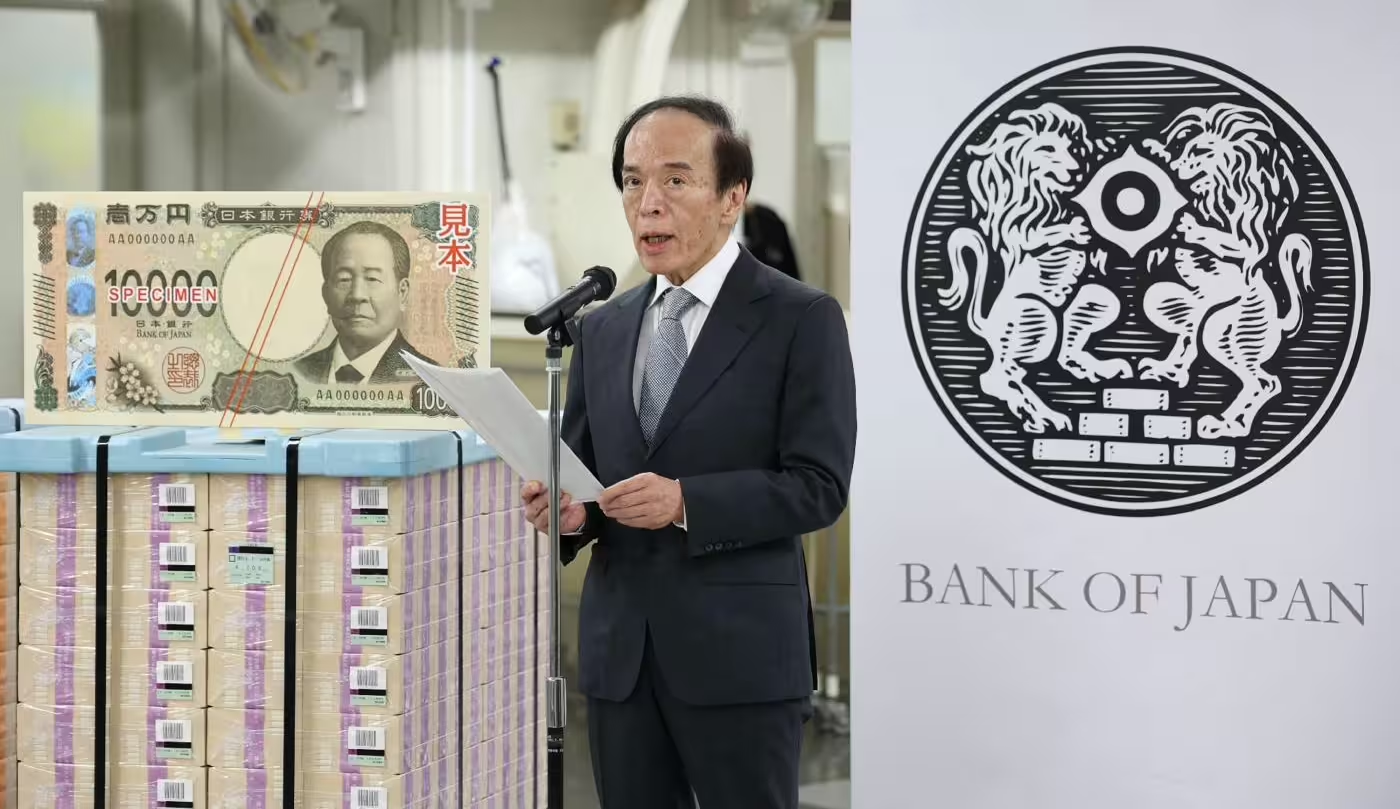
- The Bank of Japan increased its short-term policy rate by 0.25 percentage points, lifting it from 0.75% to 1%.
- The decision marks Japan’s highest interest rate level in 31 years and continues the central bank’s shift away from decades of ultra-loose monetary policy.
- Officials said companies were passing higher energy and fuel costs through supply chains at a relatively fast pace.
- The central bank warned that underlying inflation was approaching its 2% target and could exceed that level if left unchecked.
- Japan’s core inflation slowed to 1.4% in April, but wholesale prices rose more than 6% in May, their fastest increase in three years.
- Deputy Governor Shinichi Uchida said risks to the economy had eased after the US and Iran agreed on a peace framework, though uncertainty remains over energy supply recovery.
- Japan relies heavily on Middle Eastern energy imports, leaving it exposed to oil disruptions and currency-driven increases in import costs.
- The yen has weakened sharply against the US dollar in recent months, making imported fuel, food and raw materials more expensive.
- Tokyo’s Nikkei index reached a record high during trading after the decision before ending the session slightly higher.
- The rate rise adds pressure on Prime Minister Sanae Takaichi, whose spending plans face higher borrowing costs.
What Else
Investors will watch Japan’s next inflation data and Bank of Japan guidance for signs of further rate increases later this year. The move contrasts with the US Federal Reserve and Bank of England, which are expected to keep rates unchanged this week.