News
In recent days, a wave of Gulf comments has escalated, criticizing Egypt’s position on the Iranian aggression against Gulf states. Many argued that Cairo did not move with the speed and clarity that Gulf capitals and Gulf publics had expected at a moment when Gulf facilities, infrastructure, and cities were coming under direct attack.
That anger also extended to the performance of some analysts and channels that treated the scene more as a US-Israeli war on Iran than as an Iranian aggression that directly struck fellow Arab states.
On the other hand, Egypt later issued official positions condemning the Iranian attacks on Gulf states and affirming solidarity with their security and sovereignty.
But the condemnation did not end the debate, because in the Gulf reading the issue is not only what is said, but when it is said, and how it appeared on television and in the wider public discussion.
Details
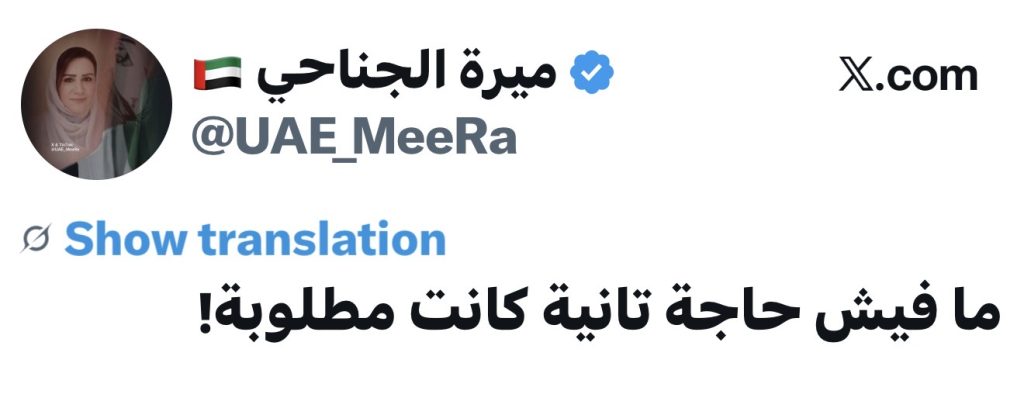
• Emirati blogger Meera Al Janahi expressed this gap clearly when she wrote that the Egyptian statement had indeed come late, after the Iranian aggression against her country and the Gulf states had already begun, even while acknowledging that Egyptian contacts and support came later.
• Dr. Ayed Al Mana from Kuwait said that the brutal and treacherous Iranian aggression against Kuwait and the Gulf states was not only a military or political confrontation, but also a battle of awareness and language.
• In the same context, politically loaded sarcastic posts were revived across platforms. One of the most prominent was what Kuwaiti writer Fuad Al Hashim published under the title The Kuwaiti Embassy and the Minister’s Suits, where he told a story about a former Arab foreign minister, known to everyone, who sent a bill for personal clothing to the Kuwaiti embassy. The post is not literally about the war, but it was used as symbolic mockery of a mindset of asking for a price, delaying a position, and then returning to the Gulf seeking support.
• Other Gulf comments also described the matter as a test of political and media loyalty.
The repeated idea was that Gulf states stood by Egypt in its major crises, and that a faster and clearer position was therefore expected when the Gulf itself came under fire.
• On the official side, Egypt condemned the Iranian attacks on Saudi Arabia, the UAE, Qatar, and Gulf states, and the Egyptian Foreign Ministry later reaffirmed its full condemnation of the Iranian attacks and its rejection of any infringement on Gulf security and sovereignty. But the time gap between the attacks themselves and the clearer political messages remained part of the core problem in Gulf public perception.
(Analysis)
When Gulf states come under missile and drone attacks, and their public then sees part of the Arab analysis preoccupied with reading the war only through the lens of Iran, Washington, and Tel Aviv, an impression takes shape that the targeting of the Gulf was treated as a side issue rather than an important Arab center of the story. That is precisely where the disappointment began.
What deepened that feeling was that Gulf public anger read the Egyptian delay as a sign of distorted priorities. That is why the comments were sometimes harsh and at other times sarcastic, from bloggers’ posts to the revival of symbolic stories such as Fuad Al Hashim’s anecdote.
The idea that governed this mood was simple: those whom the Gulf stood by in their crises were expected to be clearer and faster when the attacks fell on the Gulf itself.