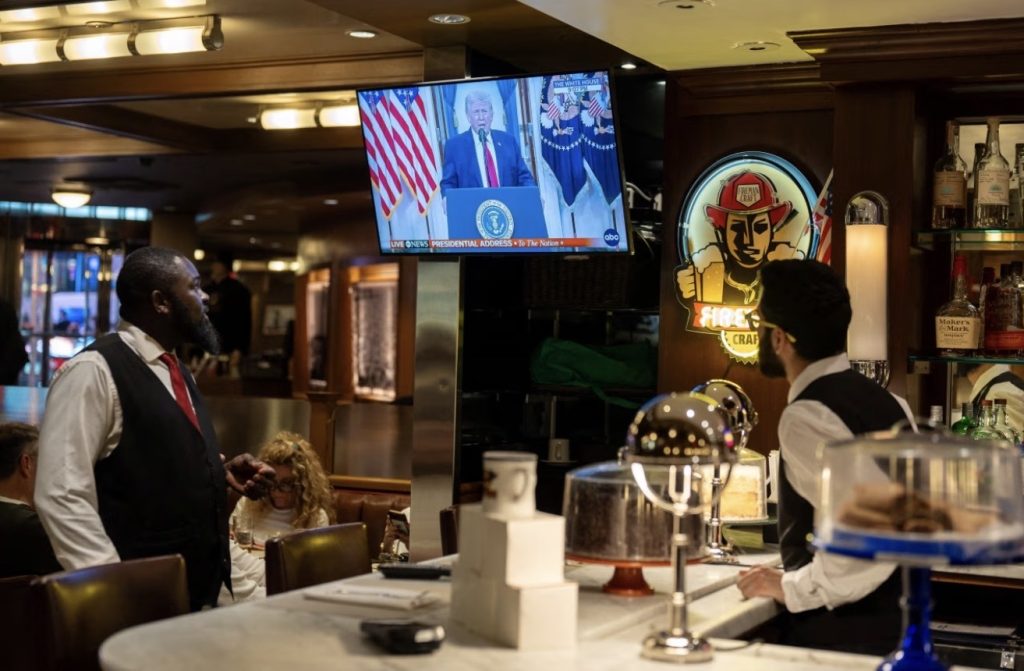
ontime+ followed Trump’s address from the White House early this morning, then tracked reactions across American newspapers and media platforms. The overall takeaway was clear: it was more a speech reinforcing what was already known than a new strategic announcement.
Trump said the war was nearing completion and that Washington was on track to achieve its military objectives soon. But at the same time, he pledged to continue striking Iran hard over the next two to three weeks. This combination of a near-end and a promise of escalation quickly became the dominant headline across much of the American coverage after the speech.
The main points Trump emphasized fell into five lines:
1- He presented the war as a major military success, stressing that Iran had suffered a significant battlefield setback.
2- He threatened to widen the strikes within two to three weeks if no settlement was reached on American terms.
3- He suggested that Washington did not want to stay in the war for long and was close to completing its objectives.
4- He downplayed the importance of the buried enriched uranium, arguing that reaching it would take time and that it remained under surveillance.
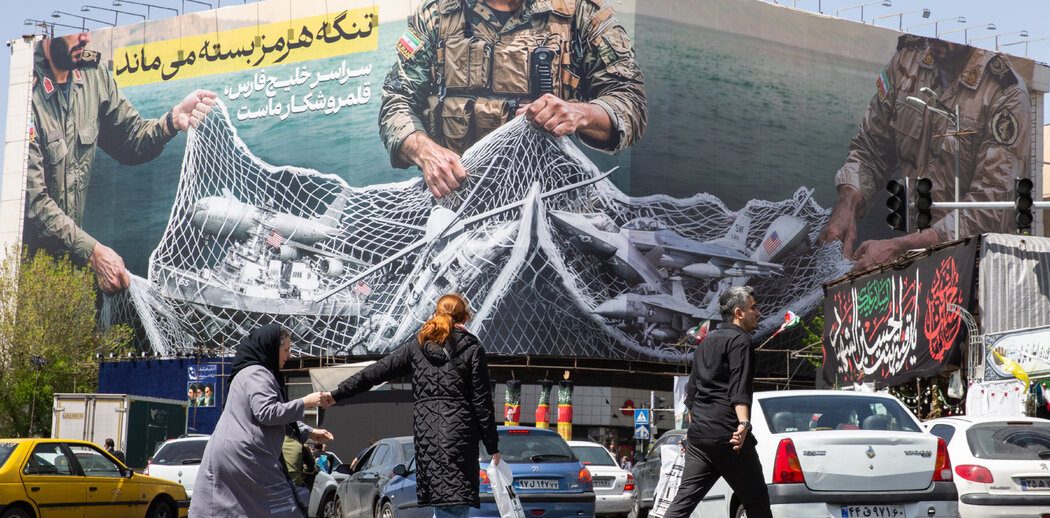
5- He placed responsibility for the Strait of Hormuz on the countries most dependent on Gulf oil, not on the United States alone.
Detail
The speech took the form of a broad political defense of the war, while offering very few details and keeping the contradiction intact:
• Iran has supposedly been almost crushed.
• Yet operations will continue and may even escalate until the objectives are completed.
At the same time, Trump left the unresolved issues untouched:
• the enriched uranium,
• the fate of Hormuz,
• and the shape of the war’s final exit.
He did not announce a clear exit plan, nor did he specify whether Washington would need a ground operation to seize or destroy the buried nuclear material. He also did not present a clear diplomatic framework for what he calls a deal. Even when he spoke about negotiations, he kept them vague and general, while U.S. intelligence agencies do not see Tehran as currently ready to make major concessions. As a result, the speech came across as an attempt to buy time politically rather than to define the endgame in practical terms.
The economic dimension was far more visible in the reactions than in Trump’s speech itself. After his remarks:
• Brent crude rose to around $106 per barrel,
• U.S. crude climbed above $104,
• while major Asian markets fell, especially in countries most dependent on energy imports through Hormuz.
In the end, Trump returned to speaking about the necessity of the war and the need to prevent Iran from obtaining a nuclear weapon. But he did not clearly answer two questions that have been recurring in the American media for days: if the enriched uranium is still underground, has the goal of stripping Iran of a nuclear path really been achieved? And if Iran is still capable of launching missiles and imposing costs on shipping and energy, how can the threat be considered over? This is exactly where the American criticism centered:
A tactical military success, but with an incomplete political ending.
What next?
The next phase will revolve around three direct tests:
Will Trump turn the two-to-three-week window into broader escalation?
Will Hormuz remain an open economic pressure point?
And will the language of a deal turn into a real negotiating channel, or remain merely a cover for extending the strikes?
So far, the dominant reading in the American media is that the speech did not answer these questions, but pushed them into the coming days.